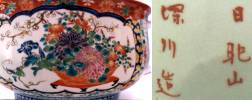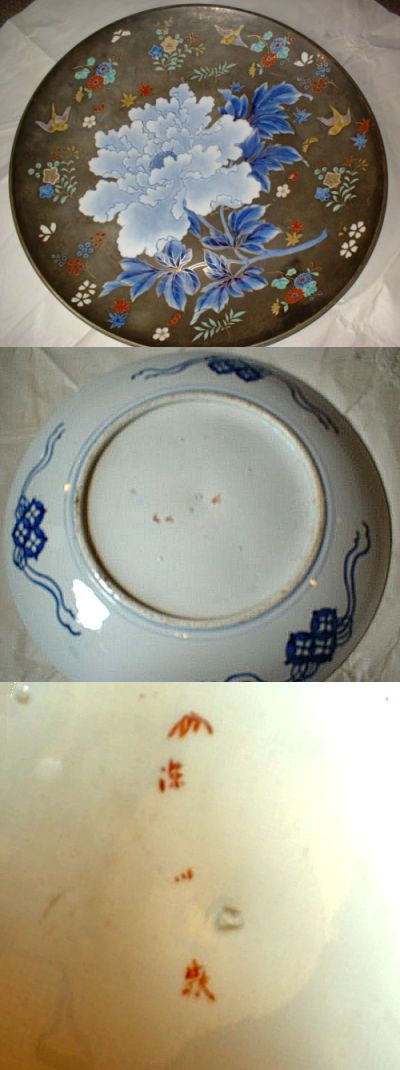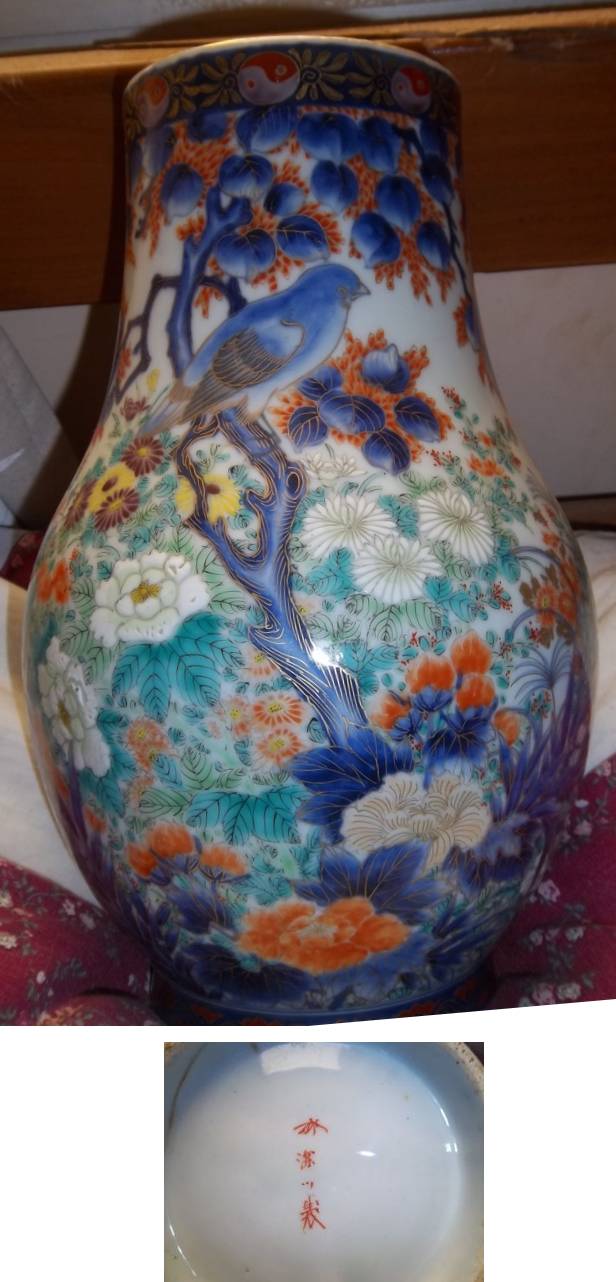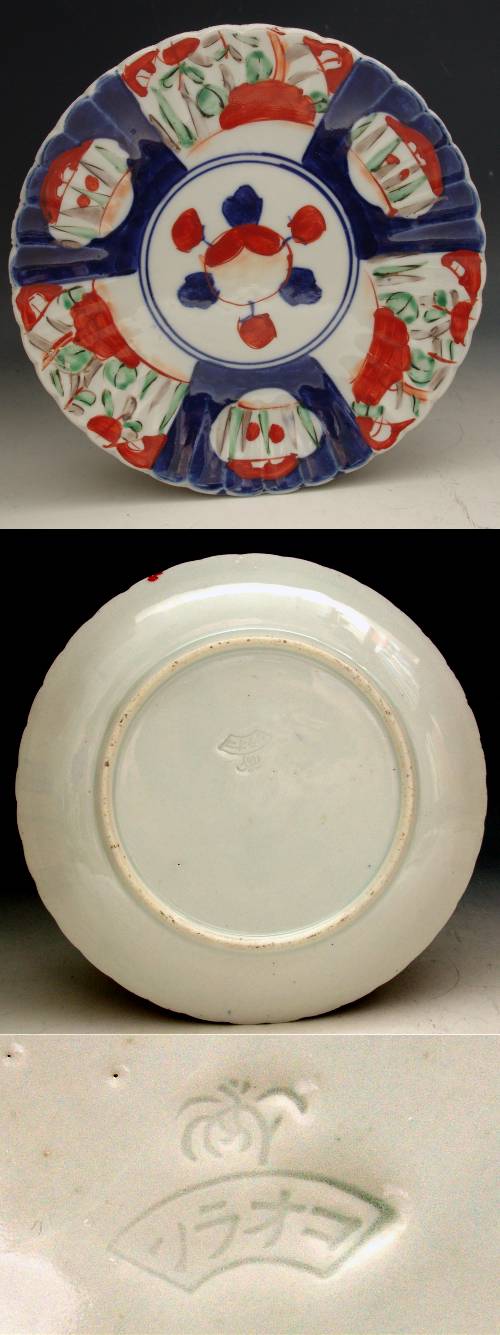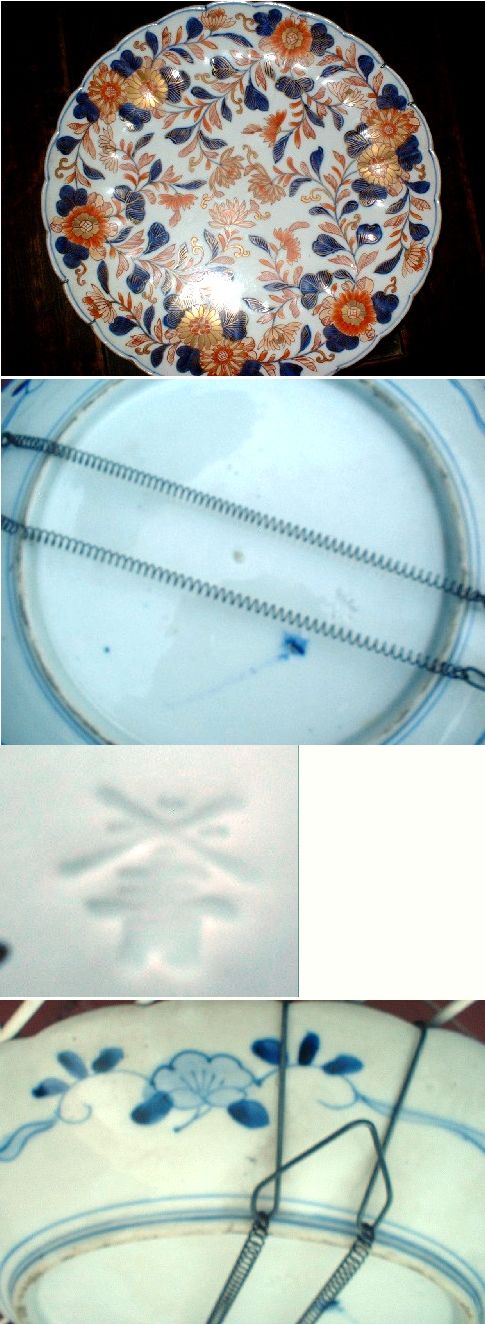
Fukagawa is a family, a brand name, a place and nowadays a porcelain factory in the Arita region. Its history goes back to the seventeenth century. Fukagawa is thus a part but not all of Arita.
Its history starts with Ezaiemon Fukagawa who in 1856 became head of his family's porcelain business and in 1875 founded Koransha (The Company of the Scented Orchid) in Arita, Japan, to produce tableware for export.
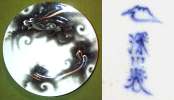
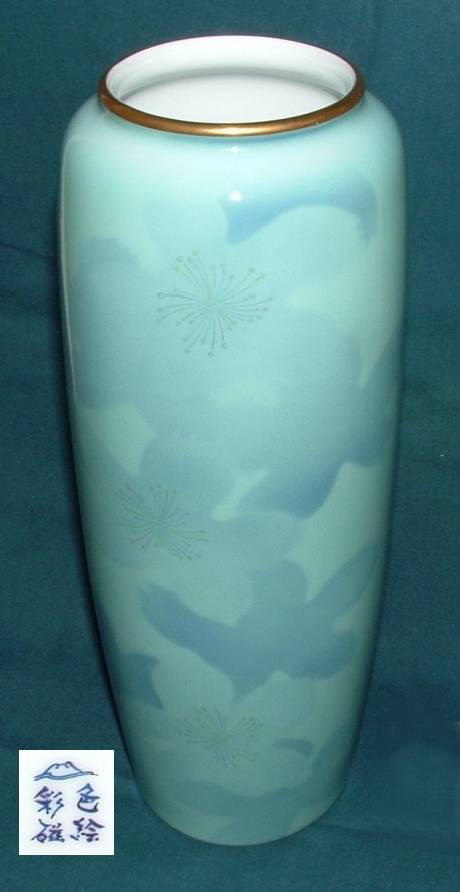
In 1894 the modern Fukagawa company was founded by Chuji Fukagawa, with the Fukagawa trade mark of Mount Fuji and a stream, as its trade mark.
In the Paris International Exposition in 1900 Chuji Fukagawa won the medaille d'or with a large Flower Vase. Among many famous artists Kinsaku Ide, shape designer, and the sculptor Toshi Ninomiya could be noted as having taken part in producing the Paris Expo 1900 prize-winning vase.
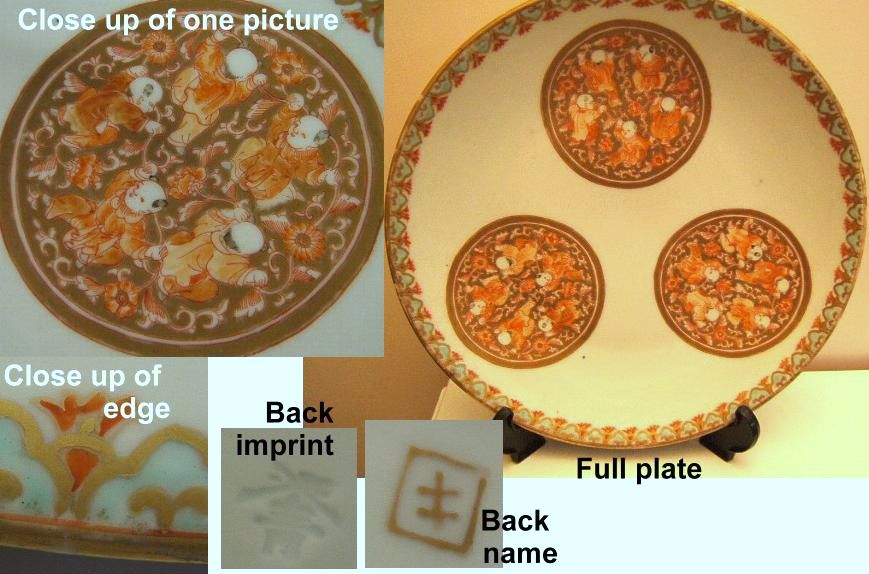
Similarities in style with Hirado can be seen in some of the early (late Meiji period) Fukagawa pieces, but the Iro-nabeshima style (decoration in enamels such as the Ko-Imari style) is more common.
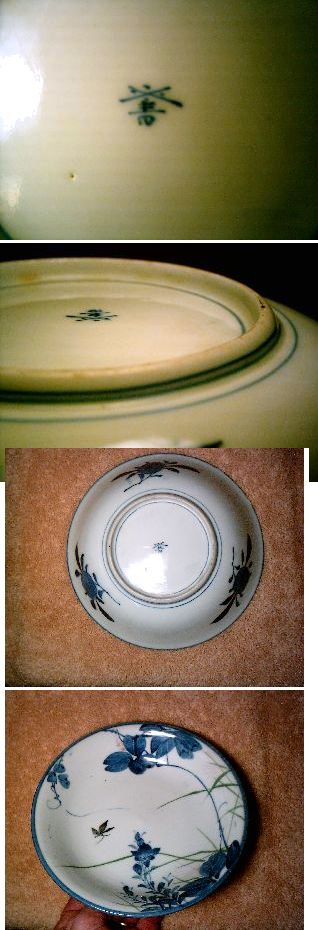
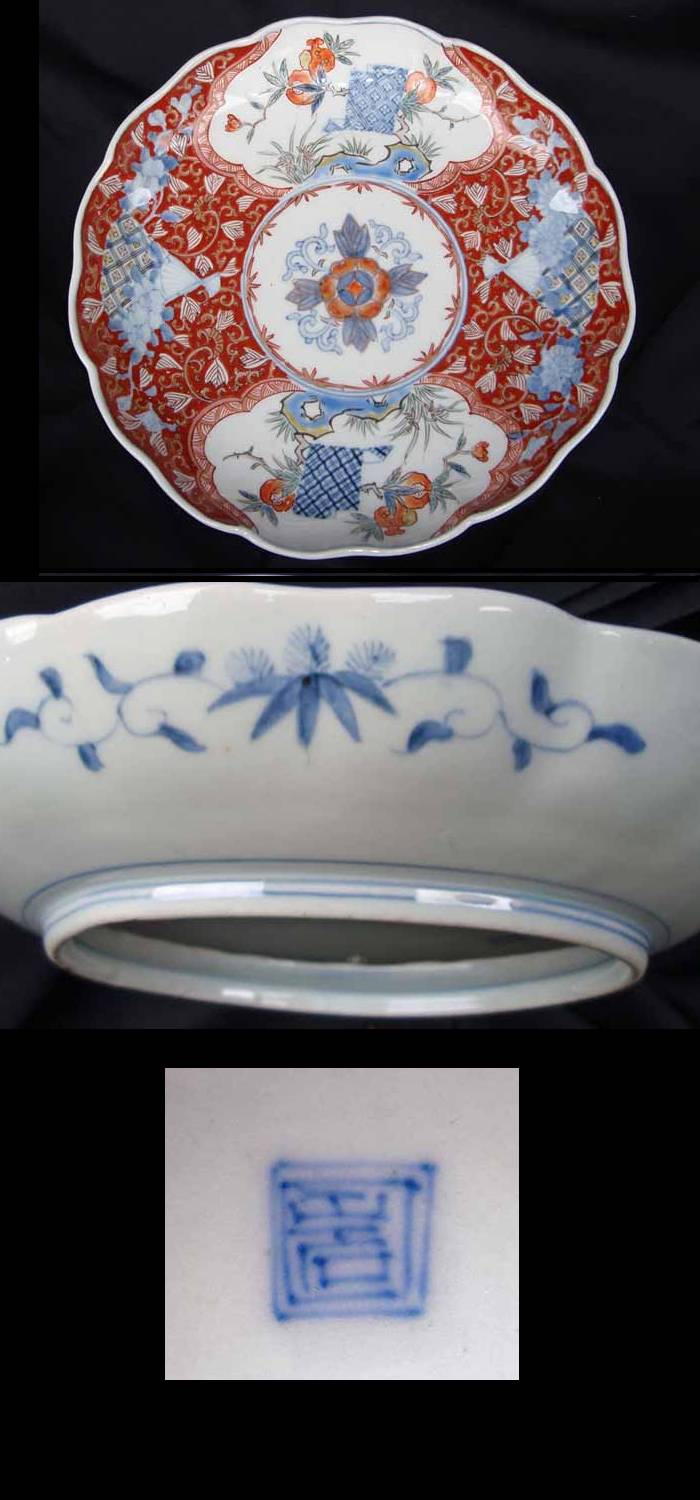
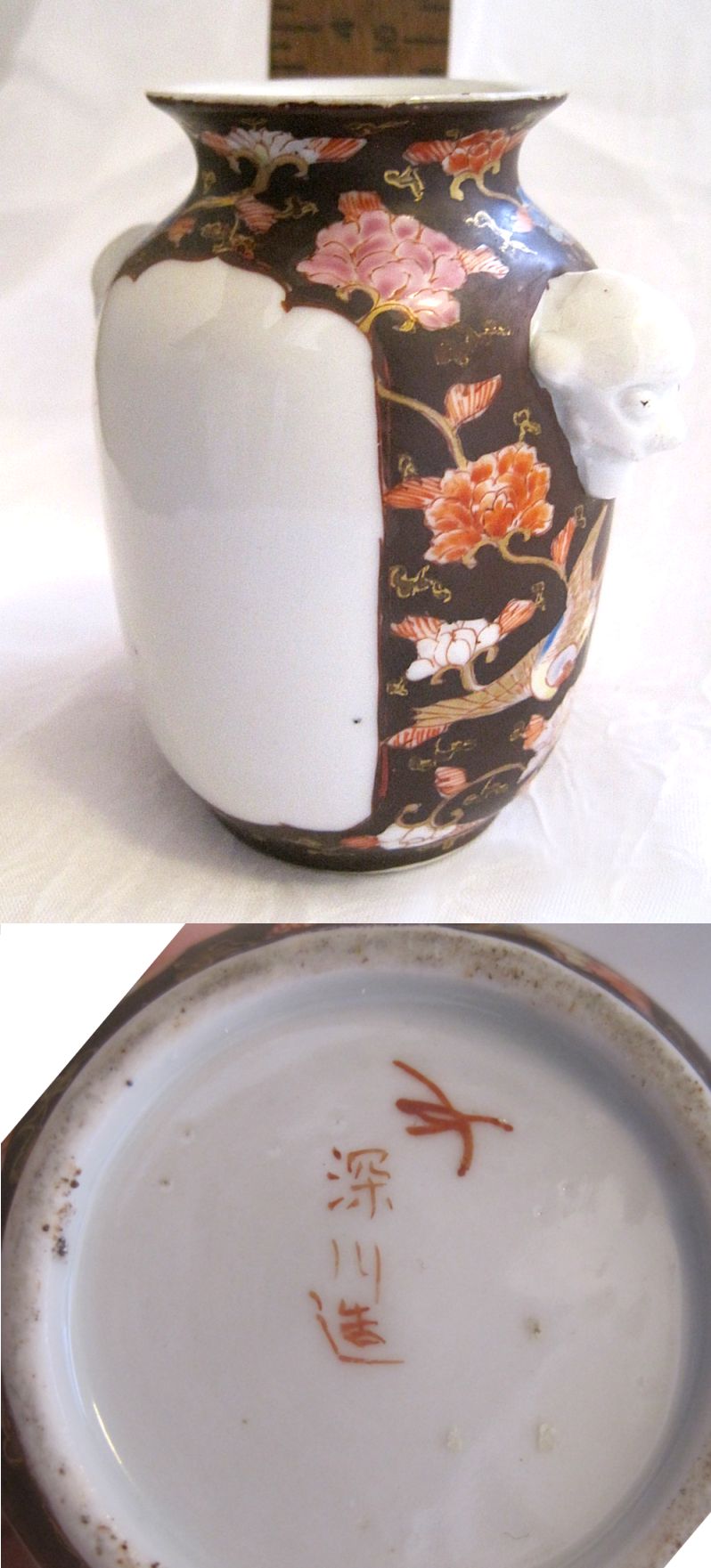
Not all Fukagawa pieces were marked with the Red Orchid mark, or Mount Fuji with a Stream. Some were simply written in red, but also in blue and could be marked with the character for sei or tsukuru, both meaning made. The calligraphy was widely varied. Some were very artistic with flair while some were hurried and simple.
The Fukagawa company has served as purveyor for the Japanese Imperial Household since 1910 and only produces what we mean by white true high temperature porcelain.
Jan-Erik Nilsson
Introductory text written by and together with several expert members of the Gotheborg Discussion Board
| RECENT ADDITION | |
|---|---|
|
1280. Plate. Mark: Tsukuru or Zo, both single words used in signaures, both meaning "make". Mark used by Fukagawa immediately after WWII, around 1945-50 |
The gotheborg.com Japanese marks page and with that basically the entire marks section as an idea, was originally initiated by a donation of marks from the collection of Karl-Hans Schneider, Euskirchen, Germany in July 2000. After sending a considerable number of unknown marks, I never heard from him again. I hope he's ok. It was fun and a beginning. It was one such thing that you really appreciate when you are exploring a new idea and you don't really know where things are going. This marks section have since been greatly extended by a large number of contributing collectors.
The marks section of Gotheborg.com was initially established in May 2000 thanks to a generous donation of approximately one hundred images of Japanese porcelain marks, by Karl-Hans Schneider from Euskirchen, Germany. This contribution provided a modest yet substantial beginning of the Marks Section. It was a kind gesture that I really appreciated.
Of the many later contributors, I would especially want to mention Albert Becker, Somerset, UK, who was the first to help with some translations and comments on the Japanese marks. His work was then greatly extended by Ms. Gloria S. Garaventa, after which Mr. John Avery looked into and corrected some of the dates. Most of the Satsuma marks were originally submitted by Ms. Michaela Russell, Brisbane, Australia. A section which was then greatly extended by Ian & Mary Heriot, a large amount of information from which still awaits publication.
A warm thank you also goes to John R. Skeens, Florida, U.S.A., and Toru Yoshikawa for the Kitagawa Togei section, and to Susan Eades for her help and encouragement towards the creation of the Moriyama section. For the last full overhaul of the Satsuma and Kutani sections, thank you to Howard Reed, Australia. The most recent larger contribution was made by Lisa M. Surowiec, New Jersey, USA.
In 2004 and from then on, my warm thank you goes to John Wocher and Howard Reed, whose knowledge and interest have sparked new life into this section and given reason for a new overhaul. Thank you again and thank you to all I have not mentioned here, for all help and interest in and contributions to our knowledge of 20th-century Japanese porcelain.
The Chinese marks section would not have been possible without the dedicated help of Mr. Simon Ng, City University of Hong Kong, whose translations and personal efforts in researching the origin and dates of the different marks have been an invaluable resource. It has since been greatly extended by several contributors such as Cordelia Bay, USA, Walt Brygier, USA, Bonnie Hoffmann, Harmen Lensink, 'Tony' Yalin Zhang, Beijing, 'ScottLoar', Shanghai, Mike Harty, and many more expert members of the Gotheborg Discussion Board.
A number of reference pieces have also been donated by Simon Ng, N K Koh, Singapore, Hans Mueller, USA, Hans Slager, Belgium, William Turnbull, Canada, and Tony Jalin Zhang, Beijing.
All images and text submitted by visitors and published anywhere on this site are and remain the copyrighted property of the submitter and appears here by permission of the owners which can be revoked at any time. All information on this site, that are not specifically referenced to peer reviewed sources, are the personal opinions given in good faith by me, my friends and fellow experts, based on photos and the owners' submitted descriptions. They are not to be used for any financial or commercial decisions, but for educational and personal interest only, and can and will be changed as further information merits.
For further studies, Encyclopedia Britannica is to be recommended in preference to Wikipedia, which, not being peer-reviewed, might contain misleading information.
Web design and content as it appears here © Jan-Erik Nilsson 1996-.
 Click here to see large picture