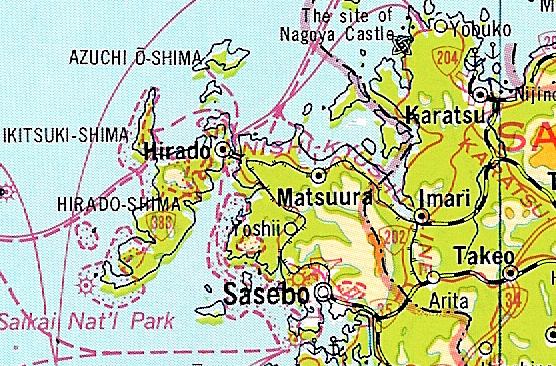
Japanese Porcelain Marks
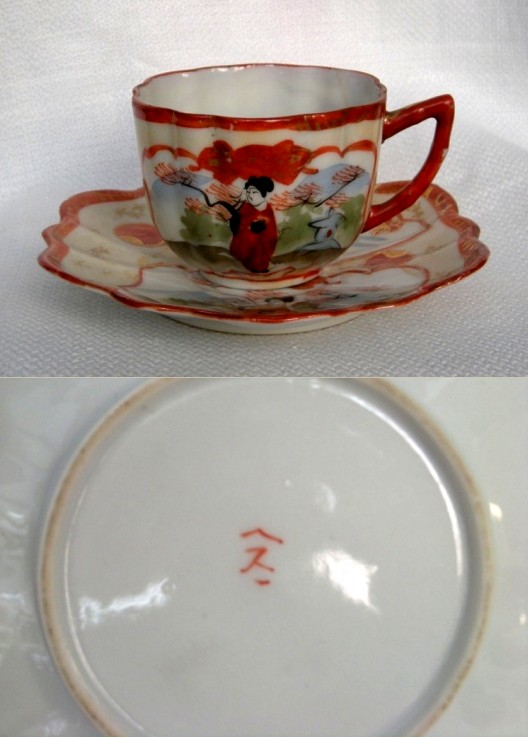
The old Japanese ceramic industry was in many ways smaller in scale compared to the Chinese. Marks was also applied for different reasons that on the Chinese porcelain. Personal signatures by the artists involved are quite common. We also find a different attitude towards what marks that are put on the Japanese porcelain and in particular the export porcelain from the 19th century and onwards. The entire range of Imperial reign marks so common on Chinese porcelain, genuine or not, is mostly lacking. The marks are more commercially oriented, more numerous and can vary even within a set of pieces. They can indicate the name of the factory, the potter, the decorator, the pattern, the customer, the exporter, the importer or both or a part of them or maybe just say "Made in Japan", "Japan", "Nippon", "Happiness" or "Good luck" in any number of ways. Increasing the confusion are the hundreds of porcelain decorating firms active in the early to mid 20th century simultaneously putting many different marks on the same wares seemingly at random but probably for some reason. To take just one example, the Noritake company which has been active for about one hundred years only, are thought to have used over 400 different marks.
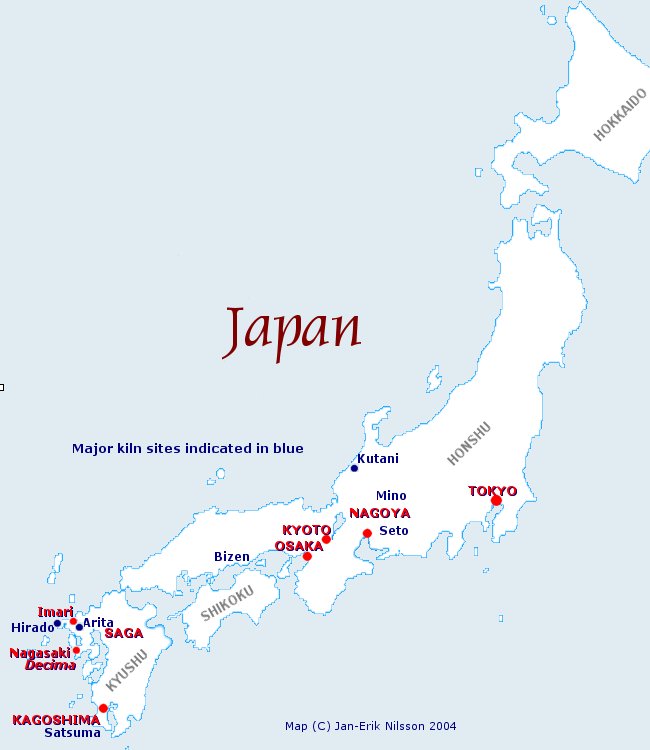
To immediately gain a better understanding on the many names that occurs in Japanese pottery and porcelain, I believe this map, that indicates the most common kiln areas (blue names) and cities (names in red), will be helpful.
Periods and marks commonly met with
To immediately gain a better understanding on the many names that occurs in Japanese pottery and porcelain, I believe the map that indicates the most common kiln areas (blue names) and cities (names in red) will be helpful.
Regarding dates, the following Japanese historical period names are the ones most commonly met with:
- Momoyama period (1573-1603)
- Edo period (1603-1867) roughly split into early, middle or late Edo. This is the broader historical period named after Edo (now Tokyo), which was the center of government under the Tokugawa shogunate. The period is known for peace, stability, and isolation, as Japan limited foreign influence and focused on domestic affairs. During this time, the arts flourished, and a distinct Japanese cultural identity emerged, which influenced ceramics, woodblock prints, literature, and more.
Sometimes the Genroku era (1688-1703) within the Edo period (1603-1867), is distinguished as a cultural high point. Art, literature, and entertainment, including the development of ukiyo-e woodblock prints, kabuki theater, and bunraku puppetry, flourished during this time. The aesthetic of the era emphasized luxury, with vibrant colors and decorative styles that became prominent.
- Meiji (1868-1913)
- Taisho (1913-1926)
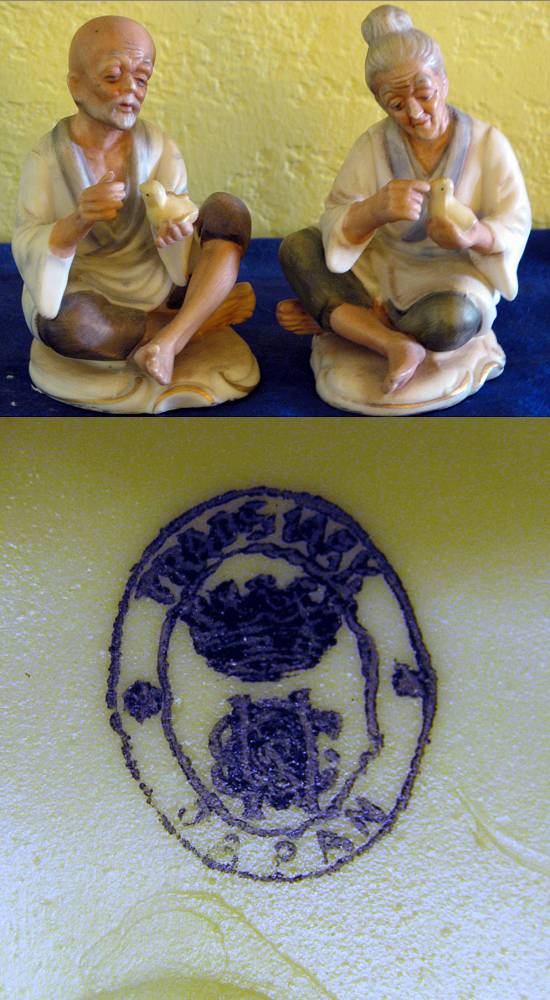
- Showa (1926-1988), where "early Showa" is often used to cover the Showa reign before 1945, and
- Heisei (1988-today)
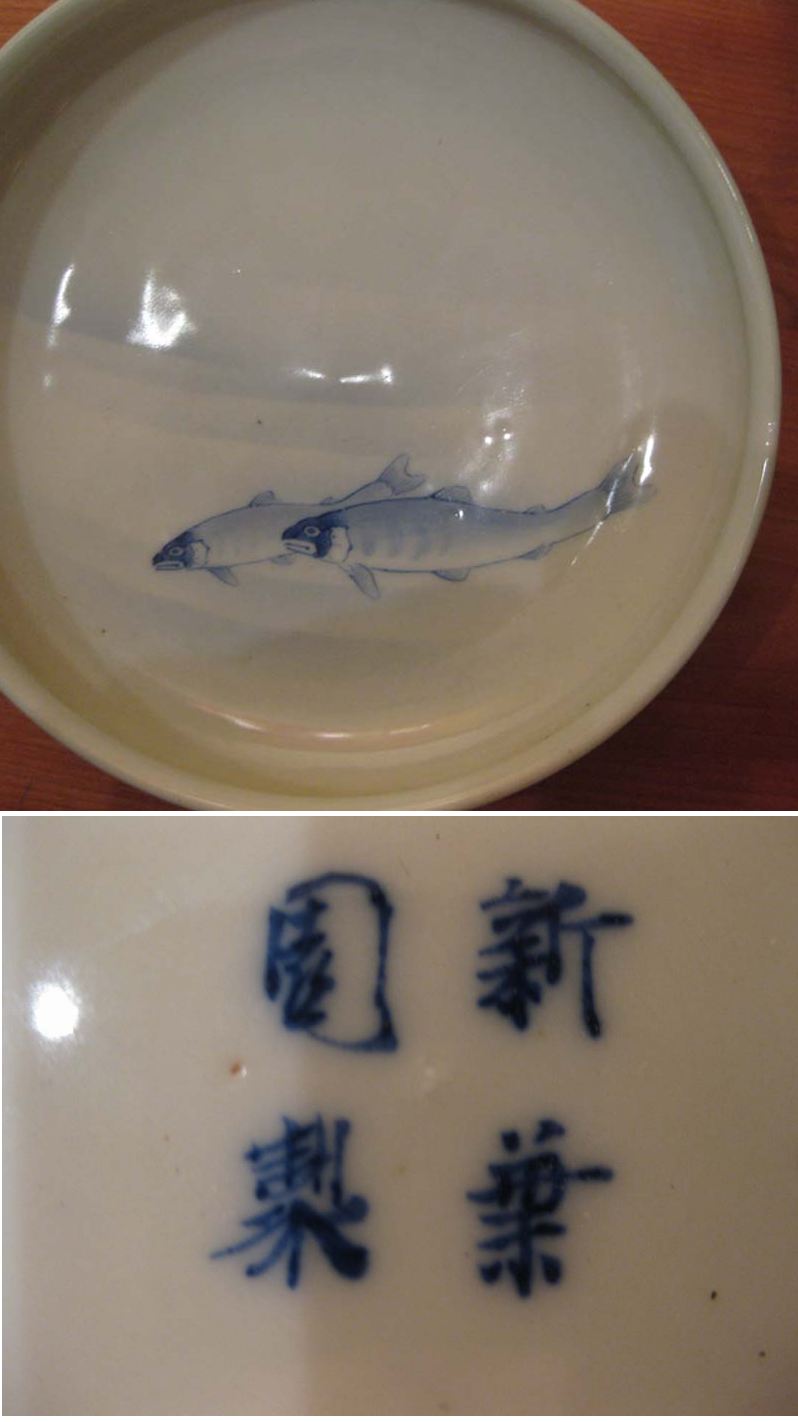
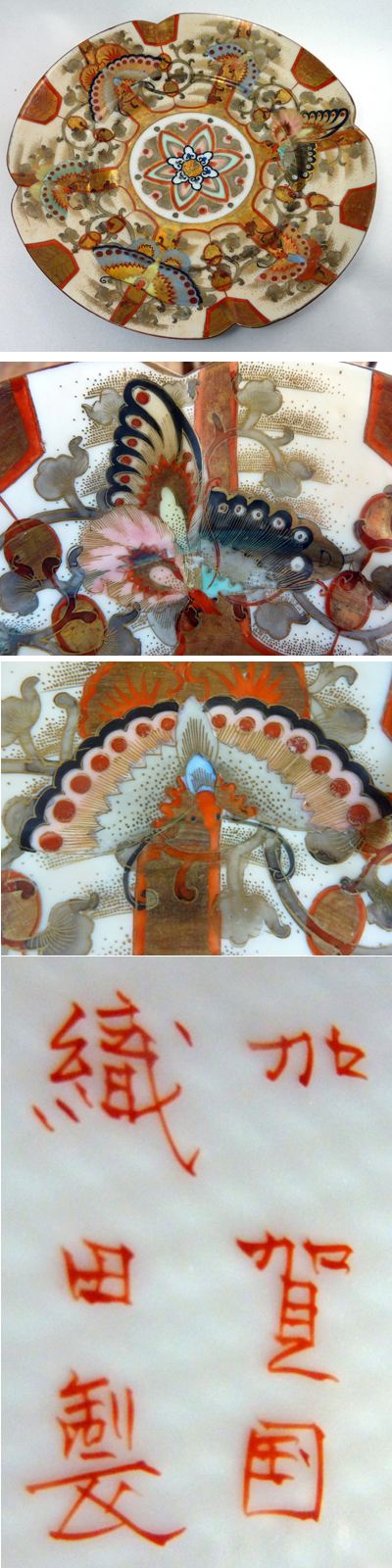
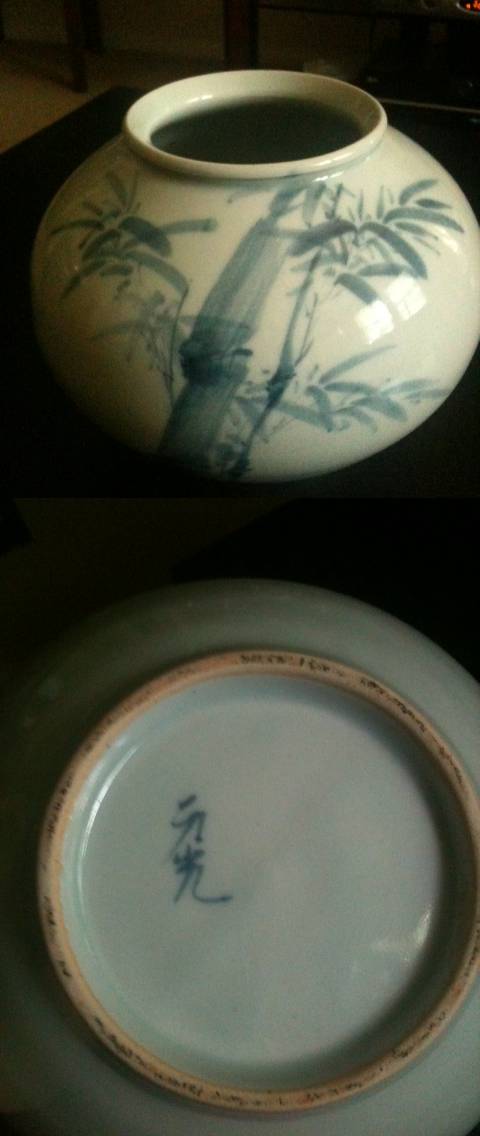
The marks are normally read from top to bottom, and right to left. Signatures are usually followed by a suffix, for example Sei, tsukuru or saku all meaning "made", or Ga, Dzu or Fude meaning "painted" or "drawn". Then there are place names, Satsuma, Kutani, Seto etc.
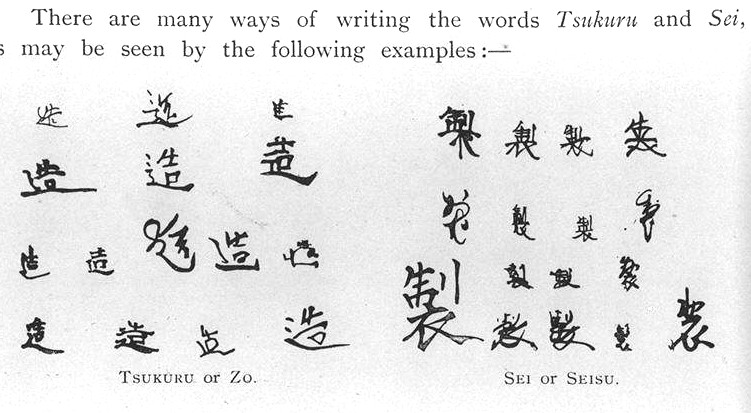
Tsukuru or Zo, Sei or Seisu (made) characters from various examples of marks and seals on Japanese pottery. From examples in the Bowes collection, Japanese pottery, Bowes, James Lord, 1890
To read these requires references such as a good Japanese/English dictionary such as Nelsons. One simple and easy guide to reading & writing Japanese is Ed Florence Sakade & al. J Bowes, Japanese Marks & Seals is very helpful as is Koop & Inada, Japanese Names. It is a very unrewarding task to go through lists of marks and signatures as the below in the hope of finding the exact one to match yours, however a modest amount of study can produce a big difference. Beware though, it can become an obsession.
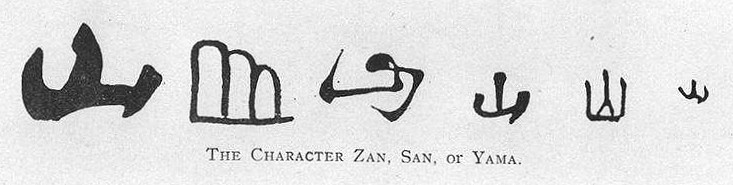
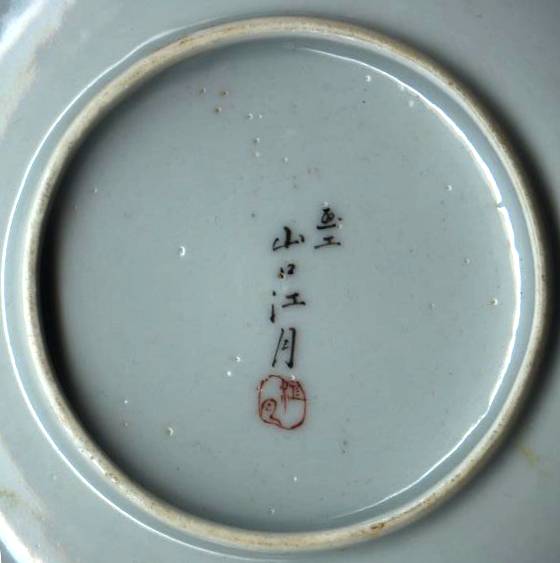
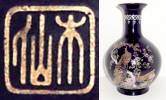
Calligraphic variations of the Sino-Japanese character for "mountain", from Bowes, James Lord, Japanese marks and seals. London 1890, p 21. Zan, San, or Yama are different readings ultimately depending of that the character is borrowed from China. Its reading in Japan depends on context. The on'yomi readings (san or zan) are used in more formal or Sino-Japanese contexts, such as names, titles, and compound words. The kun'yomi reading (yama) is the native Japanese word for mountain and is commonly used in informal or geographical contexts.
From a 1930s book "Some Suggestions for Souvenir Seekers"
To further our understanding of 20th century porcelain marks our friend and member of our Discussion Board, Elyce Litts, recently sent me some notes from a small booklet entitled "Some Suggestions for Souvenir Seekers" produced by the Japanese Government Railway. The booklet seems to date to the mid-late 1930s. In addition to descriptions and photo examples of numerous types of pottery and porcelain, including where they were made, it features a list of Souvenir Dealers. The names are given in English without the Japanese equivalency since the book was aimed at English-speaking tourists. They describe the various pottery of Japan as follows:
Satsuma porcelains - mainly produced in and around the city of
Kagoshima in
Kyushu. Wares of this type are finished in ivory lustre with fine crackles. They have a picture of a number of artisans sitting at the traditional low Japanese tables hand painting vases.
Arita porcelains - produced in the
Saga prefecture of
Kyushu.
Kutani porcelains - produced in the prefecture of
Ishikawa in the
Hokuiku district of
Honshu, the Japanese main island. On the whole
Kutani porcelains are characterized by their elaborate picture decorations in thick gold, red, blue and some other colors.
As for
Kyoto wares,
Rakuyaki of Kyoto, closely connected with tea ceremonies since olden days.
Awata ware porcelains and
Kiyomizu wares are among the souvenirs of Kyoto.
Seto ware. "The province of
Owari, with
Nagoya as its commercial and industrial metropolis, is the greatest ceramic center [of Japan] so far as the amount of products ...
Owari produces so many varieties of porcelain and stoneware that the Japanese familiarly speak of porcelain and pottery in general as "setomono" after the village of the same name in this province."
- Bizen ware (Okayama Prefecture) characterized by their peculiarly humorous figures of gods, birds and beasts.
- Banko wares (Mie Prefecture) which are mostly unglazed.
- Awaji wares (Awaji island) monochromatic with a bright yellow or green glaze.
- Soma pottery (Fukushima Prefecture) on which a picture of a horse is usually seen.
Japanese Souvenir Dealers in the mid 1930s:
TOKYO:
YOKOHAMA:
- Department Stores: Nozawa-ya; Matsu-ya;Echizen-ya;Sagami-ya
- Porcelains: Tashiro Shoten; Nikko Shoten; Nakanoya; Glory Shokai; S. Oda; Miyakawa; R. Inone
- Curios: Owariya; K. Takahashi; Kaneko; S. Shibata
KYOTO:
- Department Stores: Marumono; Takashimaya; Daimaru
- Porcelains: Kinkozan, Hiraoka, Kyoto Porcelains
OSAKA:
- Department Stores: Mitsukoshi; Daimaru; Hankyii; Nankai-Takashimaya; Matsuzakaya; Sogo; Takashimay; Izutsuya; Mikasaya.
KOBE:
- Curios: T. Shibata; Harishin; K. Nikko; K. Yoshida & Co.
- Department Stores: Daimaru; Mitsukoshi; Sogo
- Porcelain & lacquer: Chujyo Shoten; Harishin; Koshiishi Shoten; Miyazaki Shoten; K. Nikko; Ogurusu & Co.; Suzuki & Co.; Taniguchi & Co.; William Rae; Gengan Yamamoto; Yamato Bros. & Co.; K. Yoshida & co.
The booklet gives the street addresses of all shops as well. Hopefully this contribution by
Elyce Litts will greatly help our understanding of 20th century Japanese porcelain marks.
The method used for suggesting dates on the following marks is the empirical and that of the arts historian. When possible I have compared the marks with documents, files and archaeological data and these references have been added here when possible.
Unfortunately I have no further information on these marks than what is published here. For further discussions on antique Chinese and Japanese Ceramic Art you are seriously recommended to sign up with the
Gotheborg Discussion Board.
If you would like my personal help or opinion on something, there is a possibility to email me a question and help support the site at the same time. Click here to
ask a question.
Jan-Erik Nilsson
Gotheborg.com
| A A VANTINE & COMPANY |
|
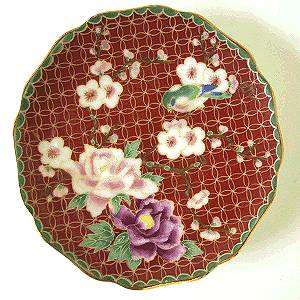
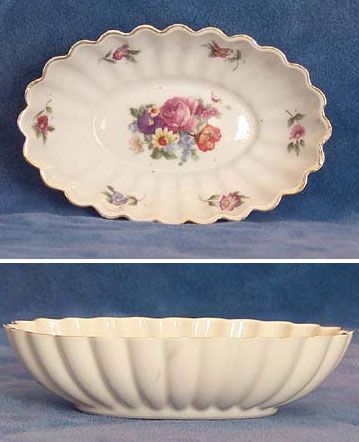
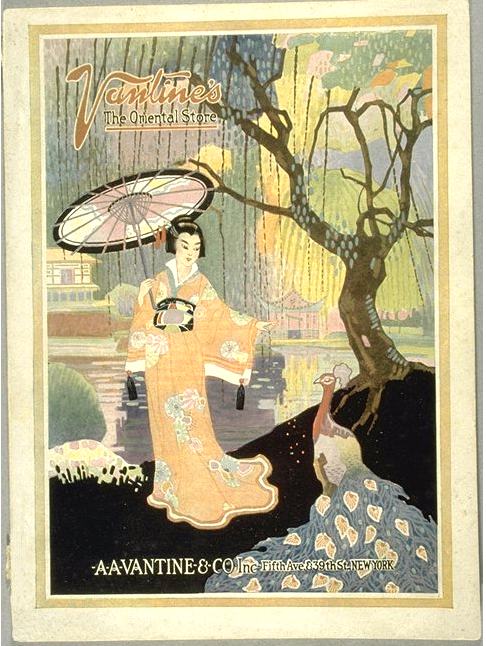
Around the 1840s Ashley A. Vantine (sometimes Van Tine) started a provision and supply business in San Francisco. He continued in California until 1869, when he came to New-York and established himself in the Oriental goods business, opening his first shop for oriental wares in New York in 1869 on Broadway, near Eighth-street. A few years later he moved to 831 Broadway, and from there, in 1883, to 879 Broadway. Mr. Vantine traveled a great deal, particularly to China and Japan, crossing the Pacific sixteen times and made six visits to Turkey and Southern Russia. The company seems to have began their business in Yokohama, Japan, already in 1865 for the purpose of manufacturing wares for export to the West. They even started a mail order business and came to have their own factories in Yokohama and Nagoya, Japan. A catalogue from 1917 is preserved at the University of Delaware Library. The text states that the book "enables you to rest comfortably at home in your easy chair, and, at your leisure, select by mail, with absolute confidence, from the largest collection of Oriental goods in America." Offerings include not only toys, but clothing, perfumes, jewelry, and pottery. The business seems to have shut down around 1951.
 Mail order catalogue 1917. Vantine's, the Oriental Store. New York
Ashley Abraham Van Tine 1821-1890, Genealogy home page (outside link)
A little journey to Vantine's by Elbert Hubbard (Author), The Roycrofters (1912)
|
|
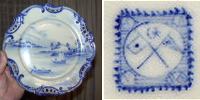
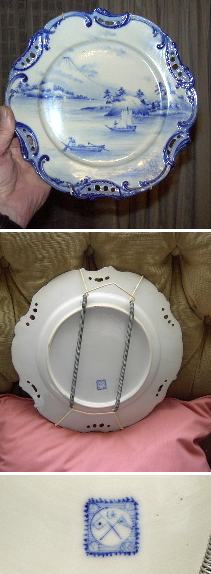
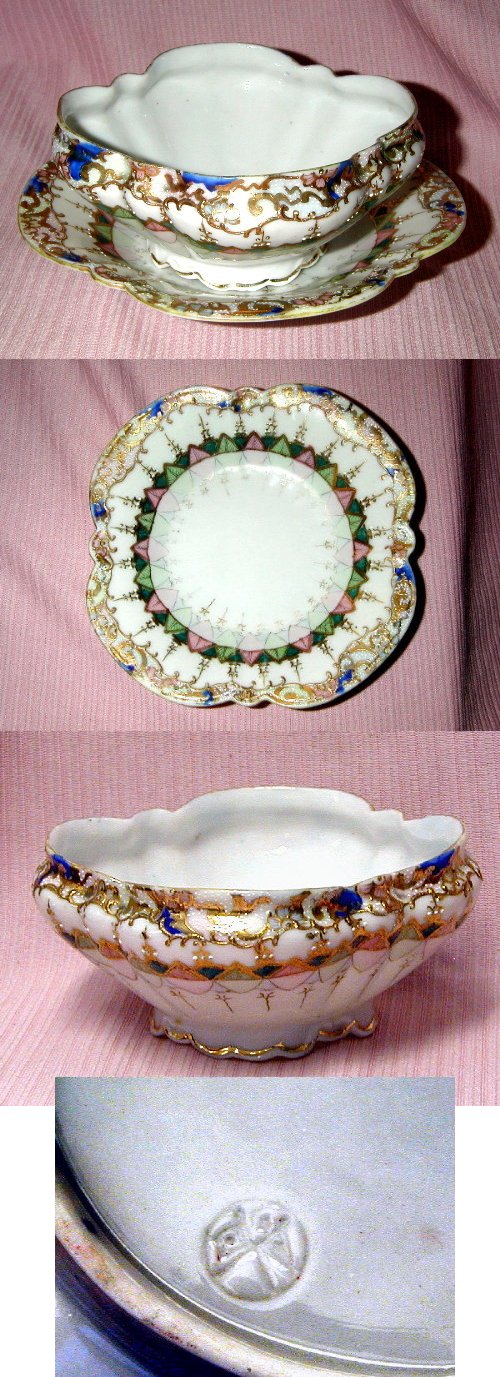
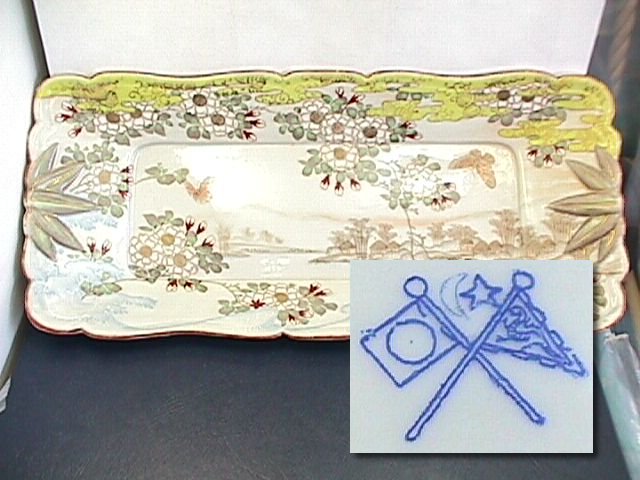
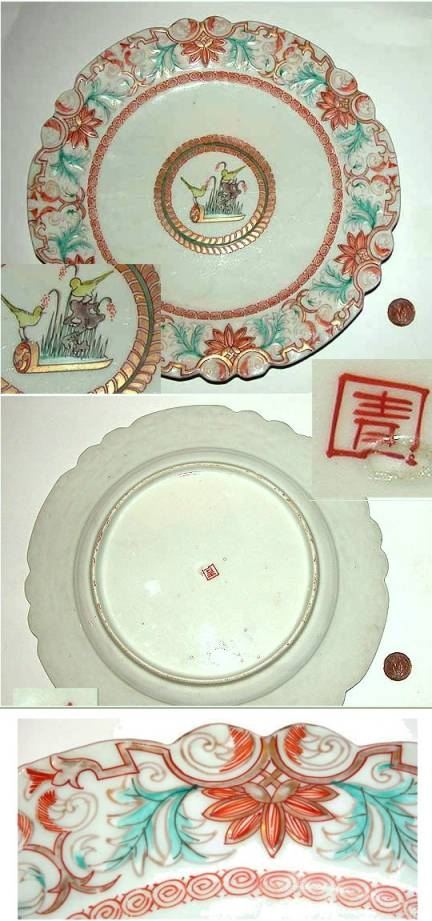
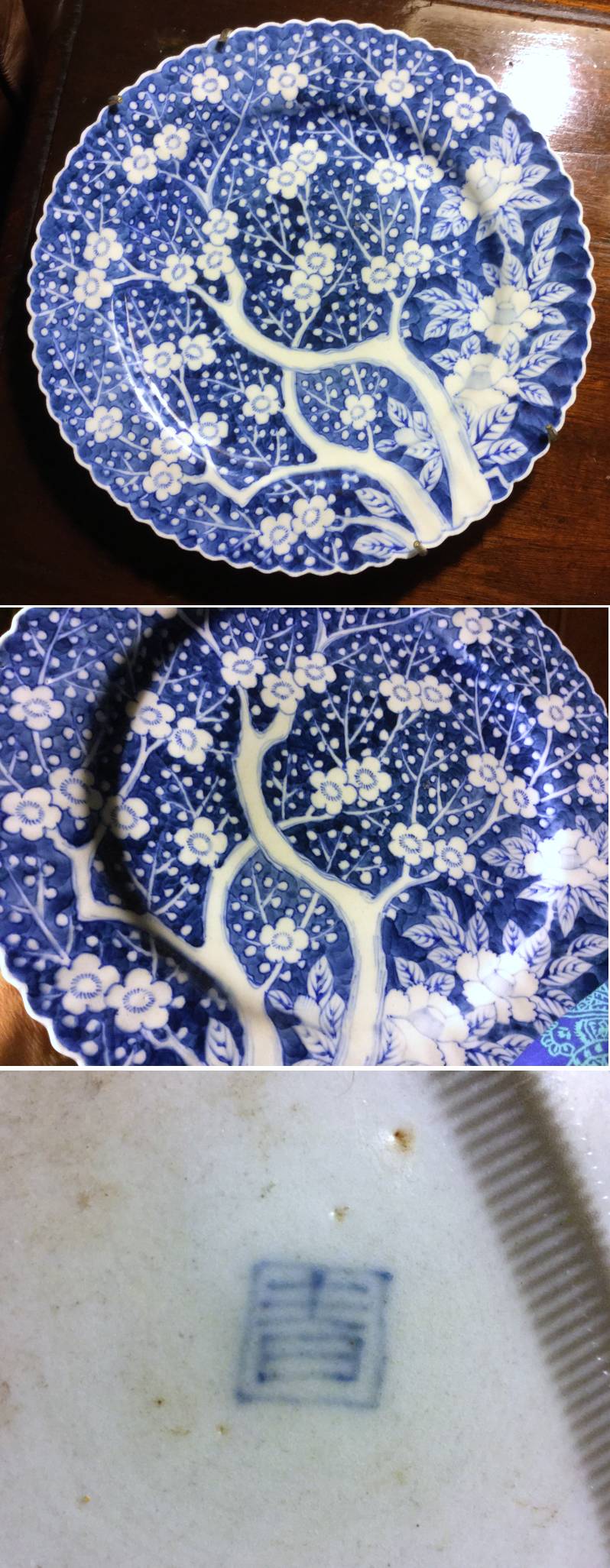
895. Mark: Crossed Imperial Chinese and Japanese flags with the Turkish crescent moon and star in-between, referring to Mr AA Vantines business relations with these three countries. Tentative date: c. 1910-20s.
Click here to see large picture
|
|
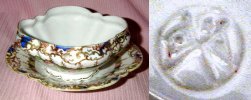
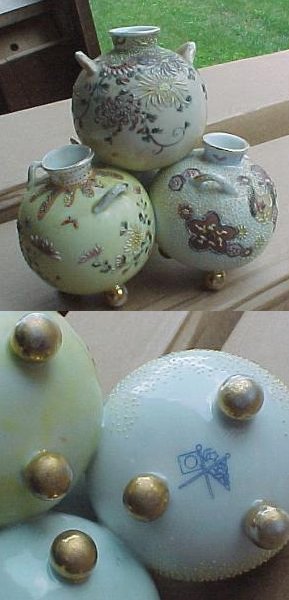
771. Mark: Crossed Imperial Chinese and Japanese flags with the Turkish crescent moon and star in-between, referring to Mr AA Vantines business relations with these three countries. Tentative date 1930-40s.
Click here to see large picture
|
|
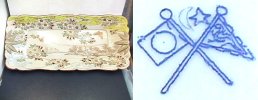
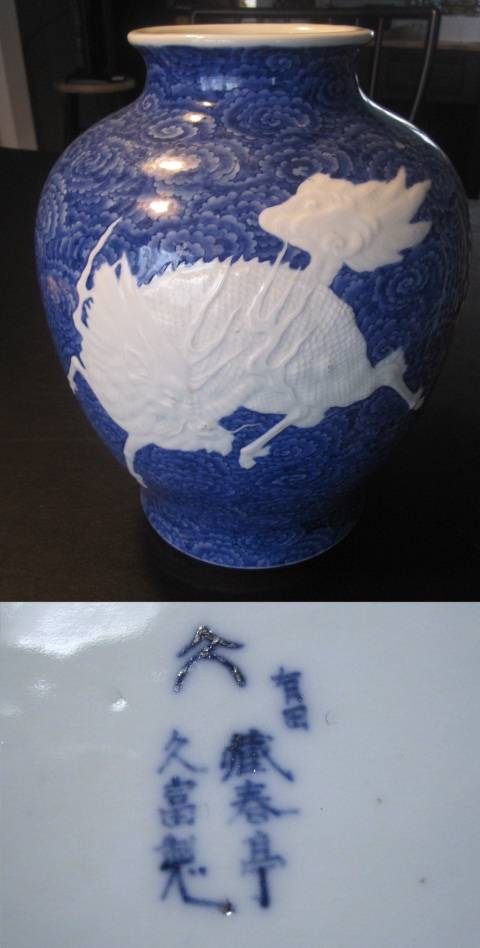
772. Mark: Crossed Imperial Chinese and Japanese flags with the Turkish crescent moon and star in-between, referring to Mr AA Vantines business relations with these three countries.
Click here to see large picture
|
|
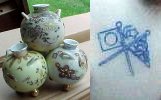
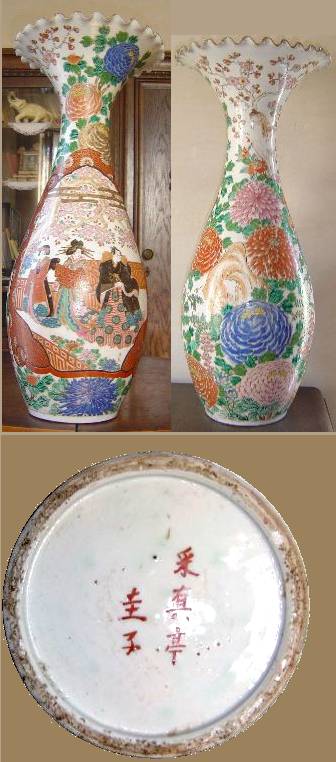
789. Mark: Crossed Imperial Chinese and Japanese flags with the Turkish crescent moon and star in-between, referring to Mr AA Vantines business relations with these three countries. From the look of the porcelain designs I would suggested the 1920-30s for this piece.
Click here to see large picture
|
| AEROZON |
|
Aerozon is a trade mark made up from 'air' and 'ozone'. It occurs on German smoking accessories, air cleaners as in perfume burners, night lamps etc. for which many porcelain bodies were made, some of them in Japan. The mark occurs between 1910-1933 by AEROZON-Fabrik, Georg und Berthold Sternberg, Berlin. In 1933 AEROZON-Fabrik Schwarz & Co, Berlin, seems to have been owner for a few months, the extent of involvement has so far not been possible to determine precisely. From 1933-1940, owned by August Brünell. From 1940 the company is used by Hermann Feese, and later his son Artur Freese until today. The company's name today is Feese Dekorative Leuchten. A catalog from 1954-63 occurs with 'Aerozone' products from Metallwarenfabrik Hermann Feese also in Berlin. All according to a German collector's web page. (Information updated by, Simone Loebsin, 2008.)
|
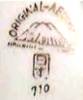 |
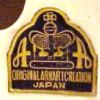
37. "ORIGINAL AEROZON", The 2 characters are read from top to bottom NICHI and HON, which read together as Nippon (= Japan). Date after 1940, tentatively around 1958/1959 - 1962/1963. |
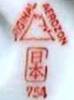 |
55. "ORIGINAL AEROZON", The 2 characters are read from top to bottom NICHI and HON, which read together as Nippon (= Japan). Date after 1940. |
ARITA
CLICK HERE FOR A MAP >>
|
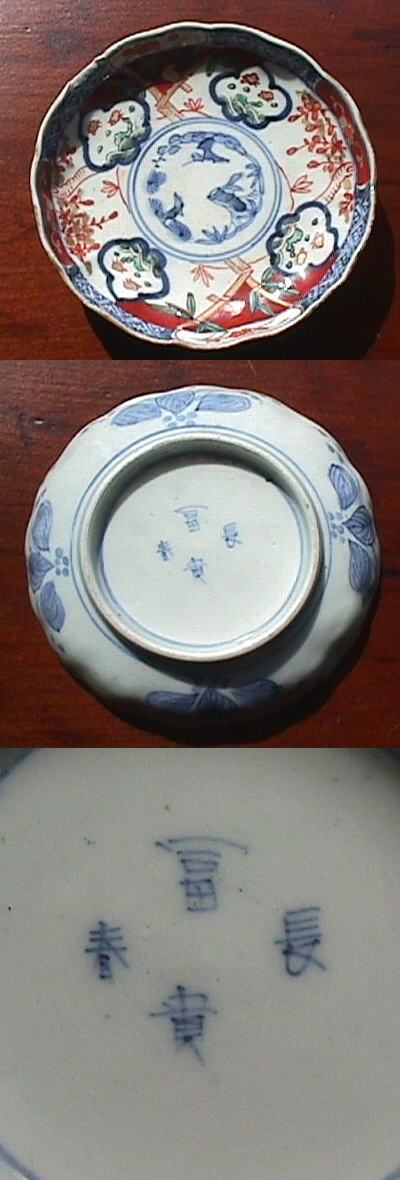
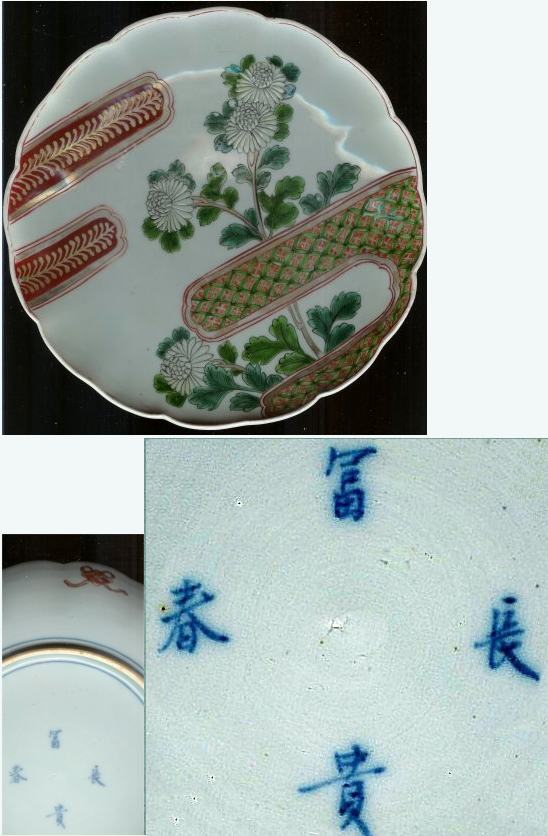
Porcelain was produced in Arita for the first time in 1616 under the control by the feudal lord of Nabeshima, or the present Saga Prefecture. Arita ware is also called Imari ware because the products of the Arita kiln were mainly shipped from a nearby port of Imari. Arita porcelains of the early days were typically made in the Chinese style of the period, with deep-blue patterns on a white background, called sometsuke = "blue-and-white". In the 1640s, a new style called aka-e" was invented, characterized by bright colors and bold patterns principally in red. These two styles, "sometsuke" and "aka-e," dominate Japanese "Arita/Imari" wares. The products of the 17th and 18th centuries are typically called "Ko-imari" (old Imari) and "Ko-sometsuke" (old blue-and-white).
Arita character marks:
- kigyoku houtei no chin (奇玉宝鼎之珍) "rare precious treasure"
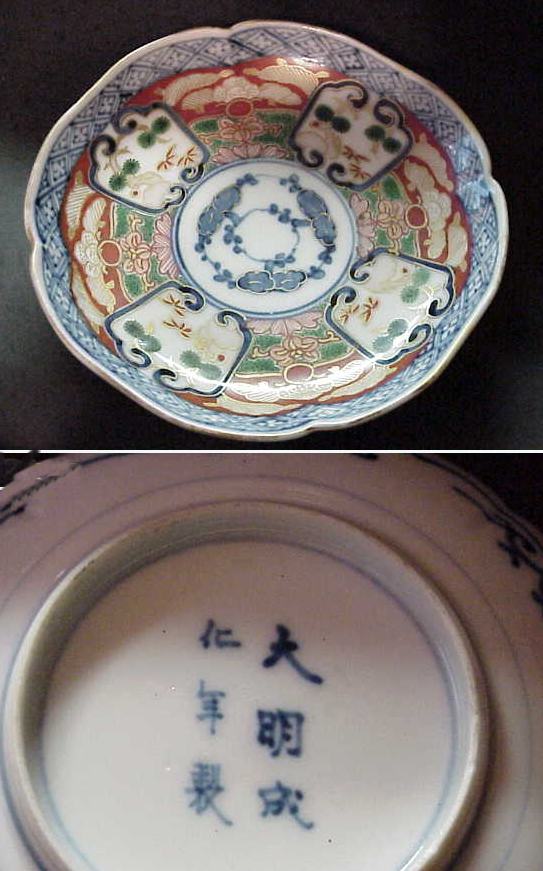
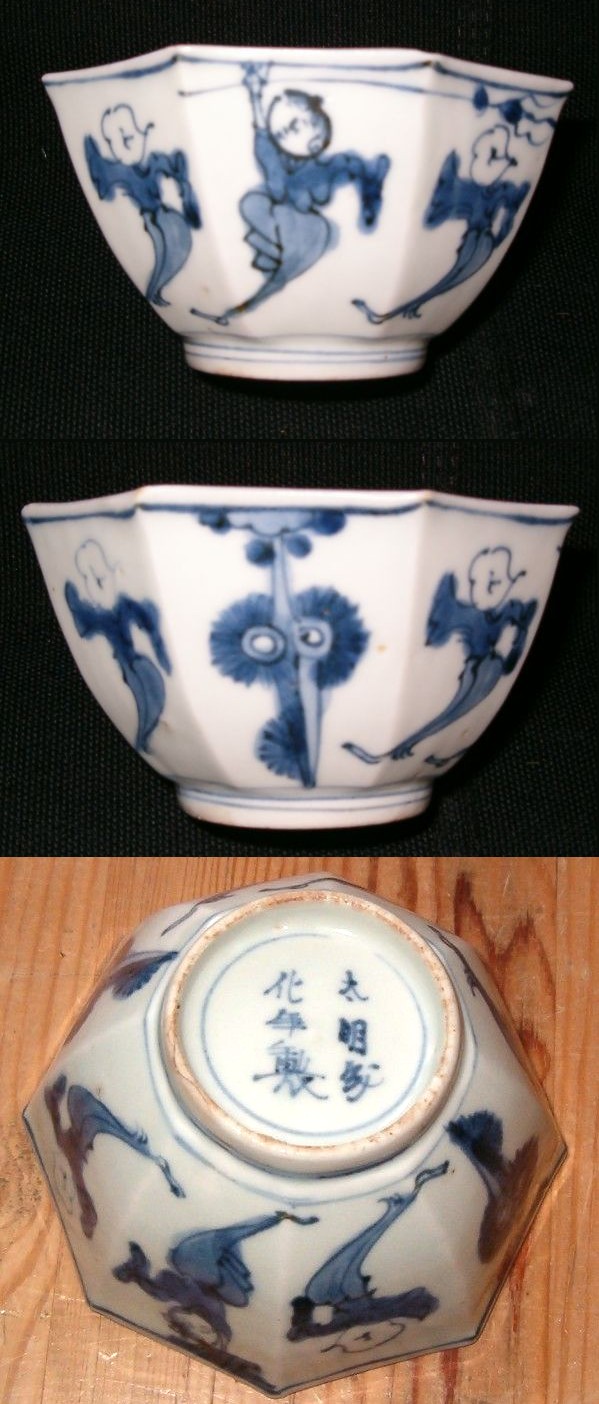
- taimin nensei (太明年製) "Great (Greatest) Ming dynasty Make", attributed to the Chinese Ming dynasty
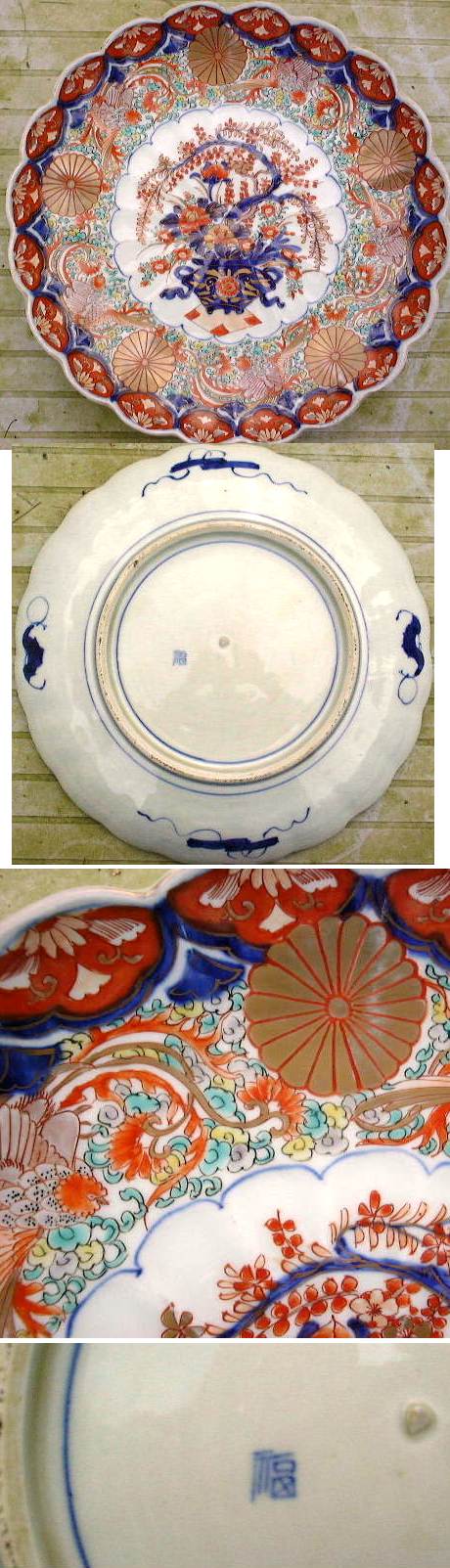
- uzu-fuku (渦福) a calligraphic version of "fuku", using a spiral as a part of the design. A kanji (Chinese character) fuku means happiness. (fuku could also be spelled huku)
- yama-fuku (山福) a kind of "fuku" mark with abbreviation of a kanji of "yama" (mountain) on top
|
|
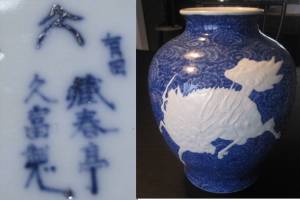
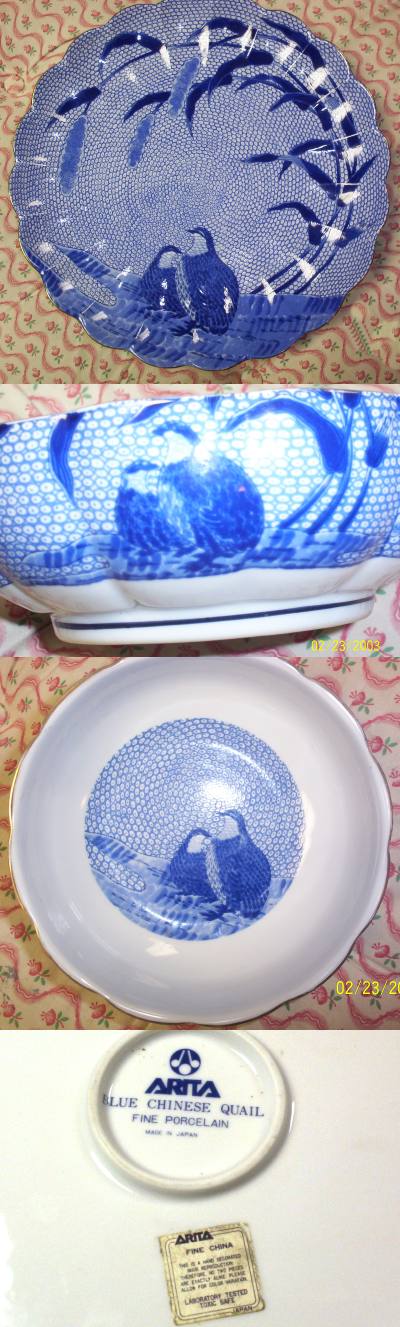
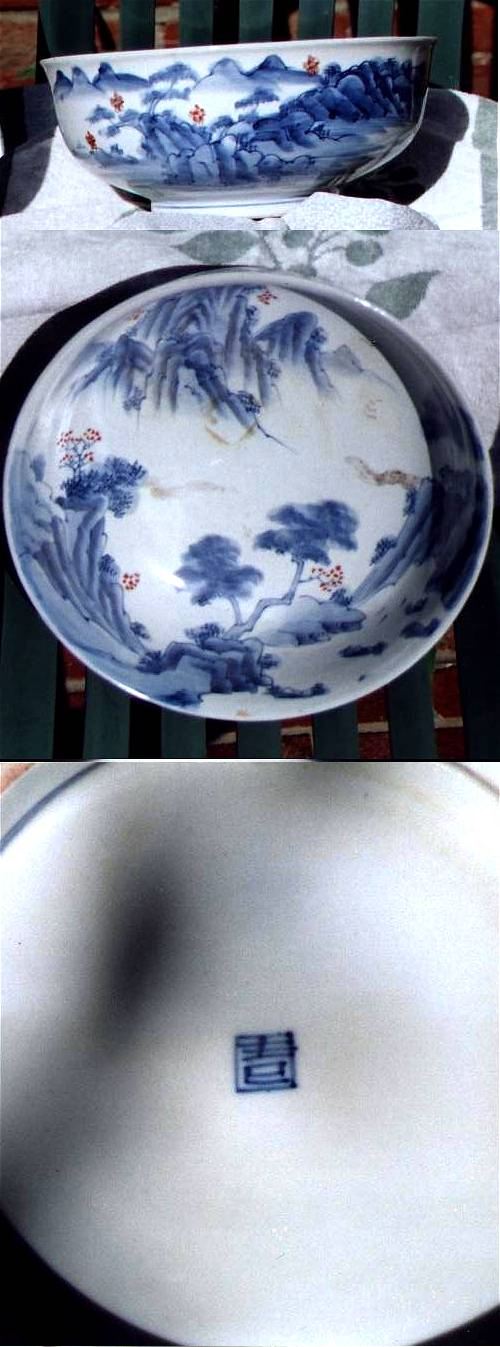
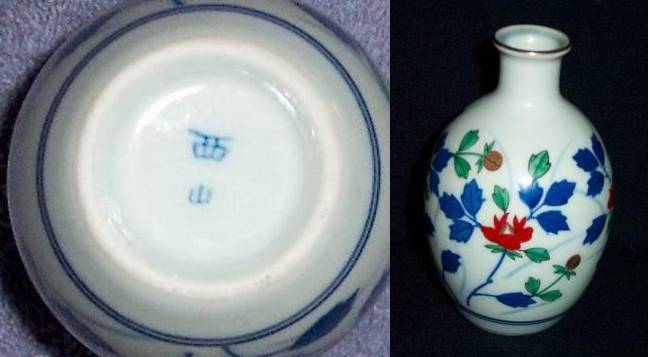
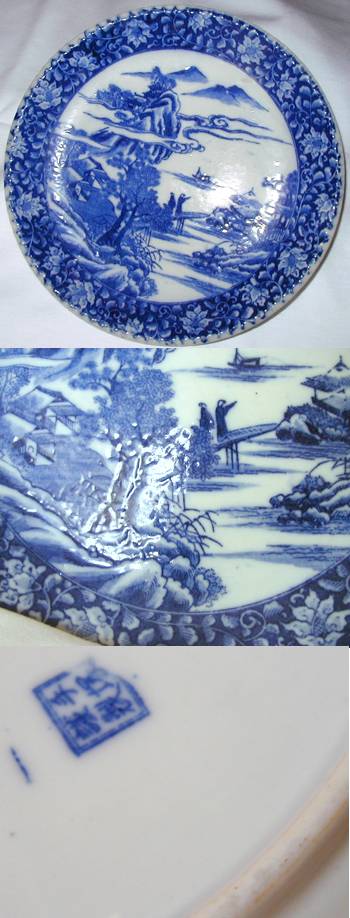
1386. Jar, blue and white decoration. Mark: Arita
Click here to see large picture
|
|
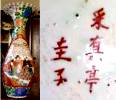
912. Mark: Saishintei Keiko (Woman's name), however J Bowes in Japanese marks &
seals reproduces the same mark which he gives as 'Saishintei Sisi' (male name). Japanese porcelain, probably Arita. Early 20th century.
Click here to see large picture
|
|
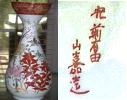
500. Mark: Kozen? Arita Yamaki zo
Click here to see large picture
|
|
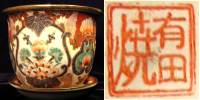
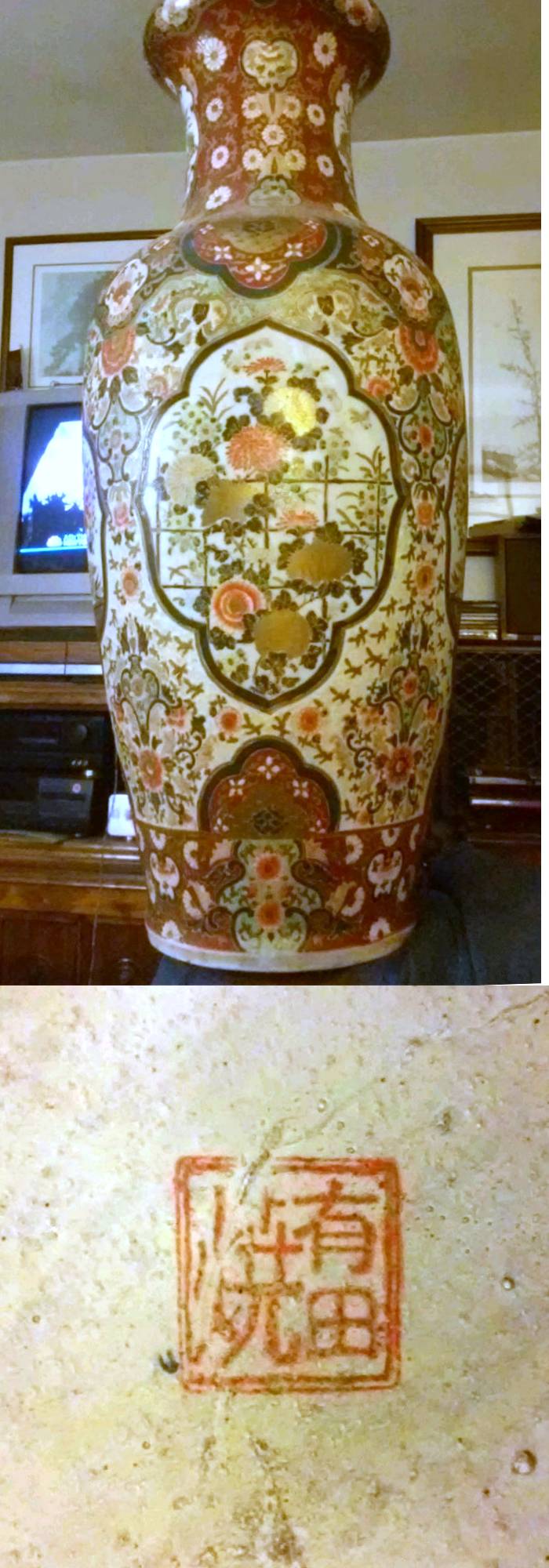
129. Seal reading Arita-yaki - , the left being a single character, early to mid 20th century.
|
|
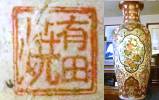
1516. Seal reading Arita-yaki - , the left being a single character, early to mid 20th century.
Click here to see large picture
|
|
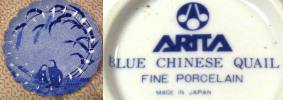
743. "Arita" Modern mark, Late 20th century.
Click here to see large picture
|
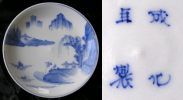
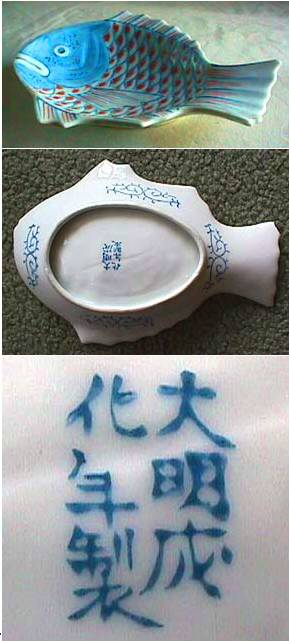
| Arita - Imitating Chinese Chenghua mark |
| Porcelain with marks imitating Chinese marks of the Ming period were made at the Arita kiln during the 19th century and possible earlier. |
|
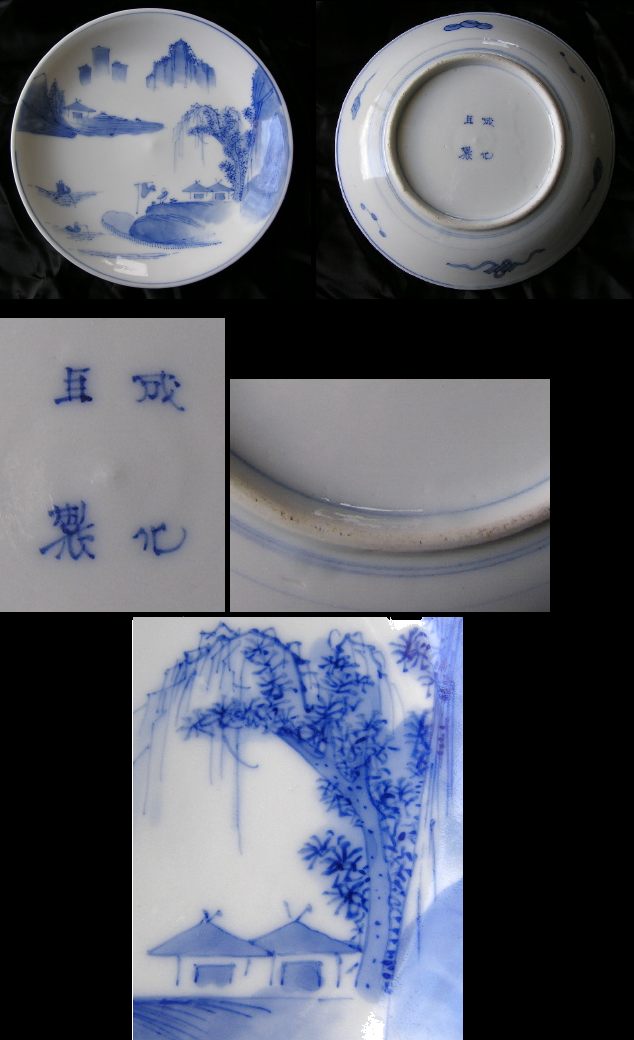
945. Mark: sei ka nensei - Chenghua period Make (成化年製), attributed to the Chinese Ming dynasty Chenghua period (1465-1487). Japanese, 19th century.
Click here to see large picture
|
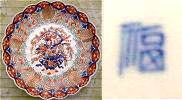
| Arita - Fuku |
|---|
| Fu ku, common on Arita porcelain during the Edo period (1603-1867). |
|
584. Mark: Fuku - "Happiness". Arita, Imari porcelain. Meiji period, around 1880-1900.
Click here to see large picture
|
| Arita - Hi(zen) |
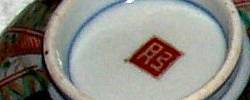 |
668. Abbreviated Hizen mark as in only the Hi (肥) part of Hizen (肥前) meaning Arita (有田) region. Usually Meiji period (1868-1912). |
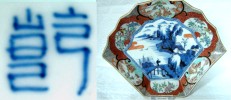
| Arita - Ken - Qianlong |
|
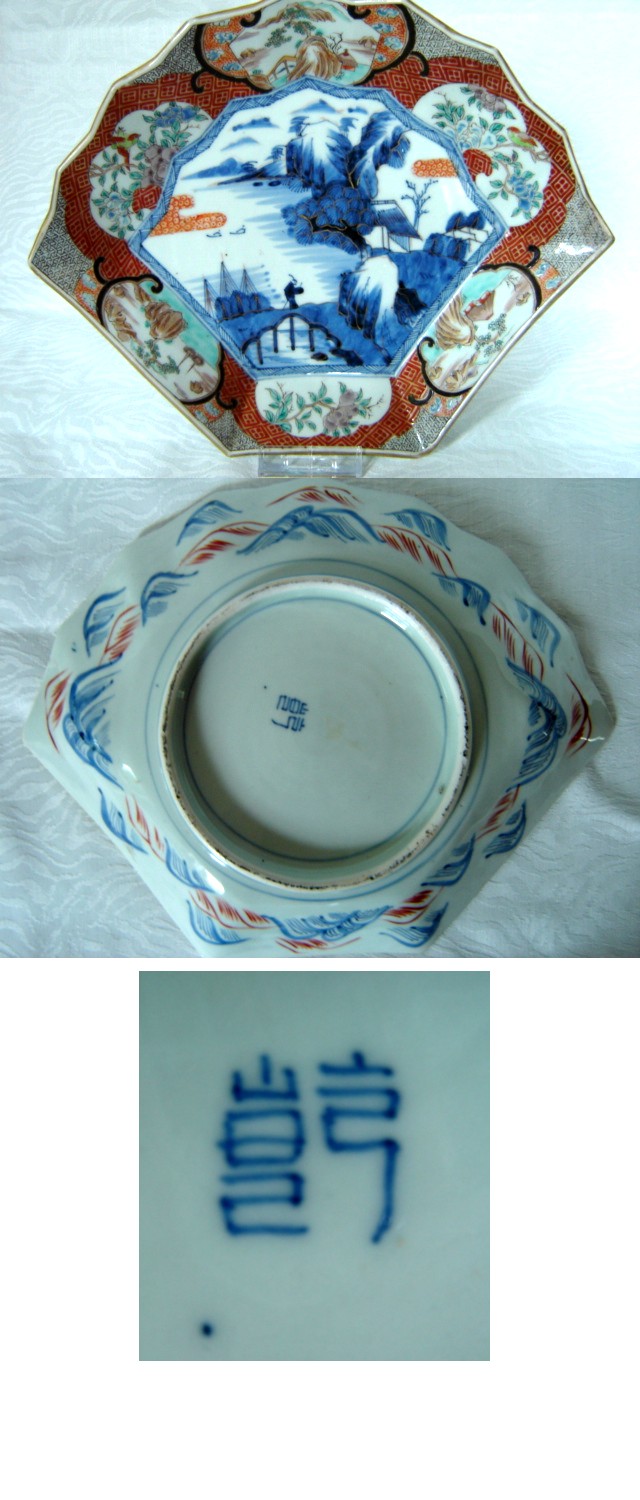
1412. Mark in underglaze blu: Ken. This kanji character, ken in Japanese is from the kanji characters of kenryu-nen-sei which stands for the Chinese Qianlong period (1736-1795). Japanese porcelain with 'Imari' decoration. Late Edo period (1780-1860).
Click here to see large picture
|
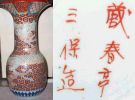
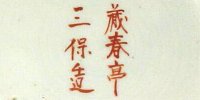
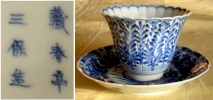
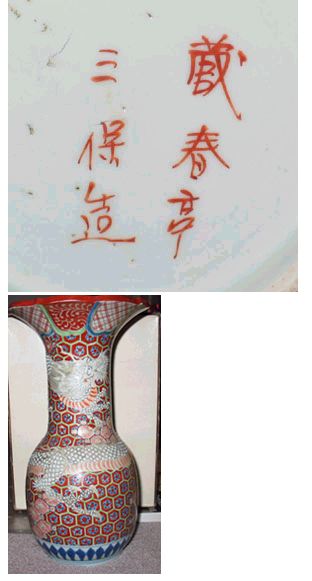
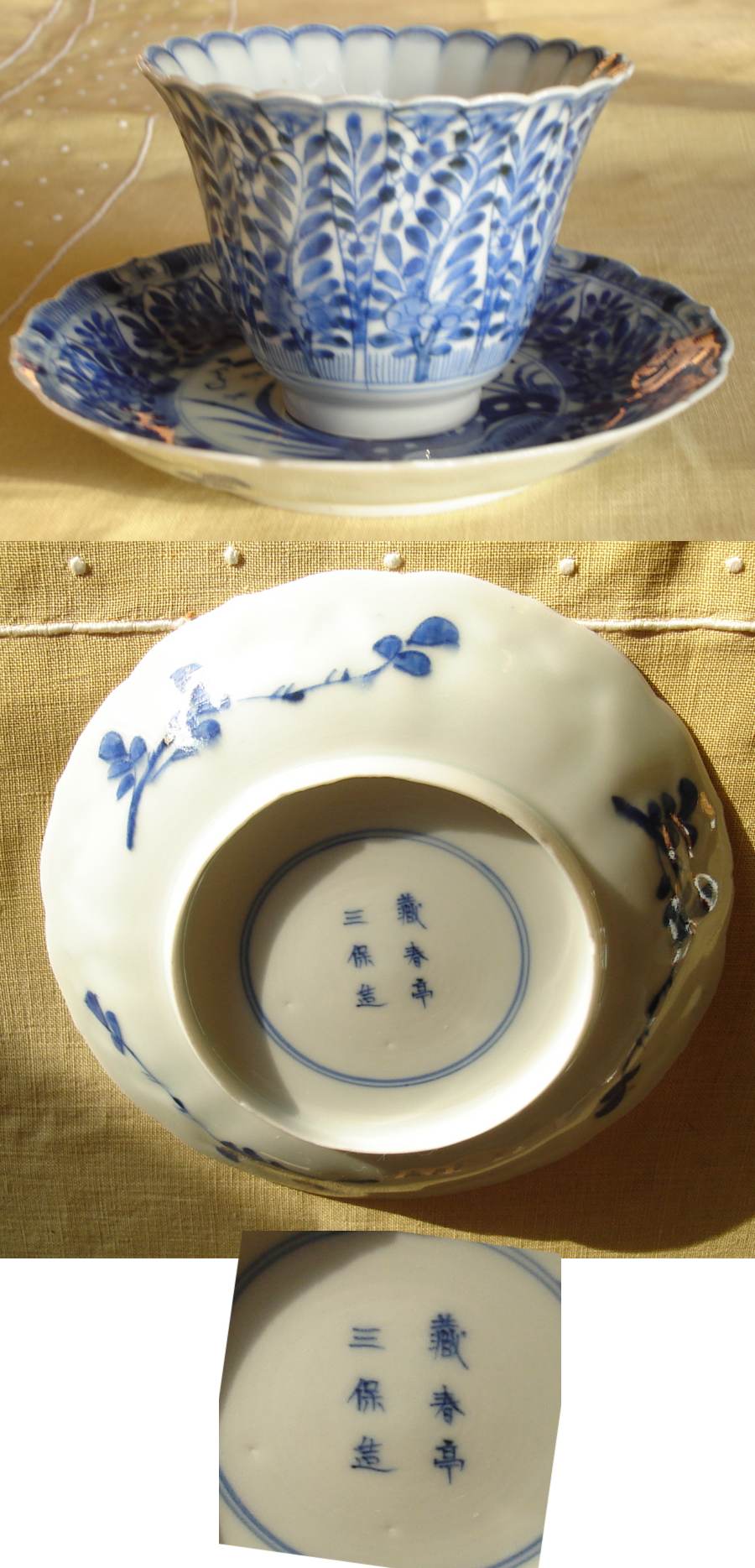
| Arita - Zoshuntei Sanpo Zo |
| Early company name or trademark, in use between 1842 to 1870. Zoshuntei Sanpo means "Zoshun (shop) Sanpo Made (made by Sanpo). The owner was Hisatomi Yojibei Masatsune who as one of the first potters in the area of Arita and Mikawachi was granted an export permit by the Lord of the Arita Han Lord Nabeshima Naomasa (1814-1871) in 1842. This was also the first time it was allowed to put a signature on pieces exported from Arita, other than Fuku (Happiness) or various copies of Chinese reign marks. His business was succeeded by Masatsune's oldest son, Masayasu (1812-1878) and his younger brother, Yohei Masaoki (1832-1871) until Yohei's sudden death in the sea. In 1911, Masayasu's nephew, Hisatomi Kikuro (1862-1937) restored his family business with a modern factory method, but only lasted for 15 years, until 1926.
|
|
795. Mark: "Zoshuntei Sanpo Zu "Zoshun (shop) Sanpo Made (made by Sanpo) - a fictitious trade name of Hisatomi Yojibei Masayasu. Good quality, mid 19th century, Japanese export ware with Imari style decoration. Mid 19th century.
Click here to see large picture
|
|
872. Mark: "Zoshuntei Sanpo Zu "Zoshun (shop) Sanpo Made (made by Sanpo) - a fictitious trade name of Hisatomi Yojibei Masayasu. Good quality, mid 19th century, Japanese export ware with Imari style decoration. Mid 19th century.
|
|
1396. Tea cup and dish with underglaze blue and white decoration in imitation of Chinese Kangxi period (1662-1722) porcelain. Mark: "Zoshuntei Sanpo Zu "Zoshun (shop) Sanpo Made (made by Sanpo) - a fictitious trade name of Hisatomi Yojibei Masayasu. Good quality, mid 19th century, Japanese export ware. Mid 19th century.
Click here to see large picture
|
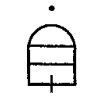
| Arnart Imports Inc. |
| Arnart Imports Inc. is still in operation and is currently located in 230 Fifth Avenue, New York. The company specializes in
Porcelain gifts and decorative accessories. First registered trade mark is the Crown and A's mark registered April 30, 1953. A mark looking like a bee hive, was first used the last of December 1957. Both were canceled in 2001. |
|
952. Arnart Imports Inc., mark registered in 1957. Cancelled June 6th, 2001.
|
|
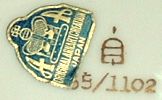
953. Arnart Imports Inc., Crown and A's mark in use since April 30, 1953. Canceled February 17, 2001.
|
|
954. Arnart Imports Inc., Crown and A's mark in use since 1953 combined with the 'bee hive' in use since 1957, both canceled in 2001.
|
|
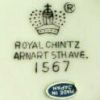
955. Arnart Imports Inc., Royal Carlton, was registered for porcelain tableware, in 1957; Royal Crown was registered for use on animal and bird figures 1965 - 1987. Several similar 'Royal' marks with a crown and a brand mark exists, all from the second half of the 20th century.
|
| Bijutsu Toki - Art Ceramics 美術陶器 |
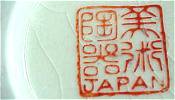 |
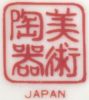
431. Mark: Bijutsu Toki. Meaning 'Art Ceramics'. Second half of 20th cent. ca 1970s. Satsuma looking crackled glaze. |
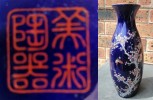 |
1594. Vase. Mark: Bijutsu Toki. Meaning 'Art Ceramics'. Second half of 20th cent. ca 1970s. |
| Cherry Blossom Marks |
|
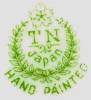
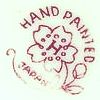
In 1924 a mark know as the "Cherry Blossom", in the shape of five "M" was sub-contracted by the Nippon Toki Kasha Company (Noritake Company) to independent companies making porcelain for export the USA Market. I have here collected a number of these and similar marks with the likelihood of a relation to the Noritake sales organization, the US market and a possibly date to the mid 1920s. |
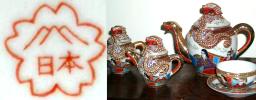 |
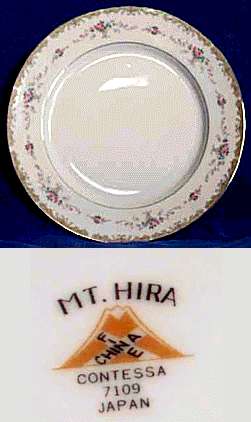
1088. Mark: Mt. Fuji and the Japanese characters "Nichi Hon" (Nippon) = Japan, late first half of the 20th century.
Click here to see large picture
|
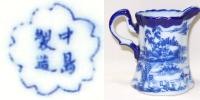 |
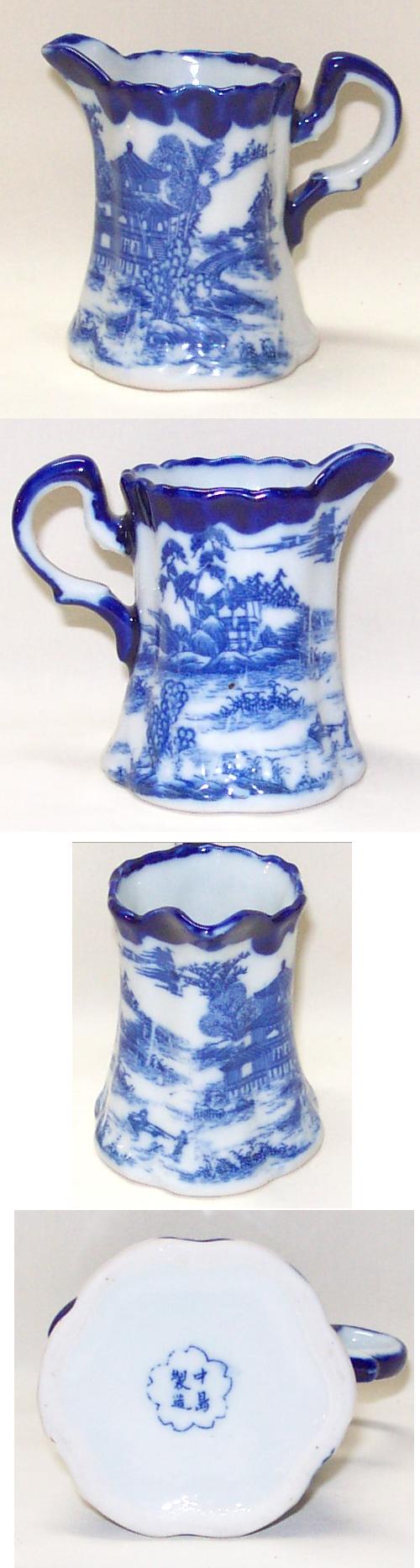
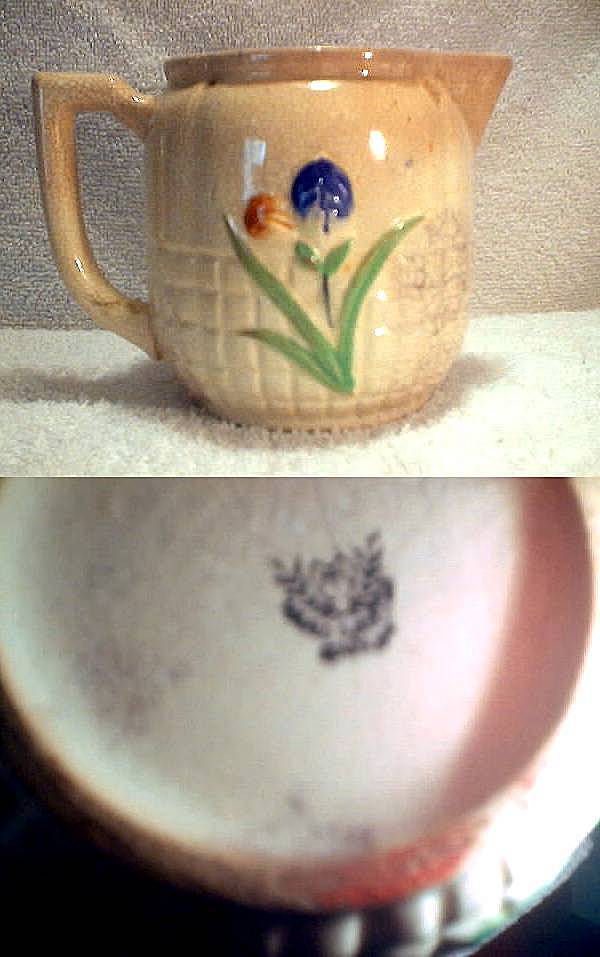
1093. Pitcher. Mark: Cherry Blossom and within Japanese characters beginning with "Naka" and second character is "Cho" or "To". It was produced for export, not in Japanese taste and is of lesser quality. Tentative dated first decades of the 20th century.
Click here to see large picture
|

|
104. Mark: Cherry Blossom in the shape of five "M". Mark sub-contracted to independent companies making porcelain for the USA Market, by the Nippon Toki Kasha Company (Noritake Company). Date: c 1924.
|
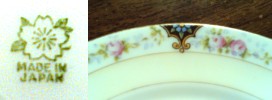 |
1524. Mark: Cherry Blossom in the shape of five "M". Mark sub-contracted to independent companies making porcelain for the USA Market, by the Nippon Toki Kasha Company (Noritake Company). Date: c 1924.
Click here to see large picture
|
|
626. Nippon/Noritake. The "T N" could be "Tame &
Nakamura" of "Moriyama style". "Flower" mark in shape of five "M". Early 20th century |
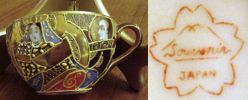 |
722. "Souvenir - Japan", "Flower" mark in shape of five "M". Early 20th century.
Click here to see large picture
|
|
527. Might be of the Hotta Yu Shoten & Co. The use of the word "Shoten" indicates the name for a shop which is selling products from its own kiln. In either case they seems to have went out of business in 1947. This mark likely to be from the 1920-30s.
Click here to see large picture
|
|
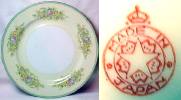
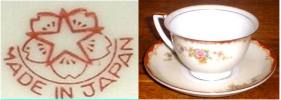
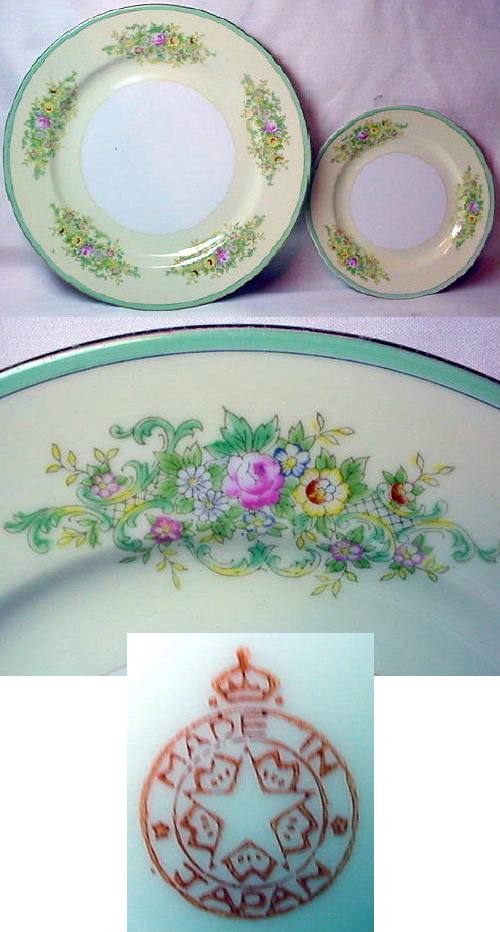
824. Literally hundreds of companies produced dinnerware with European or Western style designs. It is not a Noritake mark, but is similar in design to those made during that period. Many of these companies were in business for very short periods of time. Style suggests a post WWII date, possible 1960s.
Click here to see large picture
|
|
1038. Literally hundreds of companies produced dinnerware with European or Western style designs. It is not a Noritake mark, but is similar in design to those made during that period. Many of these companies were in business for very short periods of time. Style suggests a post WWII date, possible 1960s.
|
| Chikaramachi branch factory of Noritake |
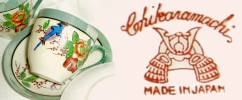
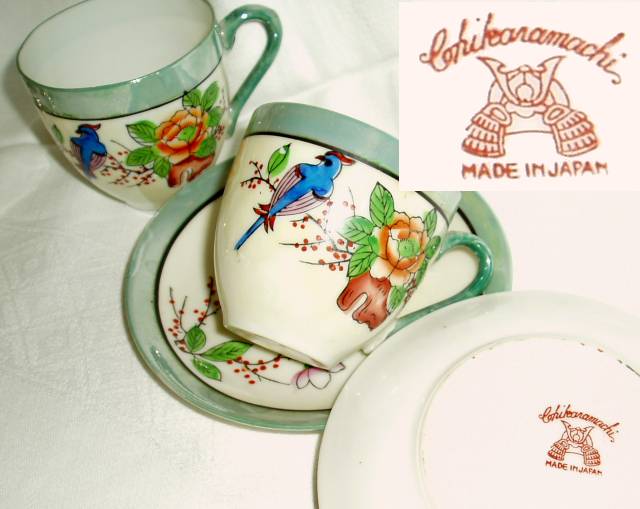
| Chikaramachi, Made In Japan. In use on porcelain made at the Noritake factory, Chikaramachi branch, during 1928-1946. Mark occurs in black and red. Porcelain intended for the United Kingdom market uses "Foreign" instead of Made in Japan. Same factory also used a mark with a crown inside a wreath. After the Noritake Morimura Gumi period that ended 1946, the factory changed name to Hinode Shokai. |
|
928. Mark: chi kara machi. Lusterware (or lustre ware) type porcelain. Date: Mid 20th century
Click here to see large picture
|
| Dai Nippon (Great Japan) Printed marks (1920-40) |
|
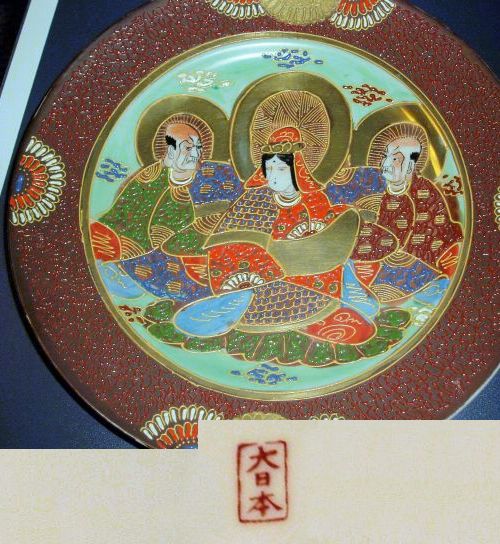
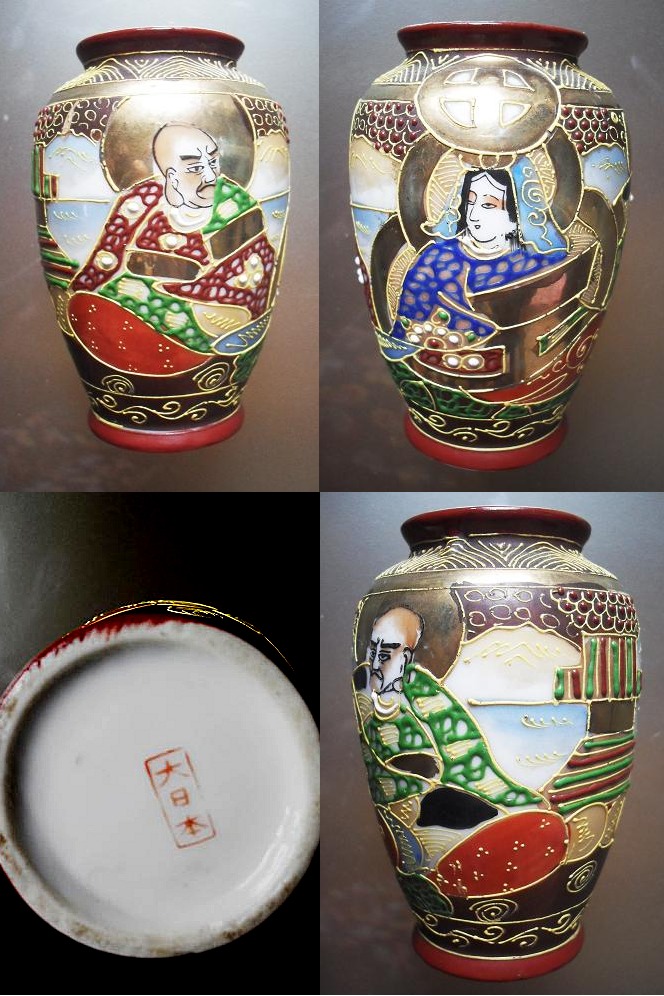
It is generally accepted that marks that includes "Dai Nippon" in Japanese characters on the whole date to the Meiji (1868-1912) period, reflecting the greatly increased nationalism of that period. However, in stamped versions it also occurred on mass produced export wares well into the 1930s. There are a number of examples of export wares where marks including the Japanese characters for Dai Nippon are stamped or printed, that suggests that this marking did continued to be used in-between the wars. I believe that all signs so far points towards that printed marks occurred until trade difficulties during early WWII made export to the west difficult. Without any scientific foundation or literary source to refer to, I would still like to suggest that this kind of printed Dai Nippon marks in general belong to the period in-between the wars with a suggested end in the late 1930s/early 1940s
|
|
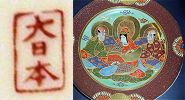
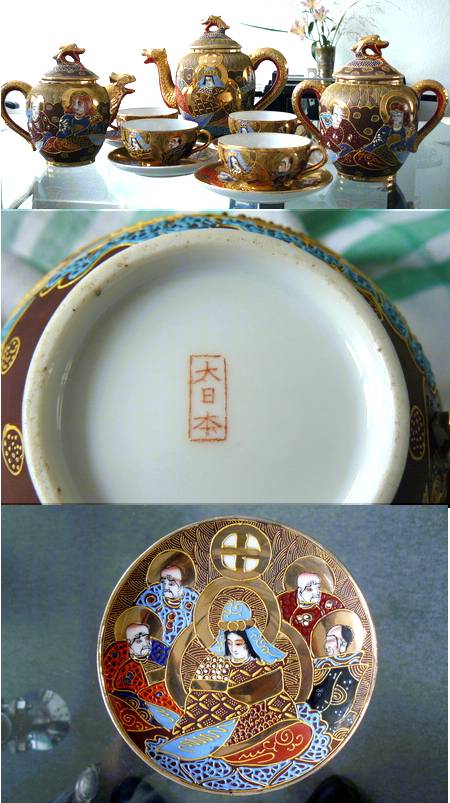
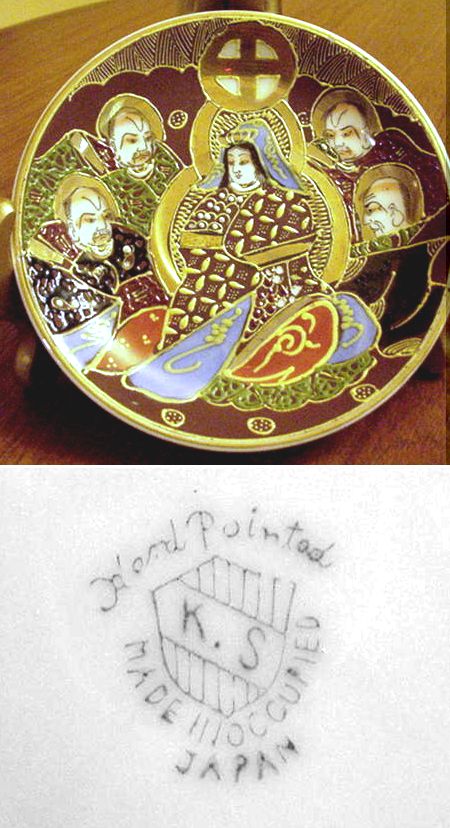
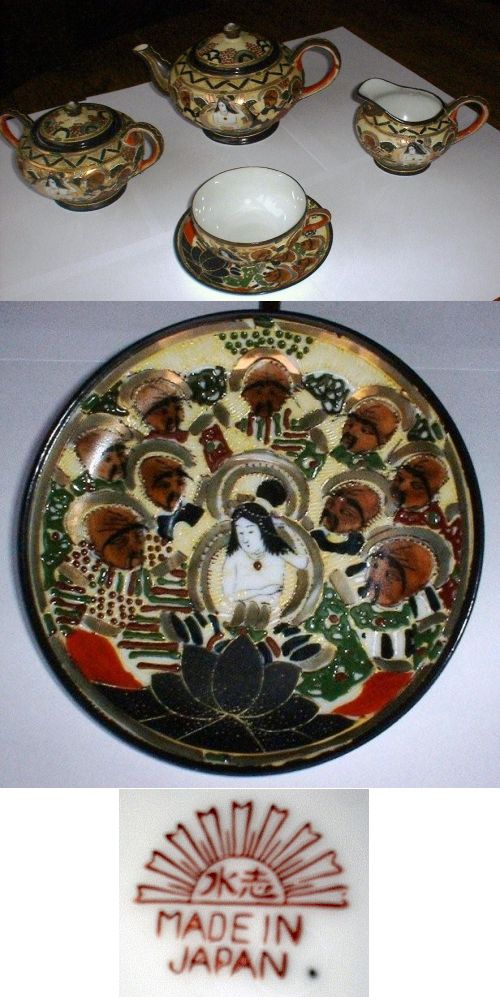
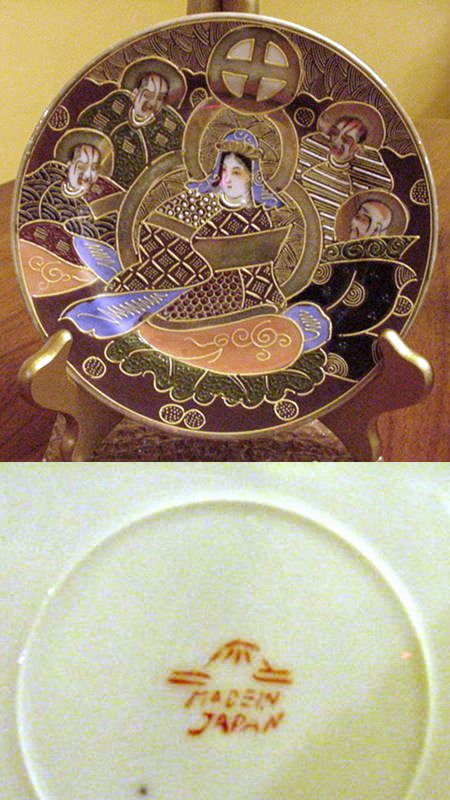
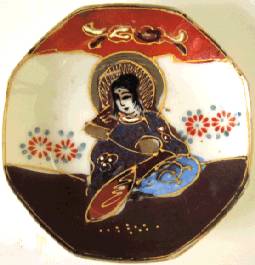
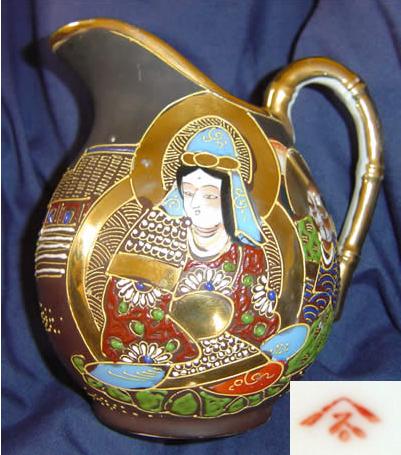
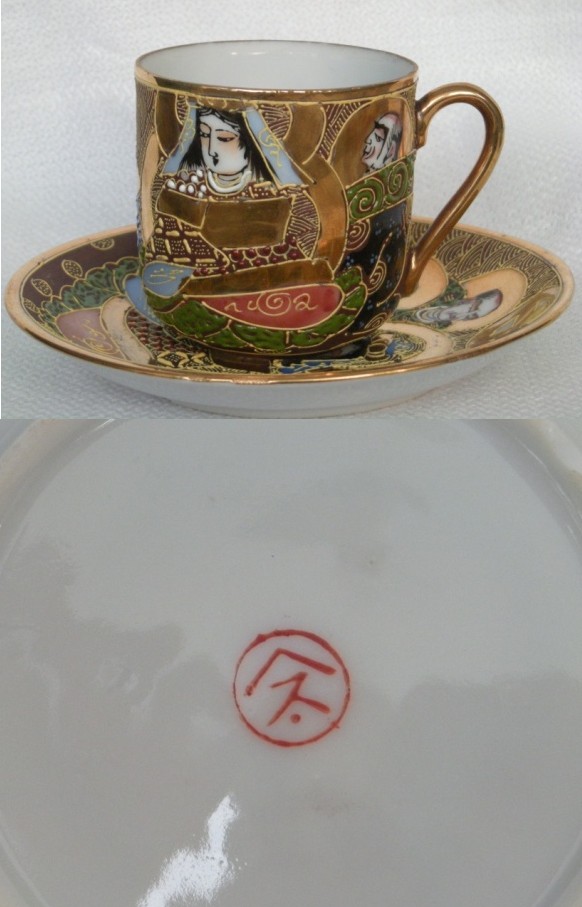
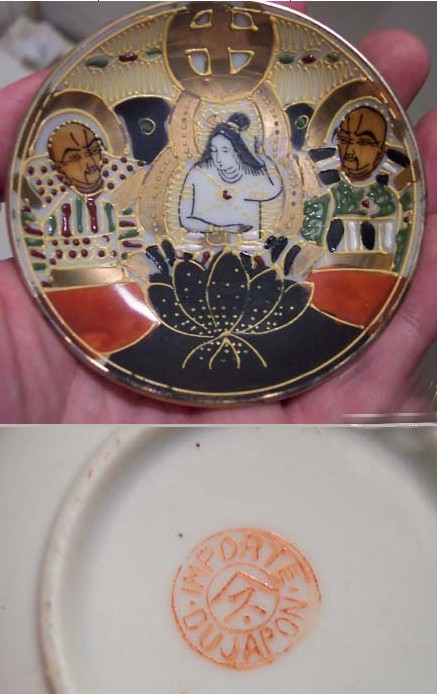
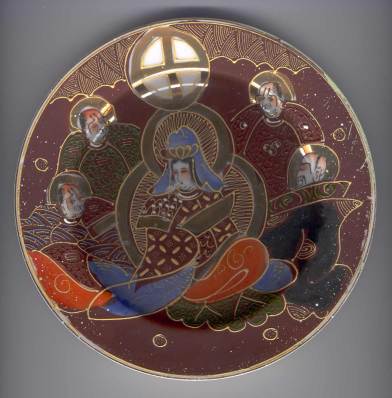
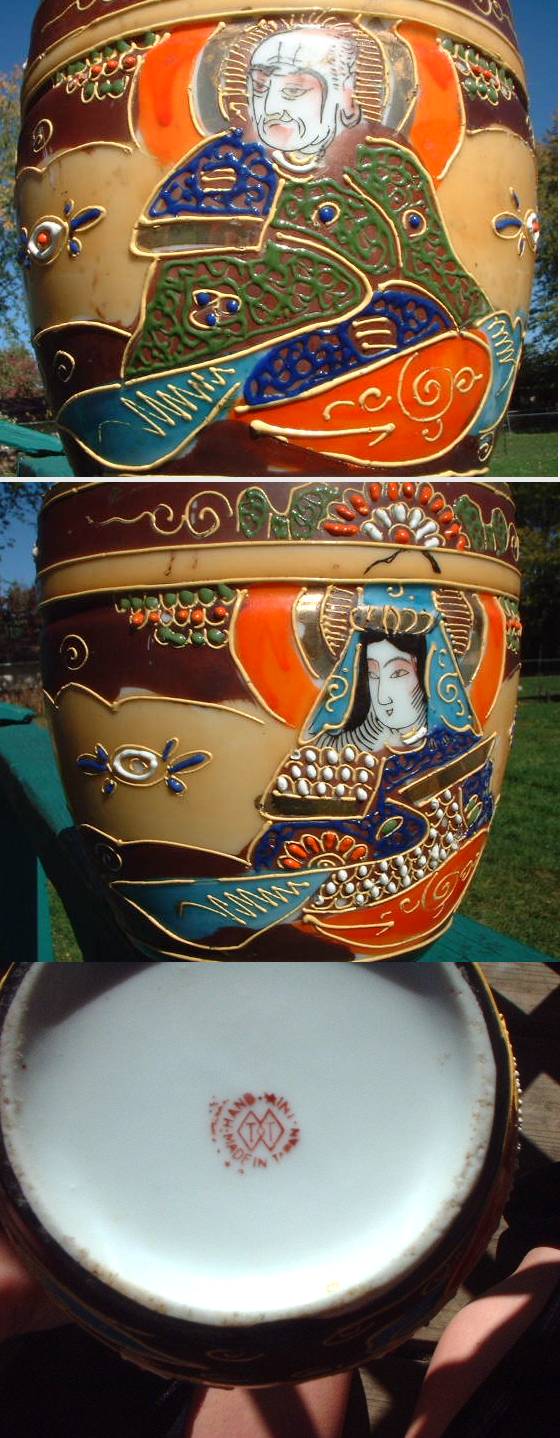
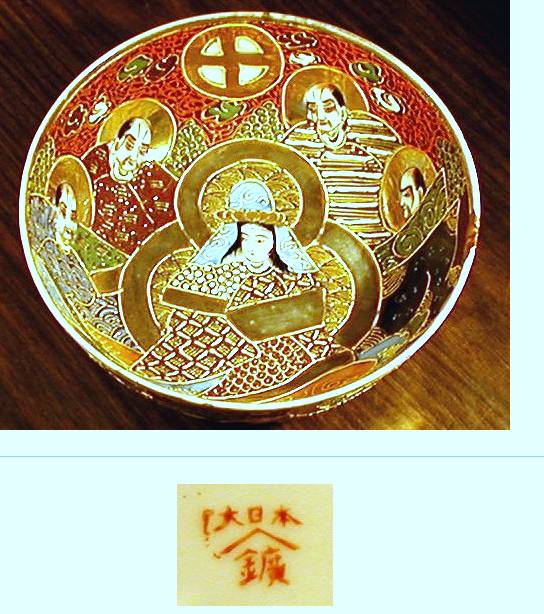
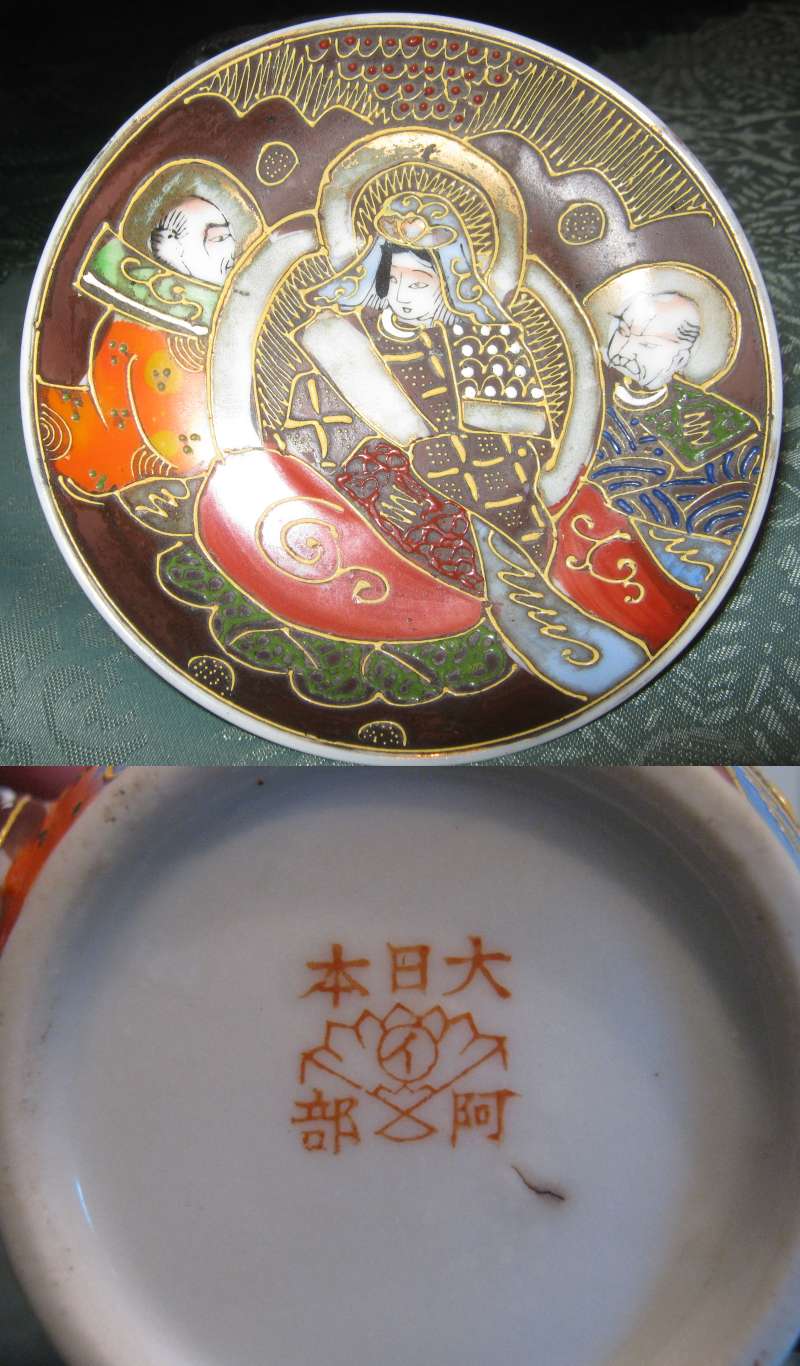
1218. Mark: Dai Nippon. Plate in Satsuma style but on porcelain, from around 1935. The decoration is of Kannon with a rakan on each side of her. This type of wares made heavy use of moriage or raised enamels.
The mark on the back of the plate is a generic one meaning Dai Nippon or "Great Japan". These wares were mass produced for export during the Taisho (1913-1926) & early Showa (1926-1988) period.
Click here to see large picture
|
|
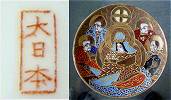
1230. Mark: Dai Nippon. Plate in Satsuma style but on porcelain, best guess, the 1920s. The decoration is of Kannon with two rakans on each side of her. Displayed above the figures is the cross in circle mon of the Shimazu family crest. This type of wares made heavy use of moriage or raised enamels. The mark on the back of the plate is a generic one meaning Dai Nippon or "Great Japan". These wares were mass produced for export during the Taisho (1913-1926) & early Showa (1926-1988) period.
Click here to see large picture
|
|
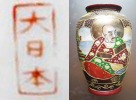
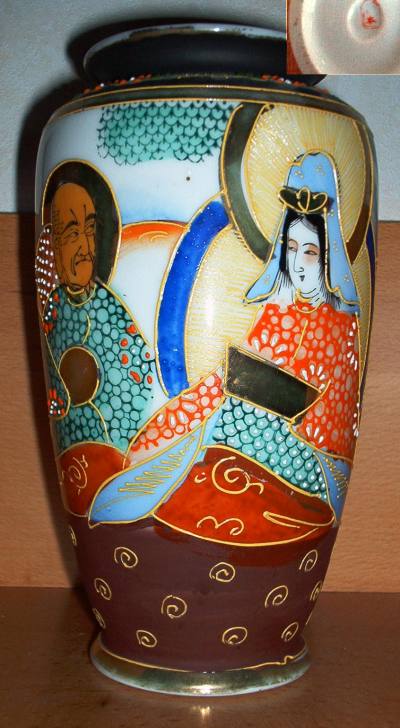
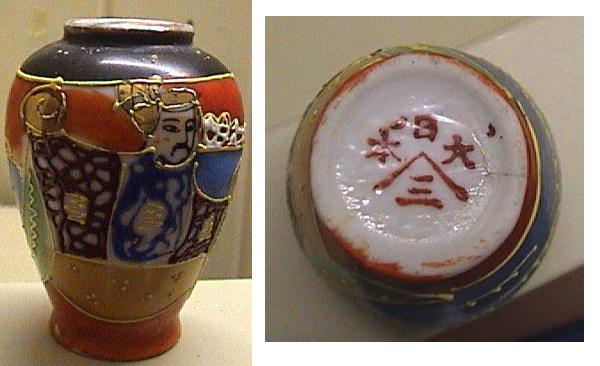
1359. Vase. Mark: Dai Nippon. Decoration in Satsuma style but on porcelain, best guess, early 1920s from its collection context. The decoration is of Kannon with two rakans, one on each side of her. Displayed above the figures is the cross in circle mon of the Shimazu family crest. This type of wares made heavy use of moriage or raised enamels. The mark on the back of the plate is a generic one meaning Dai Nippon or "Great Japan". These wares were mass produced for export during the Taisho (1913-1926) & early Showa (1926-1988) period.
Click here to see large picture
|
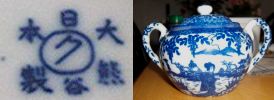 |
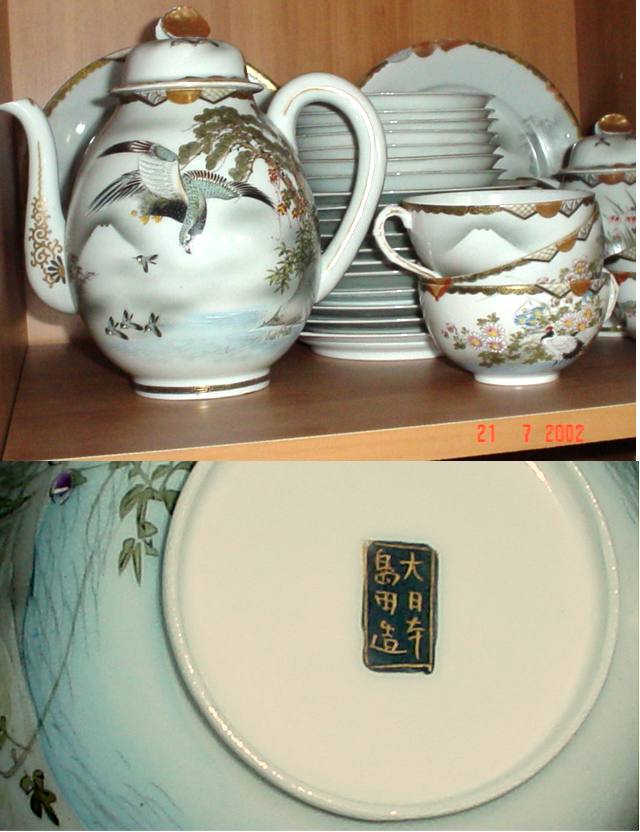
1245. Mark: "Dai Nichi Hon/Dai Nippon" (Great Japan), mid 20th century. This marks however printed gives an example of marks that includes "Dai Nippon" in Japanese characters occurs well after the Meiji (1868-1912) period.
Click here to see large picture
|
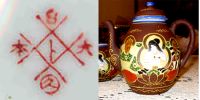 |
1382. Mark: "Dai Nichi Hon/Dai Nippon" (Great Japan), mid 20th century. This marks however printed gives an example of marks that includes "Dai Nippon" in Japanese characters occurs well after the Meiji (1868-1912) period. According to family traditions this set was acquired as a gift in the early 1940s.
Click here to see large picture
|
|
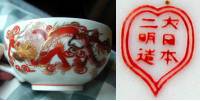
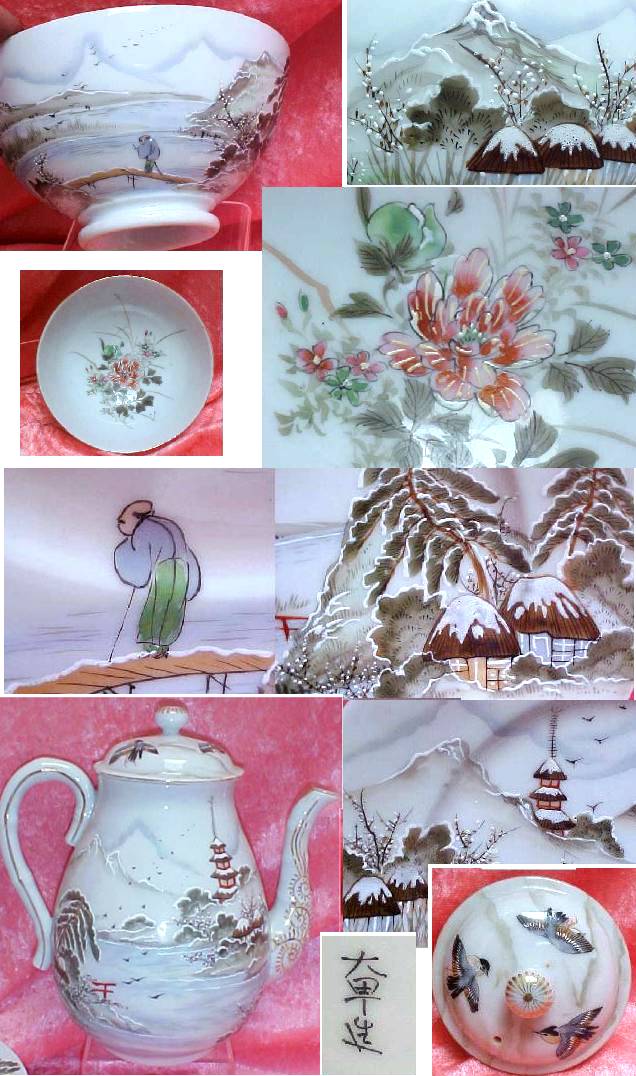
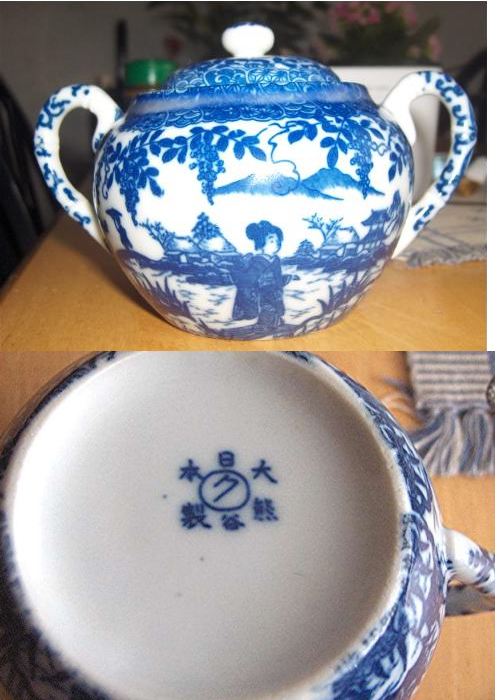
599. Mark: Dai Nippon Ji mei or ni mei, Tsukuru - "Great Japan ... Made". It is generally accepted that marks that includes "Dai Nippon" in Japanese characters on the whole date to the Meiji (1868-1912) period, reflecting the greatly increased nationalism of that period. Mark from tea set which was bought probably in Czechoslovakia between 1915 and 1935, made from a fine, almost translucent porcelain. Date: Early 20th century.
Click here to see large picture
|
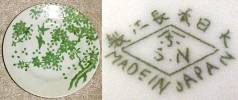 |
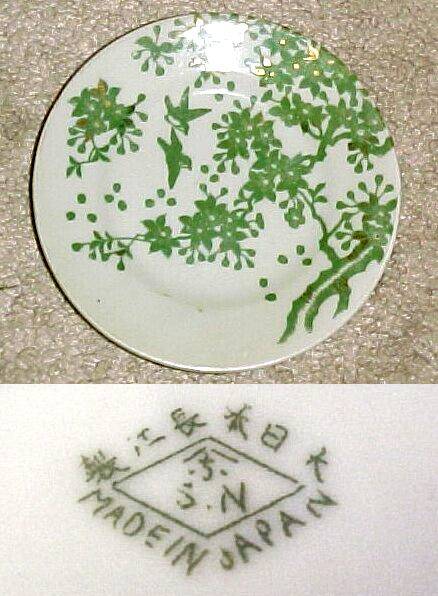
694. Mark: Dai Nippon 'Choko sei' or 'Nagae sei' "S.N.", early 20th century.
Click here to see large picture
|
| Eisho |
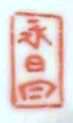 |
41. Mark: Eisho. |
| FINE CHINA OF JAPAN |
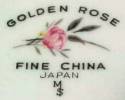 |
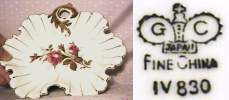
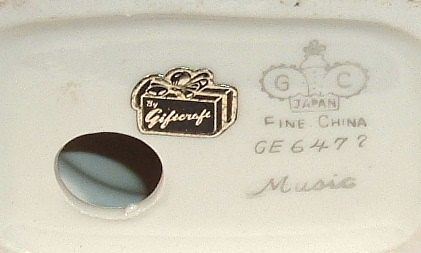
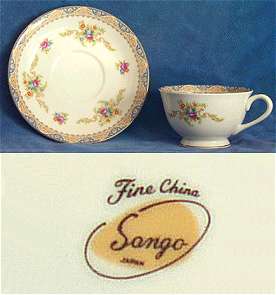
804. Japanese porcelain, "Fine China Japan, "Golden Rose" (pattern), "MSI". Retro style decoration, later part of 20th century. 'Fine China' seems to be used consistently as a brand name under which several patterns are/were sold such as Golden Rose, Platinum Rose, Golden Wheat, Platinum Wheat, Cherry Blossom, English Garden, and St. Regis. The M$ is referring to the designer Max Schonfeld.
|
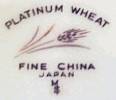 |
805. Japanese porcelain, "Fine China Japan, "Platinum Wheat" (pattern), "MSI". Retro style decoration, later part of 20th century. 'Fine China' seems to be used consistently as a brand name under which several patterns are/were sold such as Golden Rose, Platinum Rose, Golden Wheat and Platinum Wheat. The M$ is referring to the designer Max Schonfeld.
|
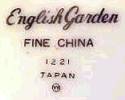 |
807. Japanese porcelain, "Fine China, Japan, "1221", "English Garden" (pattern), Retro style decoration, later part of 20th century, tentatively 1970s. |
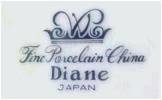 |
806. Japanese porcelain, "Fine Porcelain China, Japan, "W", "Diane" (pattern), Retro style decoration, later part of 20th century, tentatively 1970s. |
| Ge To Art (Artistic) Pottery |
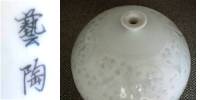 |
1333. Vase. Second half 20th century. Mark is Ge To Art (Artistic) Pottery. Probable manufacturers mark. Date: Second half 20th century/Contemporary.
Click here to see large picture
|
| Giokusei, Seto/Nagoya |
|
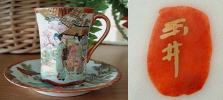
886. Japanese porcelain. Mark: Giokusei. Mid Japan Seto/Nagoya/Kutani area, possible Nagoya ware. Regarding the
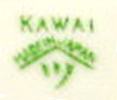
the first character, this can be Gioku or tama, and the second as Sei-, Sho-I or -noi.
A normal Satsuma reading would be Giokusei, as a town, Tama-noi, as an actors name Tama-i. Date: early 20th century.
Click here to see large picture
|
| GOLD IMARI |
|
The Gold Imari logo is a trademark of the Yazaemon family kiln founded in 1804. After many ups and downs including fires, bankruptcy, and name changes, it became the Arita Busson Co. in 1953. The trademark was created in this era. The Word Mark 'GOLD IMARI HAND PAINTED' was first used in the US December 1, 1959. The applicant was Arita Bussan Co., Ltd. Corp. Japan No. 8, 3-Chrome Iida-Machi, Higashi-Ku, Nahoya, Japan. In 2007 they became the Arita Seiyou Co., Ltd, and in 2016 they became the Arita Porcelain Lab, Inc. The US patent Office mark registration was abandoned October 29, 1984, however they are still using the trademark.
The company apparently stopped exporting in 2007 and are now only selling domestically in Japan.
|
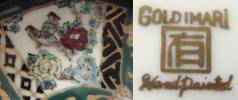 |
691. Mark: Gold Imari. Mid 20th century.
|
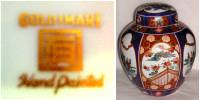 |
1139. Mark: GOLD IMARI HAND PAINTED
|
| H.SAJI JAPAN, Seto, Dai Nippon |
|
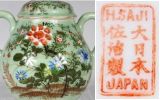
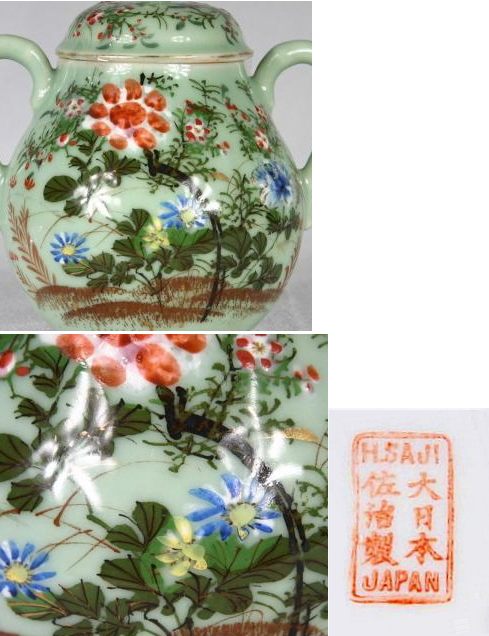
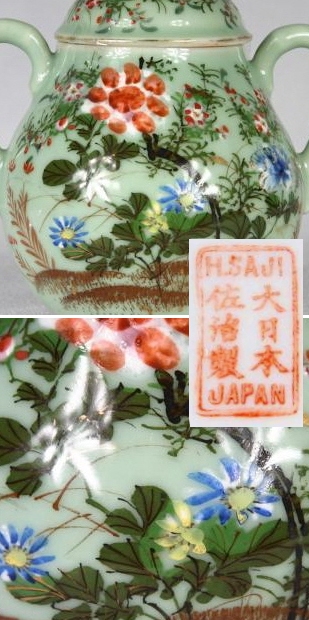
938. Sugar bowl with celadon glaze and enamels. Mark: H.SAJI JAPAN Dai Nippon Sa Ji Sei = Great Japan, Saji Made. "Saji" seems to be a name, one possibility is that it is just referring to the Japanese name for Seji" = Celadon. Best guess from looking, is a Seto/Nagoya or perhaps Yokohama product. Regarding date, it is generally accepted that marks that includes "Dai Nippon" in Japanese characters on the whole date to the Meiji (1868-1912) period, reflecting the greatly increased nationalism of that period. In this case a likely period is 1910-30.
Click here to see large picture
|
| I Man Ri |
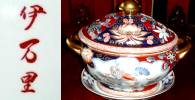 |
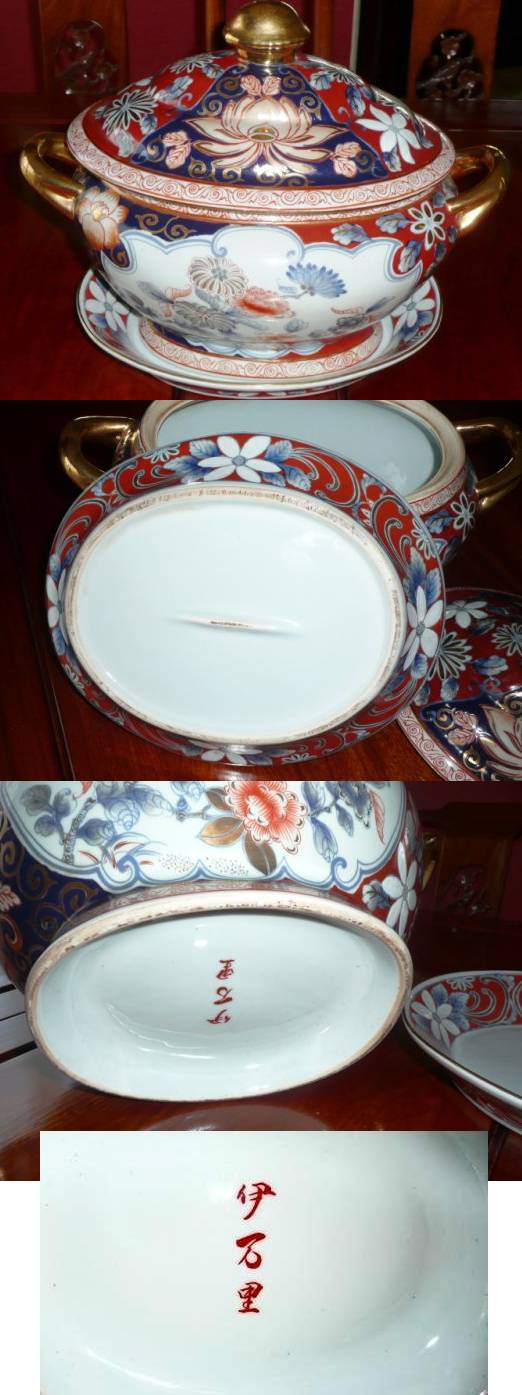
1334. Tureen. Second half 20th century. Mark is I Man Ri, where Man = 10,000 and Ri is a measurement of distance equal to almost 3 kilometers. I pronounced "Ee" means you or another, kind of vague. It is also a family name. There are noway to know what this mark actually is referring to, being it an achivment, a person or a company. Date: contemporary / second half 20th century.
Click here to see large picture
|
| Imura, Yokohama |
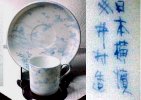 |
421. Mark: Nippon Yokohama Imura tsukuru.
Mid to late 20th century |
| Izumi, Nippon |
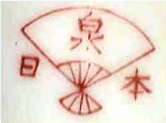 |
1. Mark: The kanji character inside the fan is Izumi. The 2 characters outside the fan are read from left to right as Hihon (Nippon) = Japan. Date: likely around 1900.
|
| JAPAN - MADE IN JAPAN |
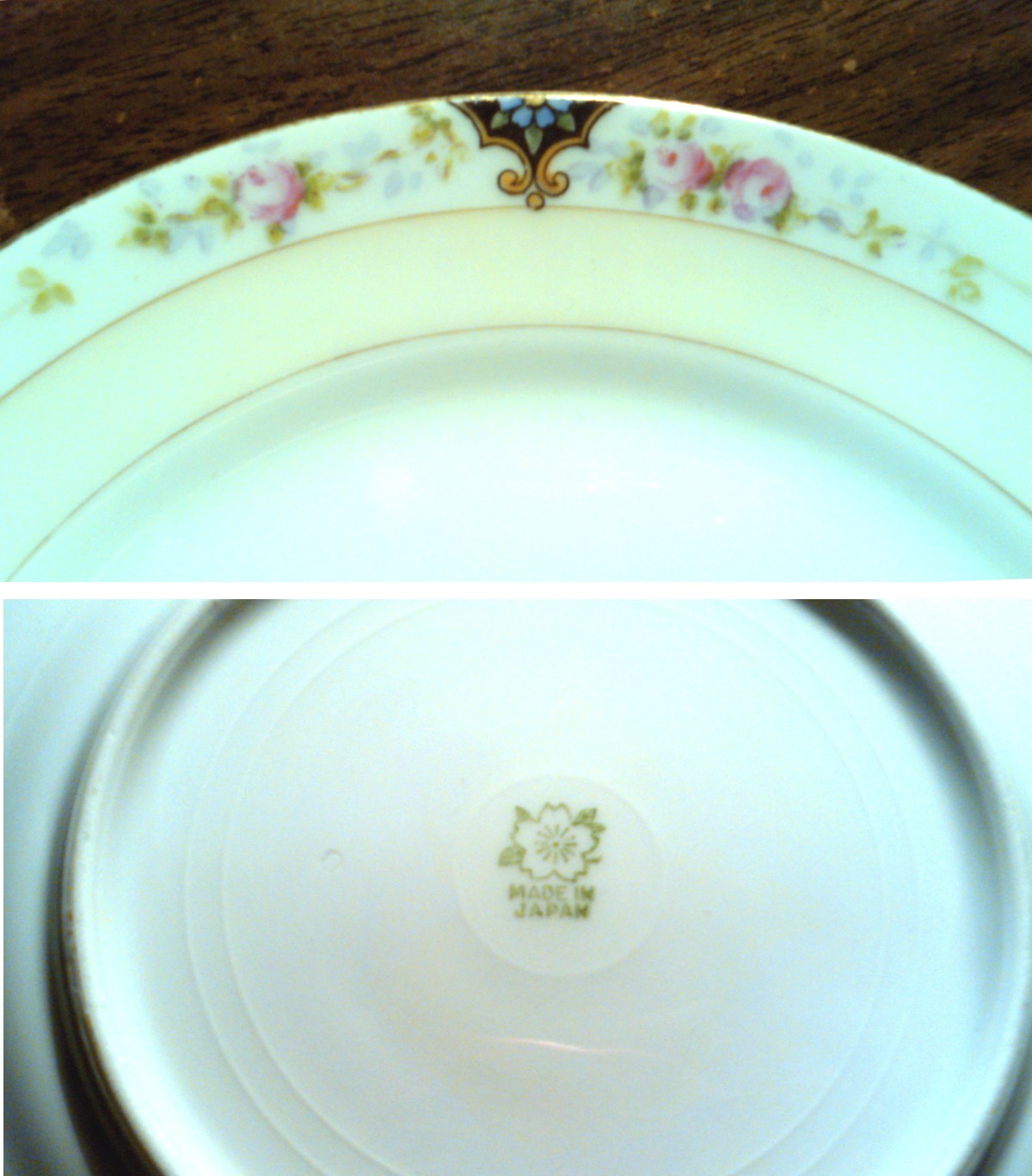
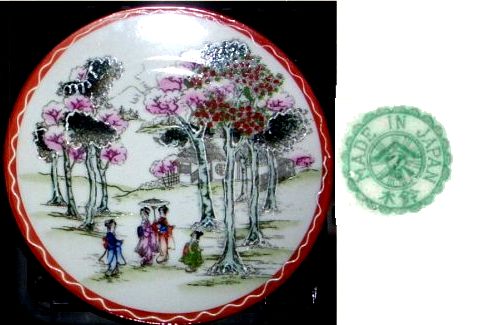
| Marks on export porcelain: In 1891 the McKinley Tariff Act was instated, requiring items imported into the United States to be marked in English with the country of origin. The name "Nippon" was chosen for items coming from Japan. (Nippon is the Japanese name for Japan.) In 1921, the official country of origin name requirement was changed to "Japan", thus creating a defined time period 1891-1921 in which wares were marked Nippon. Previous to 1891, items were either not marked at all, or marked with Japanese characters. During the period 1921-1941 porcelain should be marked "Japan" and roughly after 1941, marked "Made in Japan", though numerous exceptions appears to occurs.
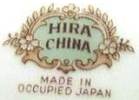
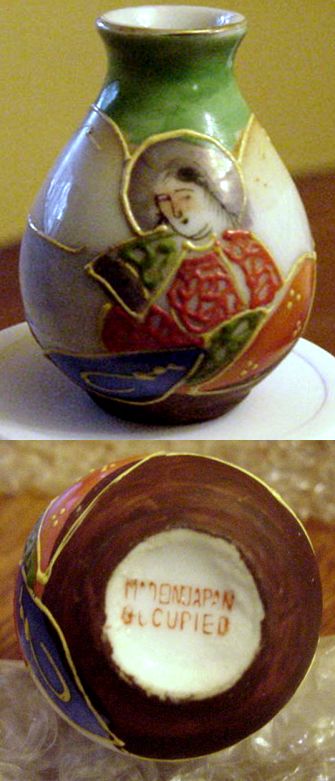
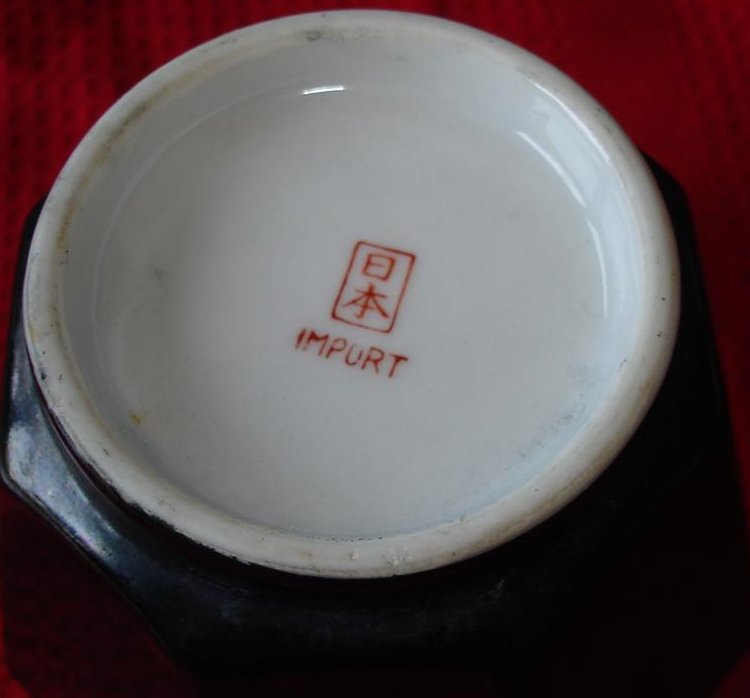
Pieces marked with JAPAN or MADE IN JAPAN in plain text without any company marks, in general date to the period immediately after the second WW. Some come with the addition of OCCUPIED JAPAN.
|
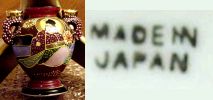 |
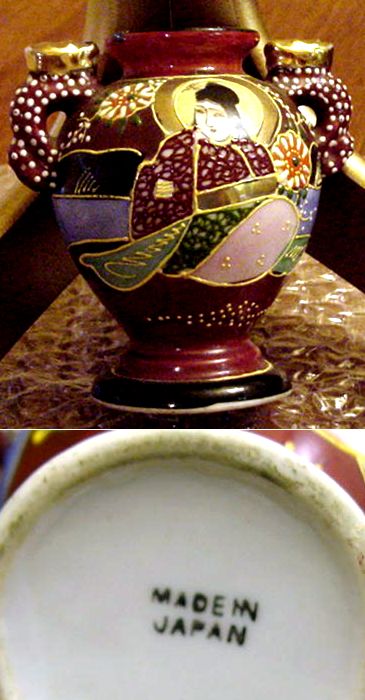
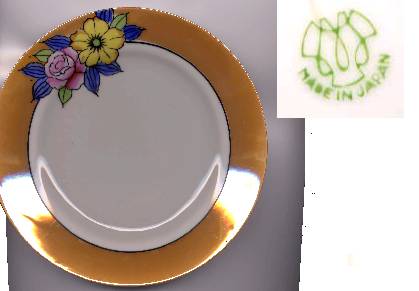
721. "Made in Japan". Date 1940s-50s
Click here to see large picture
|
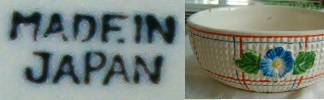 |
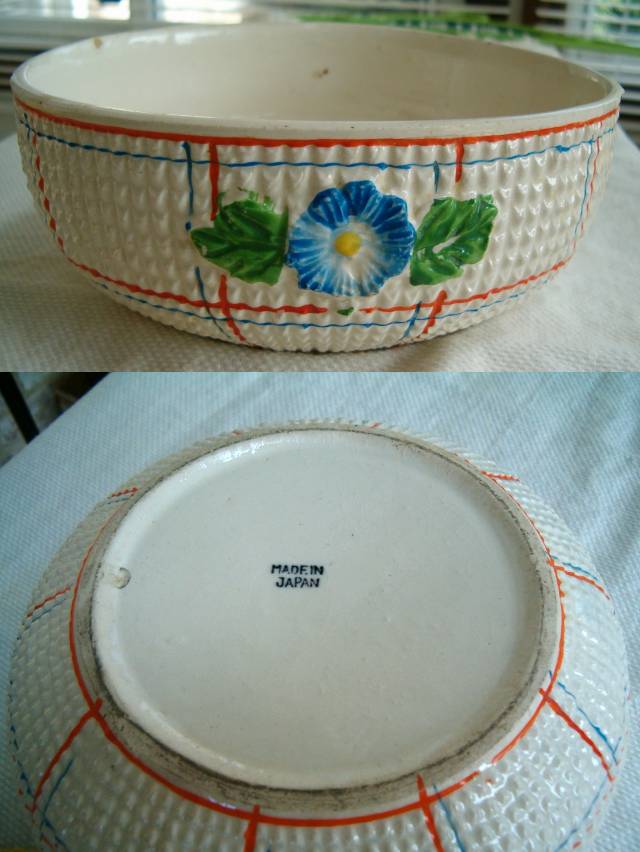
1344. Bowl in crackled earthenware. Mark: "Made in Japan". Date 1940s-50s
Click here to see large picture
|
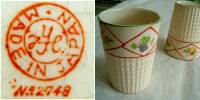 |
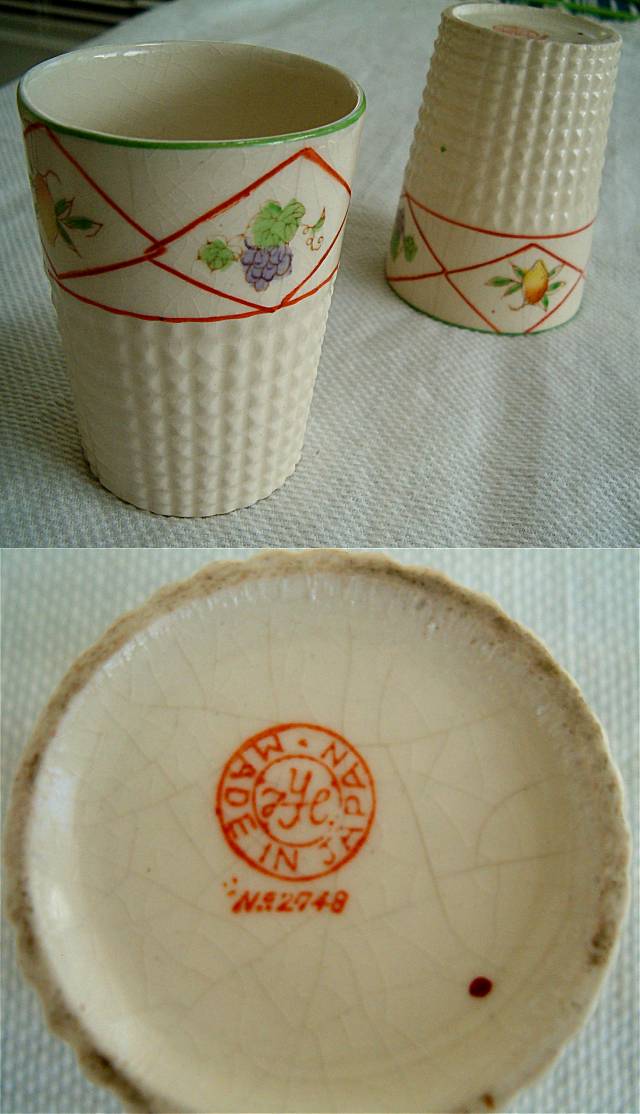
1343. Tumblers in crackled earthenware. Mark: 'jye' or 'HY' within 'Made in Japan'. Date 1940s-50s
Click here to see large picture
|
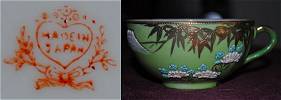 |
1389. Teas set, brought back to the US in 1946. Mark: 'Made in Japan'. Date 1940s-50s
Click here to see large picture
|
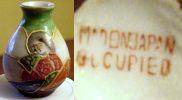 |
725. "Made in Japan / Occupied". Date 1945-52.
Click here to see large picture
|
|
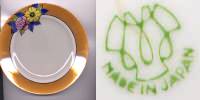
975. Mark: Symbol plus "Made in Japan". Date 1940s-50s
Click here to see large picture
|
|
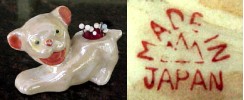
986. Mark: "Made in Japan", Japanese lustreware figure, probably c 1950.
|
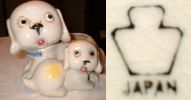 |
800. Unidentified mark on pottery planter, 1950s ?
Click here to see large picture
|
|
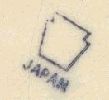
528.
|
|
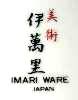
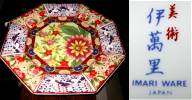
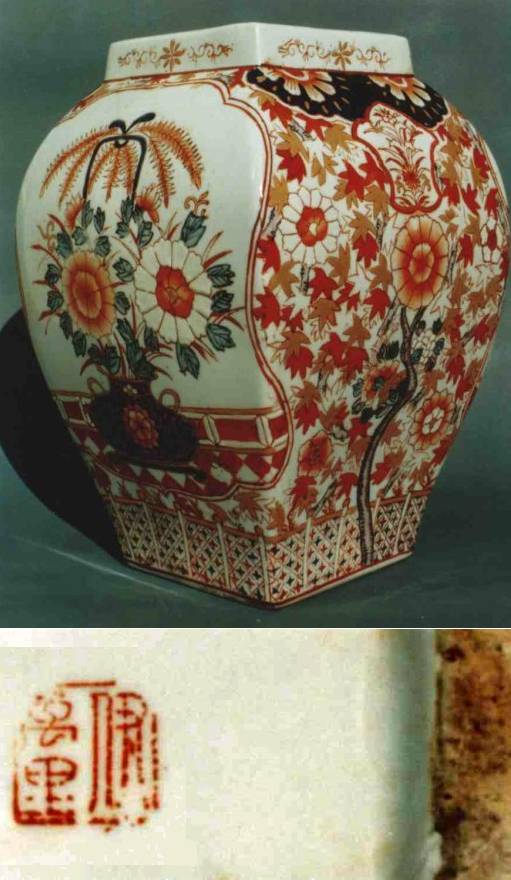
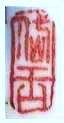
59: The two red characters are: Bi jutsu = "beautiful artwork" which are probably a brand name or product line. Decoration in traditional "Imari" style. The three black vertical characters read IMARI. Modern, late 20th century. |
|
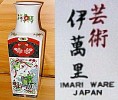
608: The two red characters are: Bi jutsu = "beautiful artwork" which are probably a brand name or product line. Decoration in traditional "Imari" style. The three black vertical characters read IMARI. Modern, late 20th century. |
|
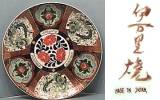
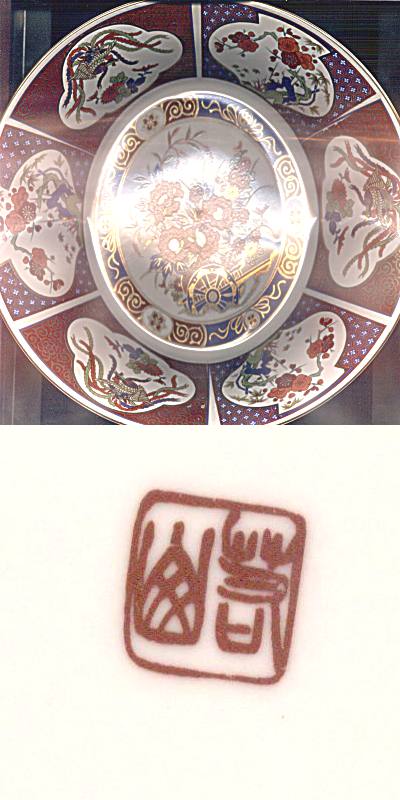
679. Decoration in traditional Japanese "Imari" style. Modern, late 20th century.
|
|
482. Decoration in traditional Japanese "Imari" style. Modern, late 20th century.
Click here to see large picture
|
| Jitsu-to (true porcelain) |
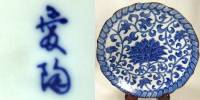
| Japanese contemporary, factory made porcelain ware. Mark unknown but tentatively translated to Jitsu to (true porcelain). |
|
1512. Mark: Jitsu-to, True porcelain. Tentative translation. Japanese porcelain, unknown factory.
Click here to see large picture
|
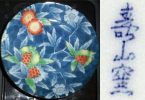
| Juzan gama |
| "Juzan was the family name and had their own kiln, made pottery for different companies. The Juzan kiln is famous for Arita ware of which some are marked Kutani Juzan". There also appears to be three "Juzan-gama". One is Kutani ware, the other one is Koishibawa ware, one more is Takatori ware. |
|
937. Mark: Juzan gama
Click here to see large picture
|
| KB |
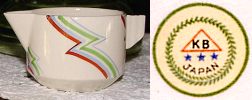 |
941. Mark: "KB Japan", Date: probably c. 1950.
|
| Kawata sei, Dai Nippon, Yokohama |
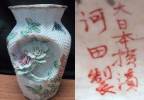 |
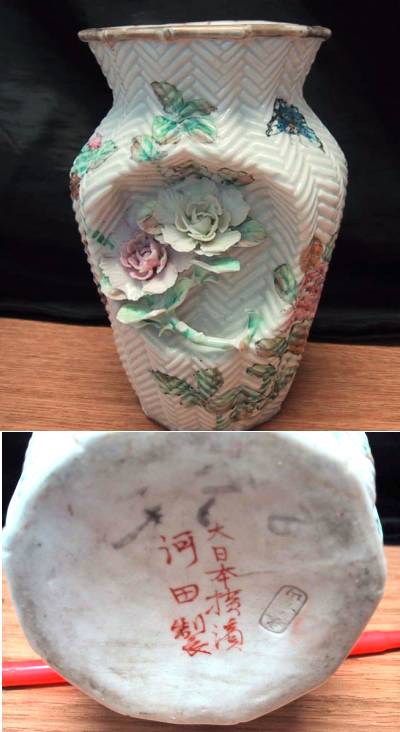
699. Mark: Dai Nippon Yokohama Kawata sei, Early 20th century. It is generally accepted that marks that includes "Dai Nippon" in Japanese characters on the whole date to the Meiji (1868-1912) period, reflecting the greatly increased nationalism of that period.
Click here to see large picture
|
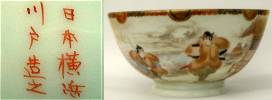
| Kawato - Yokohama, Kutani influenced |
|---|
|
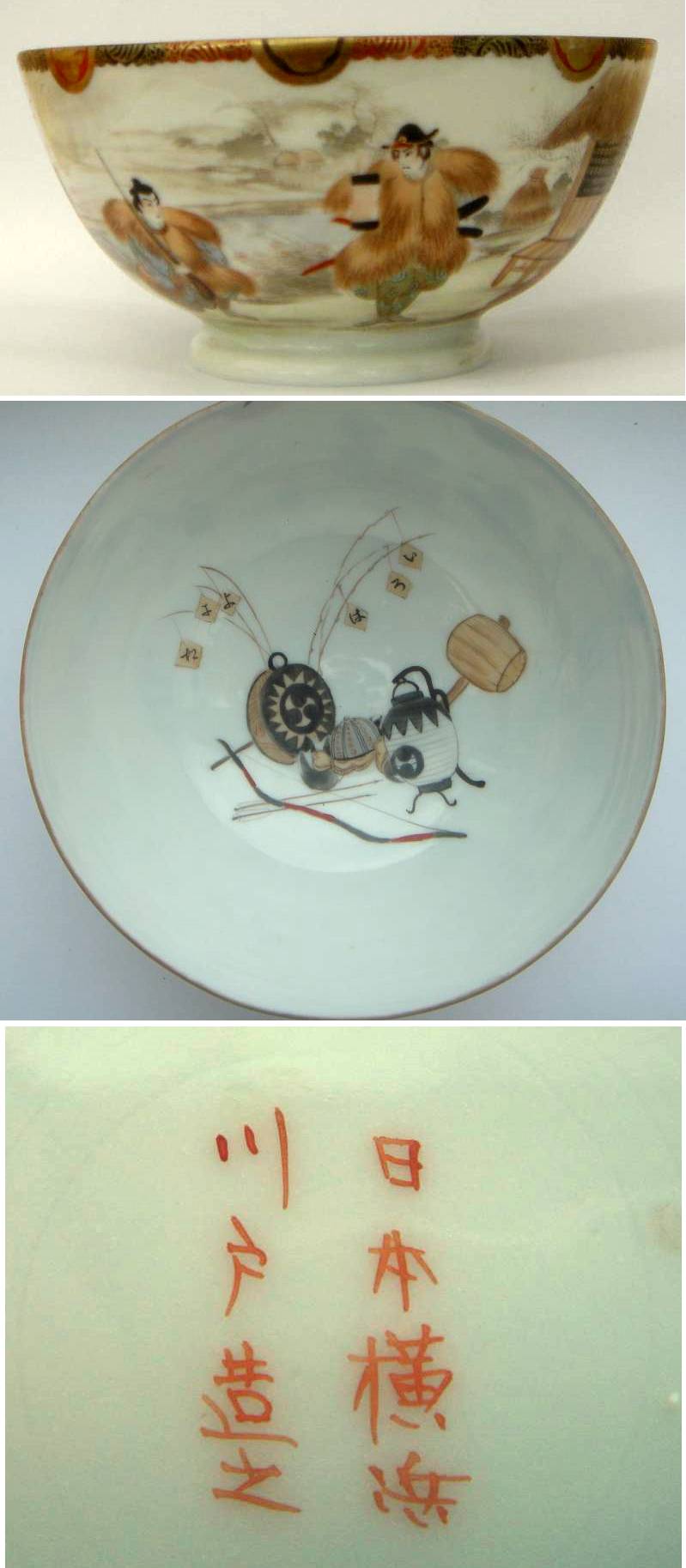
1282. Bowl. Mark: Nippon Yokohama, Kawato Zo, (decorated by Kawato), Kutani influence. Size: Diameter 6" / 15 cm across, height 3" / 7.5 cm. Date Taisho to early Showa.
Click here to see large picture
|
| Kissho - "Lucky omen" |
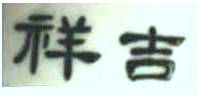 |
27. The right hand character is Kichi, the left hand character is Sho. Read from right to left they read Kissho = Lucky omen. |
| Kitagawa Togei company (ARITA) |
|
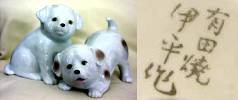
Small family kiln in Arita. Established in 1951 by Kitagawa Ihei with his 5 sons, after having worked as a free lance since 1913. The kiln is still in business today.
|
|
558. Large dog figurine. |
| Kozan Gama (Kozan Kiln) |
|
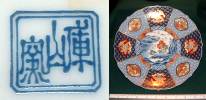
1083. Mark: Kozan Gama, meaning the Kozan kiln. Last quarter of 20th century. Kiln still in operation. Mino pottery, made in Mino area in Gifu prefecture, Japan. The third (left) says gama which means 'kiln'. Marks that includes this character are usually contemporary.
Click here to see large picture
|
| Lefton |
|
The Lefton Company was a Chicago-based company that was founded in 1941 by George Zoltan Lefton, who had left Hungary in 1938. It was not a porcelain manufacturer but an importer of decorative objects from other countries of which Japan appears to have been the most important in the early years. The company specialized in importing and distributing a wide variety of giftware, collectibles, and decorative items, including porcelain and ceramic figurines, vases, tea sets, and other tableware. Lefton was one of the first American businessmen to deal with the Japanese after World War II. The first pieces of Lefton China with the "Made in Occupied Japan" mark reached the United States in 1946.
Lefton China produced in Occupied Japan included a wide range of pieces, dating from 1946 to 1952. Designs ranged from delicate, formal pieces with gold edging and soft floral patterns to the whimsical and playful designs of the 1950s. Many of the pieces of Lefton China from Occupied Japan were produced by the Miyawo Company.
The Lefton Company became well-known for its numerous products including, but not limited to, cookie jars, holiday items, figurines, teapots, jam jars, planters, pitchers, shakers, Red Hat pieces, wall pockets and head vases.
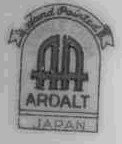
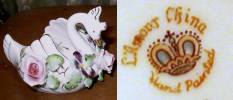
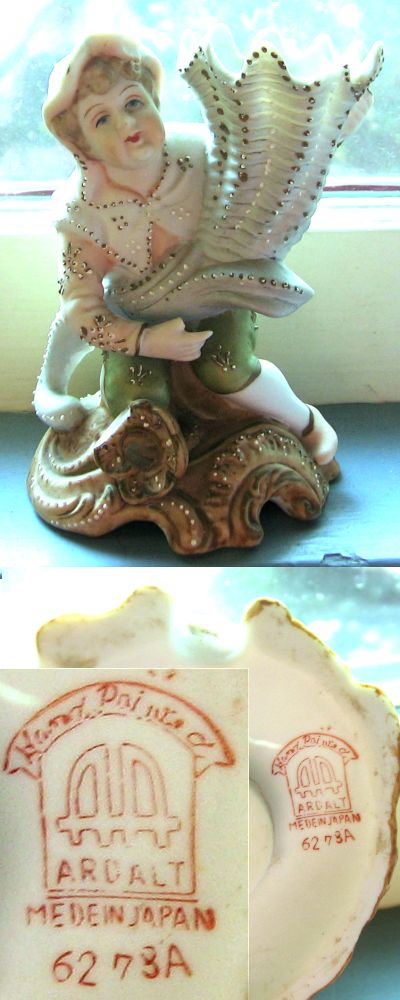
Lefton imported and distributed porcelain items from a wide variety of Japanese manufacturers, including L'amour China made by Takito Company, Ardalt, Kutani, and Ucagco, among others. Identifying marks vary, but they may include "Lefton's," "Lefton China," "Geo. Z. Lefton," "G.Z.L.," or just a letter "L." Many pieces were marked by both a maker's mark and a paper label.
During the 1950s and 1960s, the Lefton Company was one of the largest importers of porcelain and ceramic products in the United States. At one time Lefton products were sold in over 10,000 shops in the United States. Lefton China continued to be produced in Japan until the 1970s. Production in the 1980s and beyond moved to Taiwan and Malaysia. Most importantly, the quality remained high. Unfortunately, George Z. Lefton died in 1996 and the Lefton Company was sold in 2001 when it was sold to a Canadian company. |
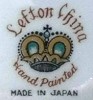 |
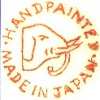
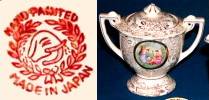
Lefton mark; with crown, Hand Painted and Made in Japan captions. Since Lefton was an importer, their pieces were made by many different factories. It appears as if most marks featuring a crown are from the 1948 - 1955 period but I have no certain information on this. It has appeared to me as if the crown is there to disassociate from the Imperial Japan period.
|
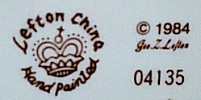 |
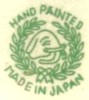
Later 'Lefton' mark, copyright 1985, with crown, I can't find any real end date for the use of the Lefton crown mark, but it appears as it becomes monochrome and less elaborate over time.
|
| Occupied Japan (1945-1952) |
|
During the "Occupied Japan" period (1945-1952), not all exported Japanese porcelain items were required to carry the "Made in Occupied Japan" mark. In fact, it was only mandatory for items that were made for export to the United States, and even then, not every piece was required to bear the mark.
According to the US Customs regulations of the time, only the primary or largest piece in a set or pair of items was required to bear the "Made in Occupied Japan" mark. For example, in a set of salt and pepper shakers, only the larger shaker might have the mark. However, it is also true that many manufacturers chose to mark every piece they exported, in order to avoid any confusion or potential problems with customs officials.
It's worth noting that some collectors today may actually prefer to collect items without the "Made in Occupied Japan" mark, as they can be rarer and more valuable. However, whether a piece has the mark or not, it is important to remember that these items were produced during a unique and historically significant time period, and they can offer fascinating insights into the culture, politics, and economics of post-World War II Japan.
For more information on Occupied Japan on Gotheborg.com please see The Ms. Sam Armijo Legacy; on: Occupied Japan
|
| M and Wreath marks |
|
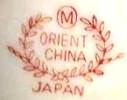
These marks might or might not have been manufactured by the Noritake company. More than 400 marks are suggested to have been used by Noritake alone. Most pieces marked Nippon also seems to have been manufactured by Noritake. For a limited list of known Noritake backstamps, see the separate Noritake section. |
|
22. Mark: M - ORIENT - CHINA |
| MARUKU CHINA |
|
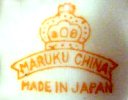
11. MARUKU CHINA, Japan, Moriage dragon ware type of porcelain. Marks featuring a crown like this, on the whole seems to date to the period immediately after the second WW, i.e. late 1940s-early 1950s. |
!-- Matskawa -->
| Matsukawa, Dai Nippon |
|
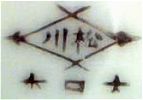
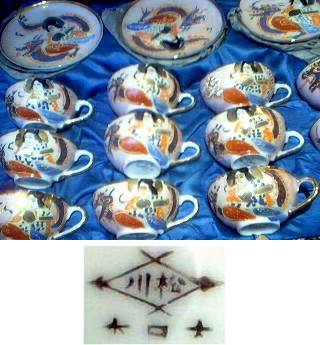
730. Mark: Dai Nippon Matsukawa. It is generally accepted that marks that includes "Dai Nippon" in Japanese characters on the whole date to the Meiji (1868-1912) period, reflecting the greatly increased nationalism of that period.
Click here to see large picture
|
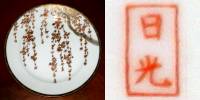
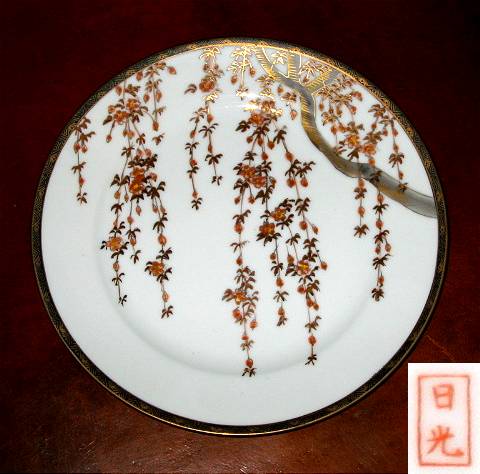
| Nikko (Sunlight) |
| NIKKO was founded in Japan in 1908. 1915 Production of "Sansui" decoration started. Successive lords promoted traditional culture and crafts of the city and the first kiln was established as Japan Ironstone Inc. Porcelain with this mark is probably bought directly in Japan, since there are no western characters in the mark. The reading of these two characters in combination becomes nikko, meaning sunlight or sunshine. In 1950 after WWII the company was reorganized and NIKKO CERAMICS Co, Ltd. was founded. 1957 Production of "Ming Tree" decoration started. 1961 A porcelain factory was built in Hakusan, Ishikawa, where the present main office is located. |
|
811. Japanese porcelain. Mark "Nikko". Most likely dating to the 1930s, or possibly the mid to late 1920s. The style of pattern design is Satsuma influenced (probably from Kyoto, not Kyushu) based on the way the gilding is applied, the design of the rim, the color of the rim ground and from the way a Satsuma trained artists portrayed weeping wisteria (a favorite of Satsuma floral designs).
Click here to see large picture
|
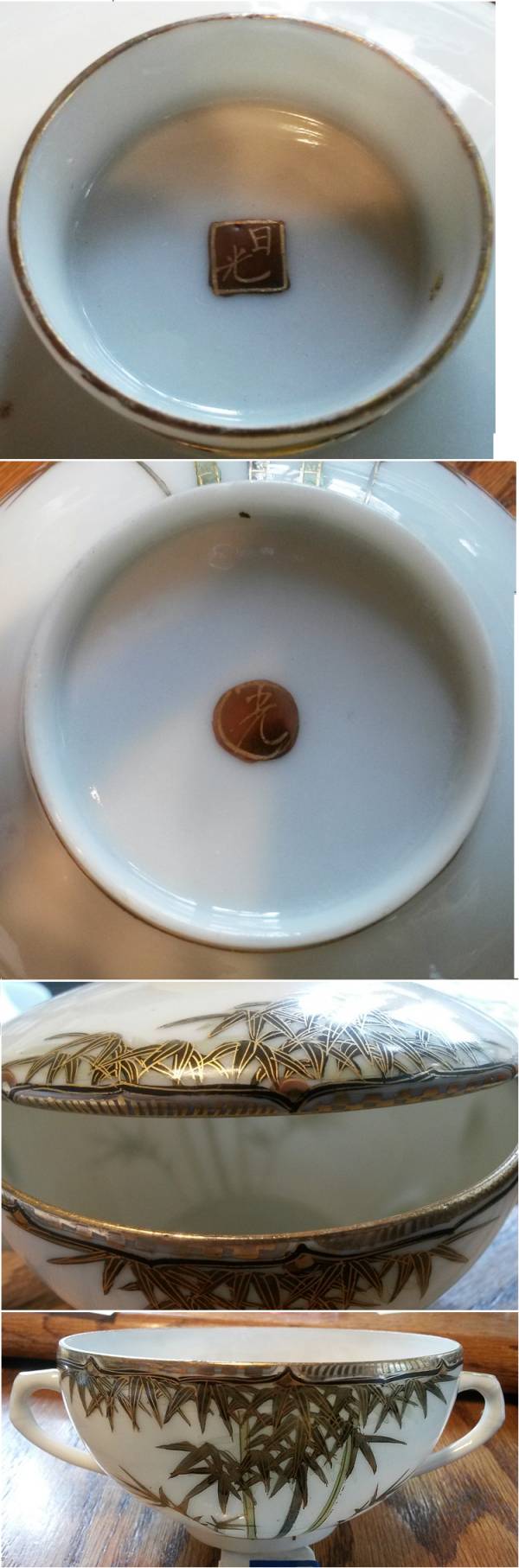
|
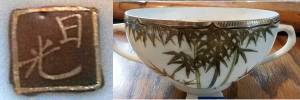
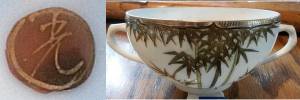
1479. Japanese porcelain. Covered, two-handled soup bowl. Mark "Nikko". Most likely dating to the 1930s, or possibly the mid to late 1920s. In the round example which was on the base of the bowl, the character is abbreviated to ko - light.
Click here to see large picture
|
| Nippon |
|
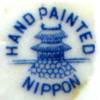
The word "Nippon" in western characters means "Japan" and occurs on most Japanese wares from around 1890 until the early 1920s. From 1891 imports to America were required to be marked with the country of origin, in western characters. Thus Japanese exports (to America) were marked with "Nippon" in English from this date to 1922, when the requirement was changed to that the word "Japan" should be used. These are the so-called "Nippon wares". However, the rule doesn't apply in other countries nor always in America because sometimes paper labels and the like was used. So while finding a back stamp saying "Nippon" is a useful dating aid its absence is not determinative. Regarding 'Nippon' marked porcelain, wares marked 'Japan' or 'Made in Japan' have not been as desirable as those marked 'Nippon'. Particularly in the US, Nippon marked pieces have always brought a large premium over those marked Japan or Made in Japan and certainly more than unmarked wares. This is true even for pieces of similar quality. In the 1960s, collector ranks swelled and demand for marked Nippon pieces vastly exceeded the supply. Thus arose the transfer (stencil) based fake Nippon mark applied by unscrupulous dealers to thousands of imported Japanese porcelain. This kind of marks can be identified by the mark being applied inside a glaze area looking a bit like a piece of scotch tape. The resulting flood of fakes became well known to dealers and the more knowledgeable collectors. The motive was money as it usually is and the confusion eventually dampened collector enthusiasm.
See also special page on: Noritake
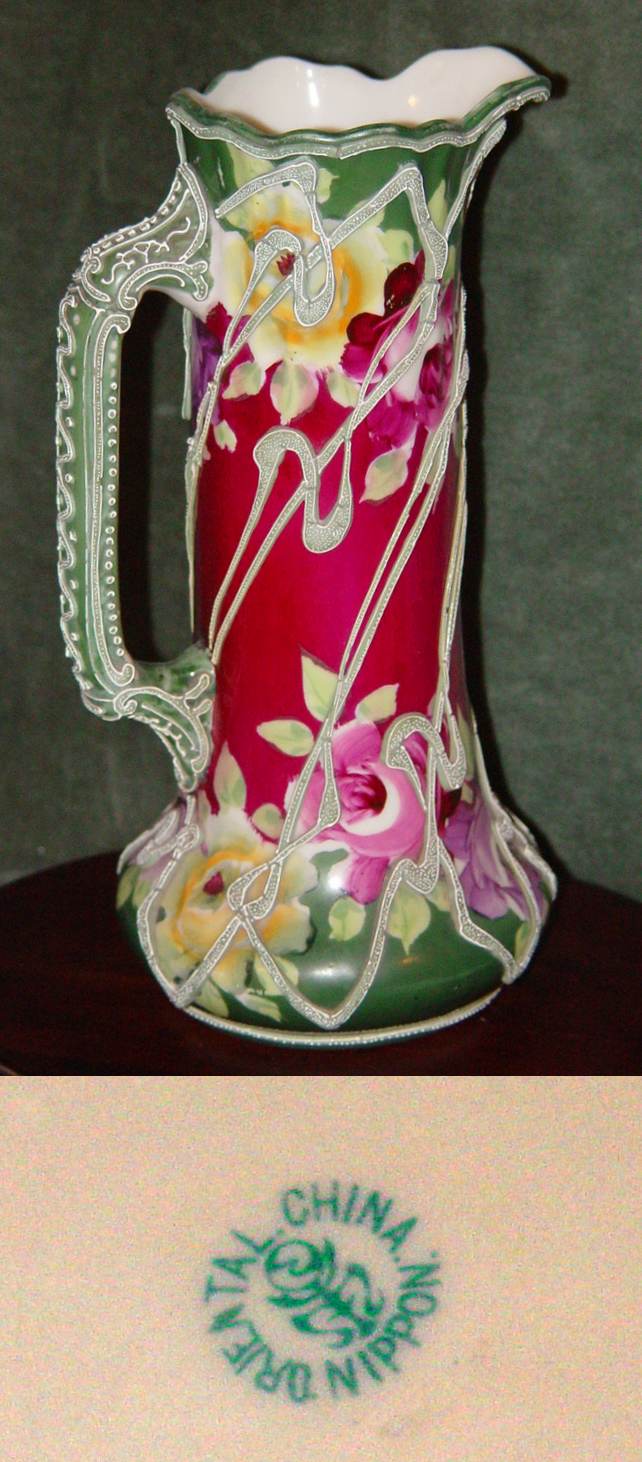
|
|
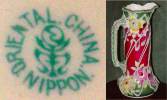
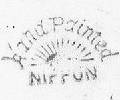
1399. Oriental China Nippon. Mark datable to the "Nippon" period 1890-1921, probably 1910-20.
Click here to see large picture
|
 |
283. "Rising sun" Nippon. This mark is probably related to Noritake. This mark however datable to the "Nippon" period 1890-1921, probably slightly later, maybe at least into the 1930s.
|
 |
677. "Rising sun" Nippon. This mark is probably related to Noritake. This mark however datable to the "Nippon" period 1890-1921, probably slightly later, maybe at least into the 1930s.
|
|
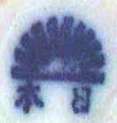
6. "Rising sun" Nippon. This mark could be related to Noritake. Mark probably in use during 'Early Showa' where Showa was 1926-1988 and 'Early Showa' is often used to cover the Showa reign before 1945. Similar printed marks occur on dated screen printed porcelains as late as 1958. The 2 characters below the "rising sun" are read together as "Nippon"=Japan. |

|
14. "Rising sun" mark. Maybe a "war effort period" mark around 1935-40 due to its simplicity. |
|
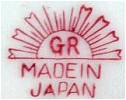
534. Mark: GR within Rising sun with the addition of "Made in Japan", suggesting a date to the latter part of the 1940s.
|
|
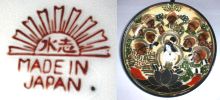
1190. Mark: Japanese characters within Rising sun with the addition of "Made in Japan", suggesting a date to the latter part of the 1940s.
Click here to see large picture
|
| Nichi Hon (Nippon) |
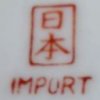
|
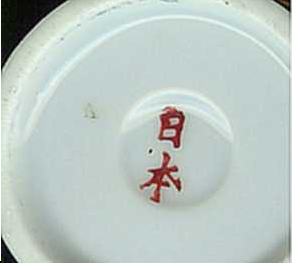
1444. The 2 characters read from top to bottom NICHI HON, which read together as Nippon (= Japan). Bought new around 1960 according to the owner.
Click here to see large picture
|
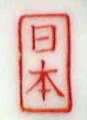
|
13. Mark: "Nippon", meaning: Japan. |
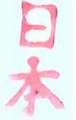
|
7. Mark: "Nippon", meaning: Japan. |
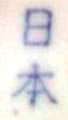
|
12. Mark: "Nippon", meaning: Japan. |
|
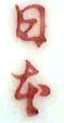
42. Mark: "Nippon", meaning: Japan. |
|
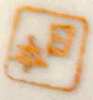
71. Mark: The 2 characters are read from right to left. They are the characters NICHI and HON which together read as Nippon (=Japan). Mid 20th century |
|
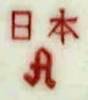
24. The 2 characters above the Gothic "A" read from left to right, are NICHI and HON, which read together as Nippon (= Japan). A rough guess on a date would be late 19th century/early 20th century before 1920s. |
|
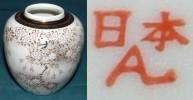
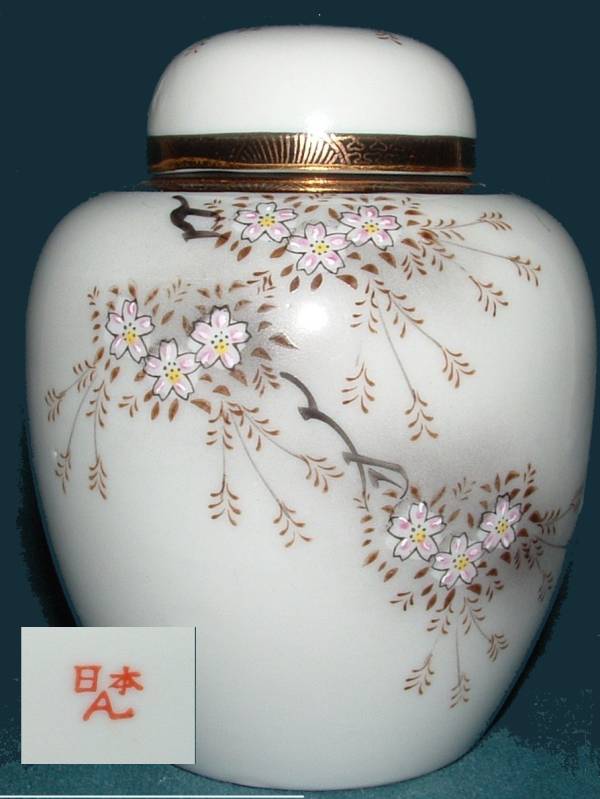
905. The 2 characters above the "A(L)" read from left to right, are NICHI and HON, which read together as Nippon (= Japan). A rough guess on a date would be early 20th century, before 1920s.
Click here to see large picture
|
|
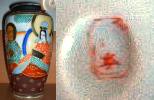
740. Nippon "Japan". Mid 20th century, 1930s (before WWII).
Click here to see large picture
|
|
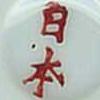
876. Nippon "Japan". Mid 20th century, 1930s (before WWII).
Click here to see large picture
|
|
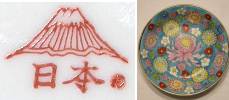
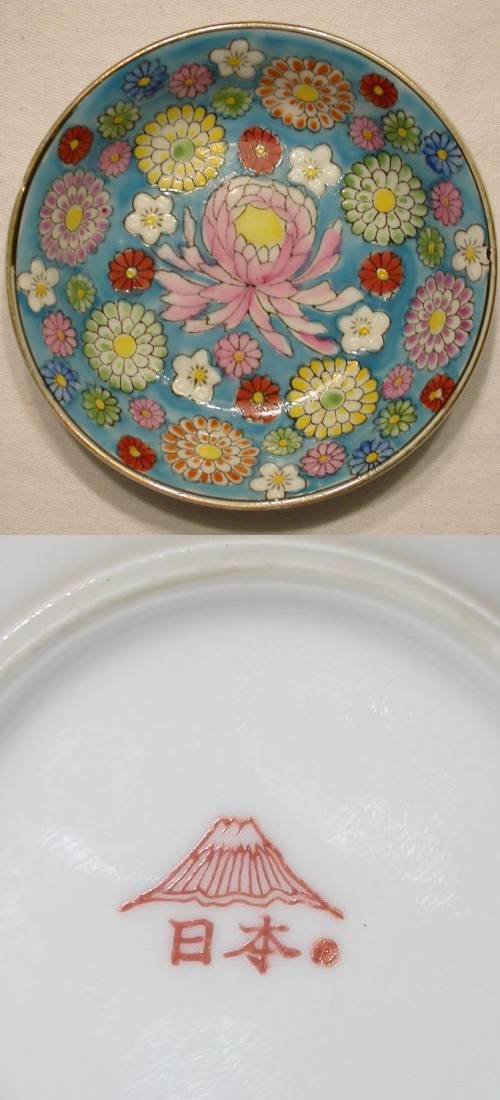
9. Unconfirmed identity but looks like Mount Fuji and a stream. The 2 characters below the picture are read together as Nippon (= Japan). Mark similar to those of Fukagawa. It is possible that this and similar clear red stamped or printed marks actually belongs to the occupied Japan period (1945-52). The red dot following the Japanese character is unexplained.
Click here to see large picture
Pictures curtesy of Prof. Dr. Karl Heinz Glätzer, Germany
|
|
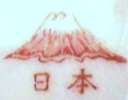
19. Unconfirmed identity but looks like Mount Fuji and a stream. The 2 characters below the picture are read together as Nippon (= Japan), similar to Fukagawa. |
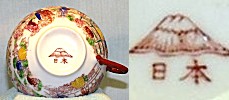 |
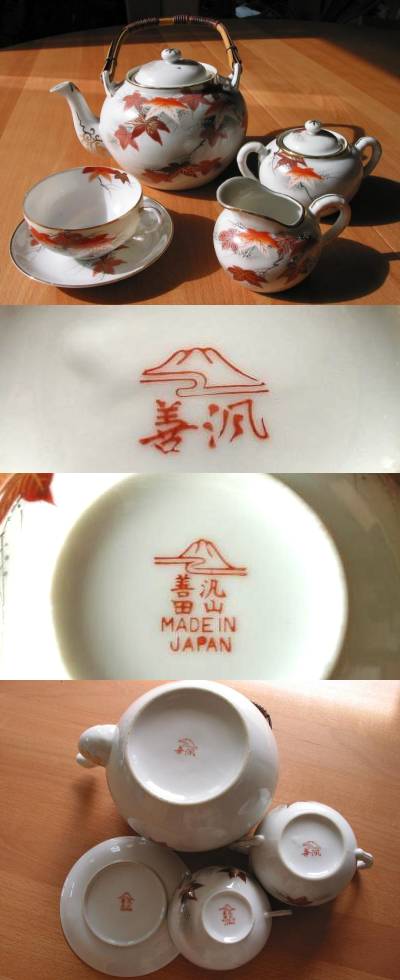
680. Japanese export ware. Unconfirmed identity but looks like Mount Fuji and a stream, similar to Fukagawa. Thought to date to the 1920s or slightly thereafter.
Click here to see large picture
|
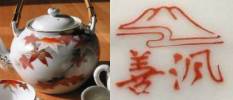 |
246. Unconfirmed identity but looks like Mount Fuji and a stream, similar to Fukagawa.
Click here to see large picture
|
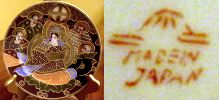 |
723. Mark: Mt. Fuji, a stream, and "Made in Japan", c 1930. Unconfirmed identity but could be Yokoi Sei-Ichi Shoten which closed in 1942. Mark similar to Fukagawa.
Click here to see large picture
|
|
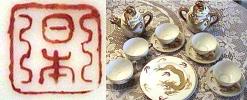
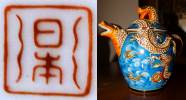
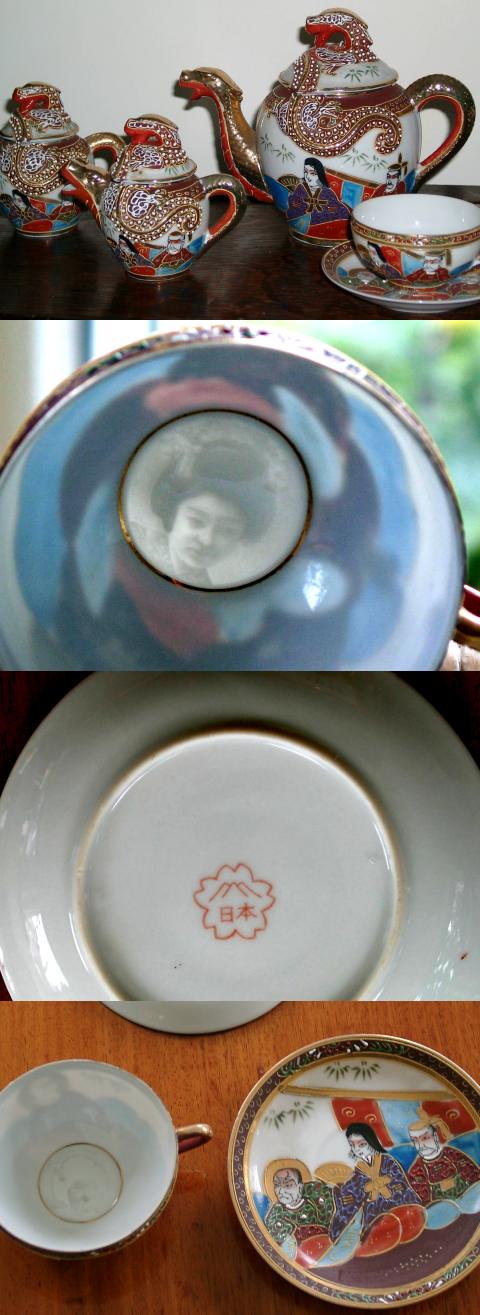
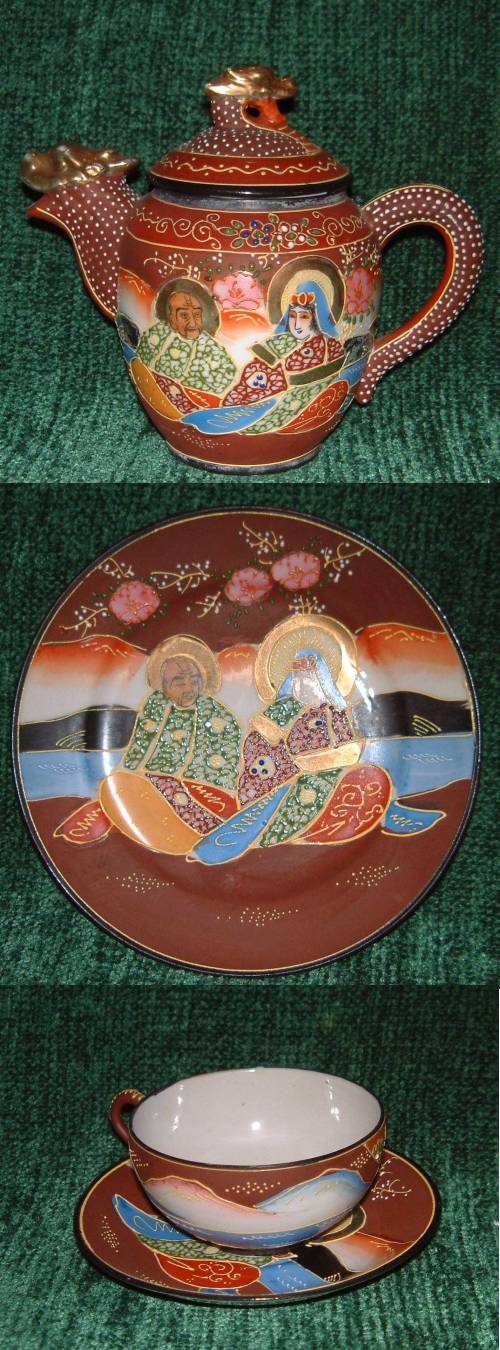
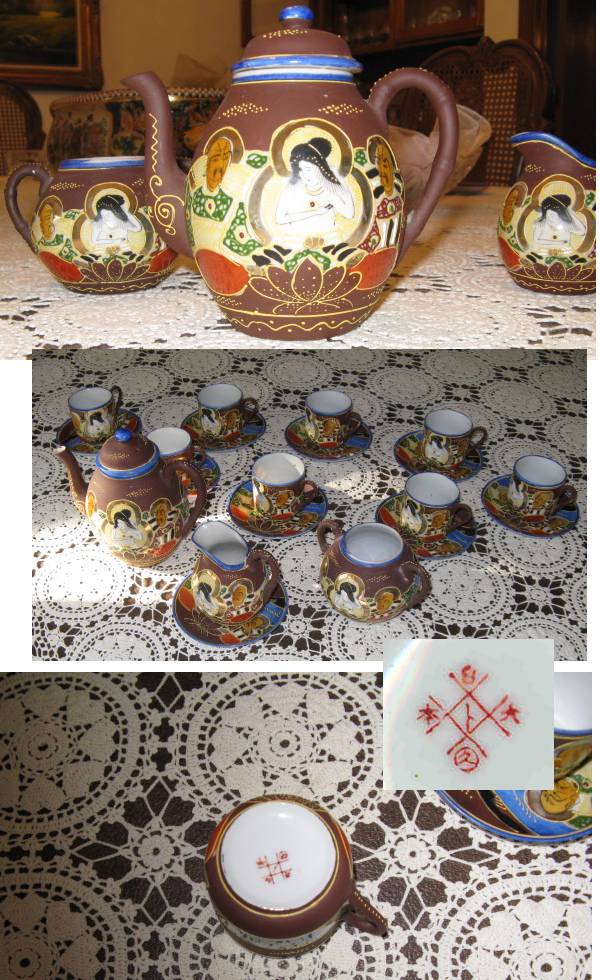
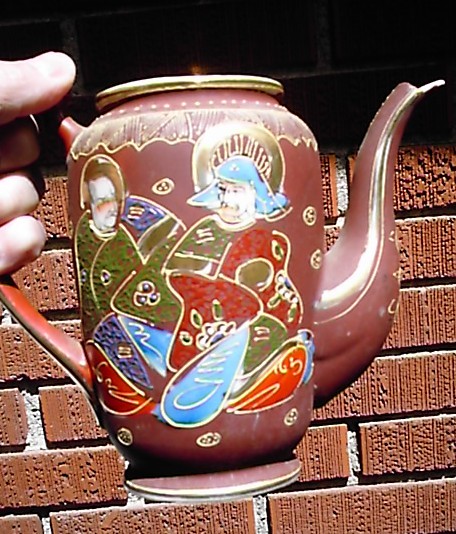
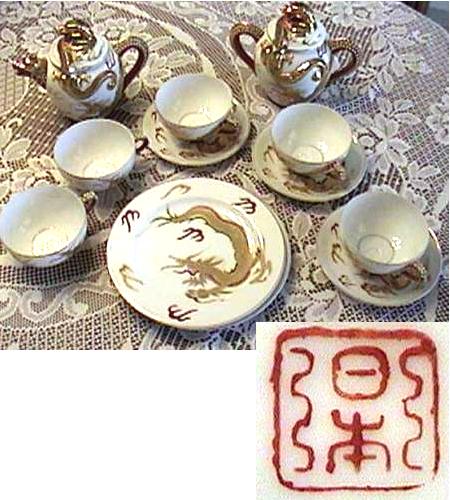
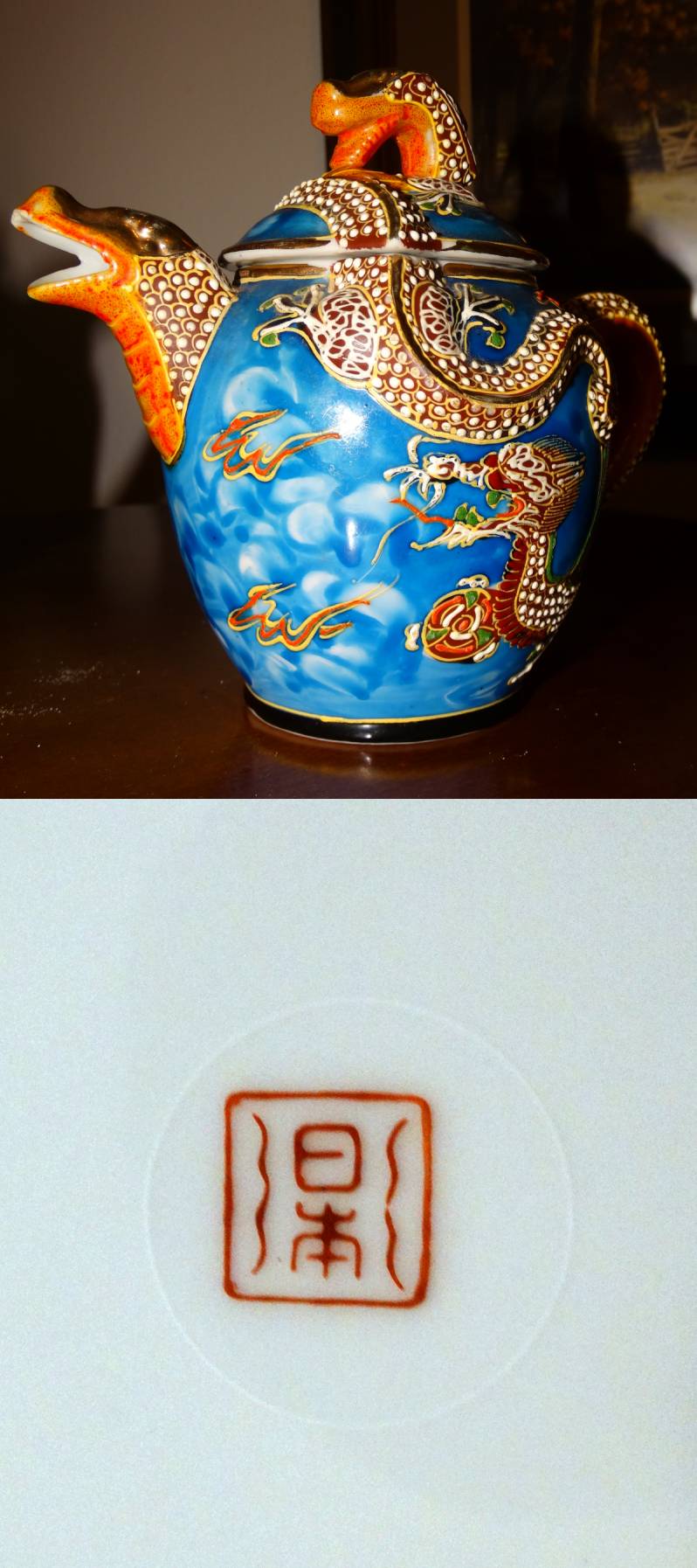
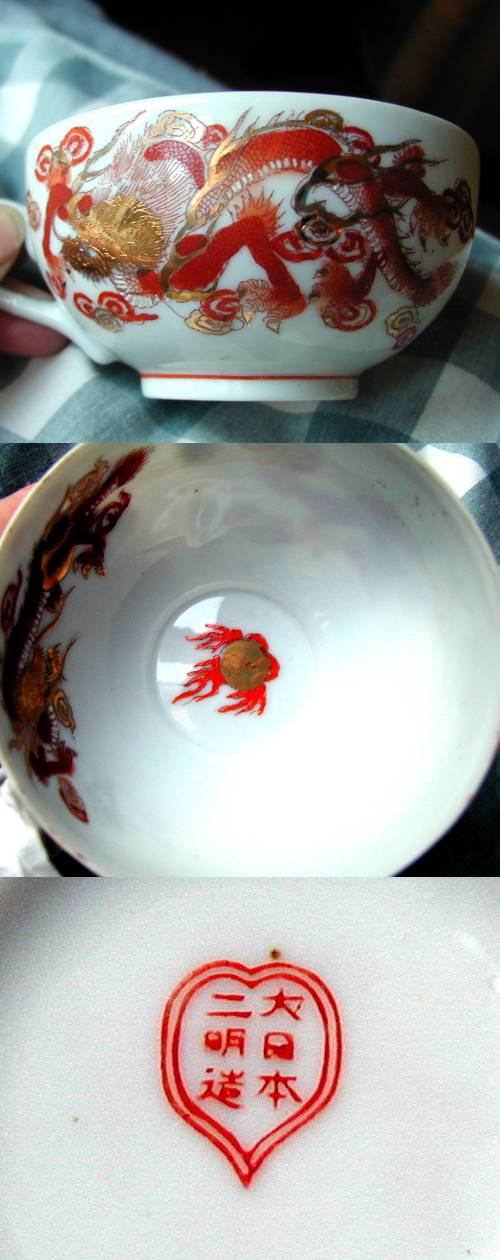
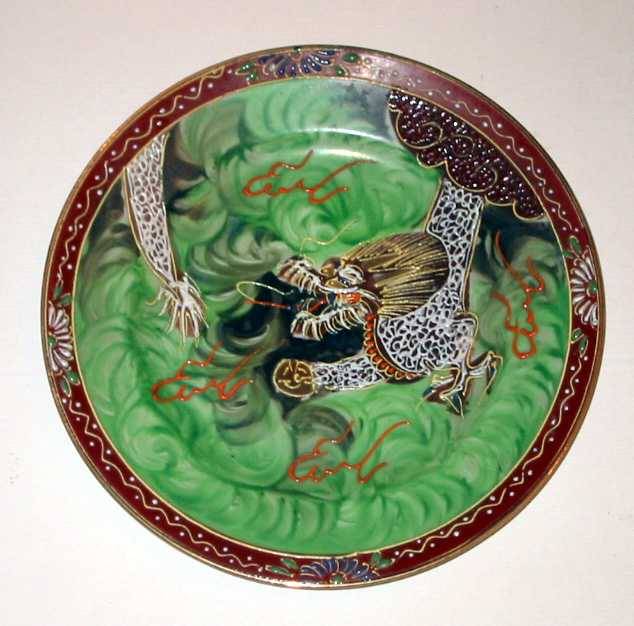
1091. Dragon ware tea set. Mark: Nichi Hon (Nippon). Tentative date, c. 1950.
Click here to see large picture
|
|
1514. Dragon ware tea pot. Mark: Nichi Hon (Nippon). Tentative date, c. 1950.
Click here to see large picture
|
| Nippon Tokusei (Japan Special Made) |
|
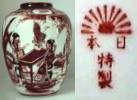
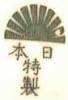
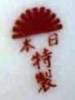
These marks appears to belong to the 'Early Showa' period, where Showa was 1926-1988 and 'Early Showa' is often used to cover the Showa reign before 1945. |
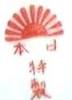
|
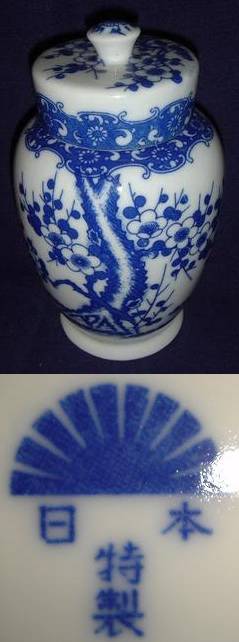
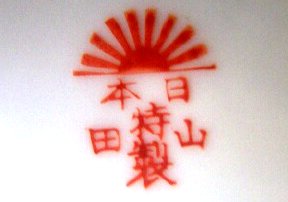
10, 15, 16, 18. The two characters immediately below the "rising sun" reads, from left to right, Nippon, meaning Japan. The two vertically written characters read Toku sei i.e. "Japan Special Make" or "Specially made in Japan".
|
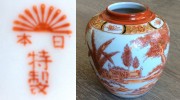
|
1548. The two characters immediately below the "rising sun" reads, from left to right, Nippon, meaning Japan. The two vertically written characters read Toku sei i.e. "Japan Special Make" or "Specially made in Japan". Tentative date from the 1930s.
Click here to see large picture, mark # 1132
|
|
This Nippon Tokusei mark might be from a revival period, at the end of the 1950s. The characters immediately below the "rising sun" reads on this mark form left to right (which is quite modern) as Nippon (=Japan). The porcelain is of a very white and glassy type and the decoration as well as the mark seems to be transfer printed with some not too advanced technique, leaving a textile pattern to the printed decoration. You can also see that the beams in the sun are more even than the 'older' ones, and that the characters below the sun are so even also they appears to be printed. |
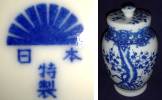
|
1132. The two characters immediately below the "rising sun" reads, from left to right, Nippon, meaning Japan. The two vertically written characters read Toku sei i.e. "Japan special make" or "Specially made in Japan". Tentative date second half of the 1950s.
Click here to see large picture, mark # 1132
|
|
This mark is Nippon Tokusei mark but with two unidentified characters ("mountain" = san something, usually a decoration workshop) tentative date 1930s. |
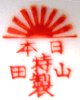
|
778. The two characters immediately below the "rising sun" reads, from left to right, Nippon, meaning Japan. The two vertically written characters read Toku sei i.e. "Japan special make" or "Specially made in Japan". The two characters below is probably the name of the decorating workshop.
Click here to see large picture
|
NISHIURA ENJI Porcelain Mfg. Co.
Tajimi Machi, Gifu, Japan. |
|
The Handbook of Japan and Japanese exhibits at World's fair, St. Louis, 1904, has the following information: "The porcelains manufactured by us are sold by the Tajima & Co., Boston, Chicago, Yokohama, Kobe, Nagoya, Japan, etc., being well known under the name of Nishiura Yaki. The output of porcelain in 1901 was valued at 6,935,176 ¥, of which 2,491,668 ¥ constituted the export. Nagoya produced one-third of the total. Gifu, Kyoto, Kanazawa and Kagoshima are the principal localities where the goods are manufactured". (No marks known yet).
|
| Okuyama |
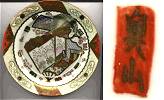 |
427. Mark: Okuyama. |
| Okura Art China |
|
Okura Art China was the forebear of the famed Morimura group of companies such as Noritake (Founded in 1904 as Nippon Toki Kaisha, Ltd. Now, Noritake Co.), TOTO (Toyo Toki Kaisha, Ltd. established in 1917 at Kokura to produce Earthenware, Chinaware and Sanitary ware. Now, Toto Ltd.), N.G.K. (Nippon Gaishi Kaisha established in Nagoya, 1919), and INAX.
Okura Art China was established in 1919 in the suburb of Kamata in Tokyo by Magobei Okura and his son Kazuchika who were both amongst the 6 founders of the Noritake company in 1904. Okura pieces were made by hand and were of choice material, targeting the top segment of the market. Marks include "OAC Noritake" and a 5 lobed trademark. Okura porcelain is still made today under the name of Okura China Ltd, with its headquarter in Totsuka, Yokohama.
|
| Rokuzo |
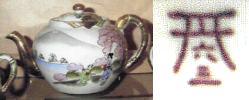
|
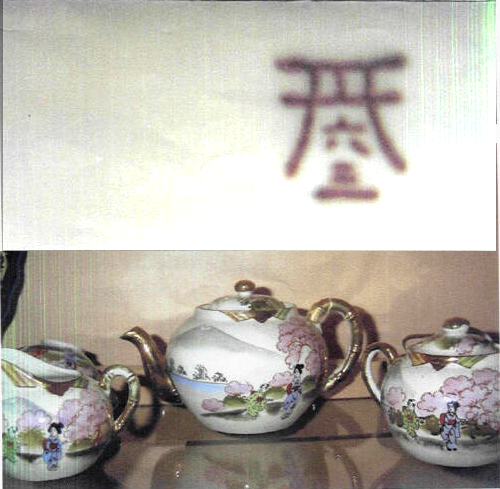
891. Mark: The numbers 6 3 (Rokuzan) under a Japanese gate of honor. A formal gateway or arch such as the one pictured is called a "torii" in Japanese. Japanese porcelain, maybe 'Seto' area. Tentative date: 1920-40s.
Click here to see large picture
|
| S |
|---|
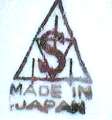
|
35. Mark: Above "Made in Japan" a capital "S" superimposed upon a system of four triangles within a fifth triangle. Stamped. |
| SPP |
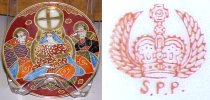
|
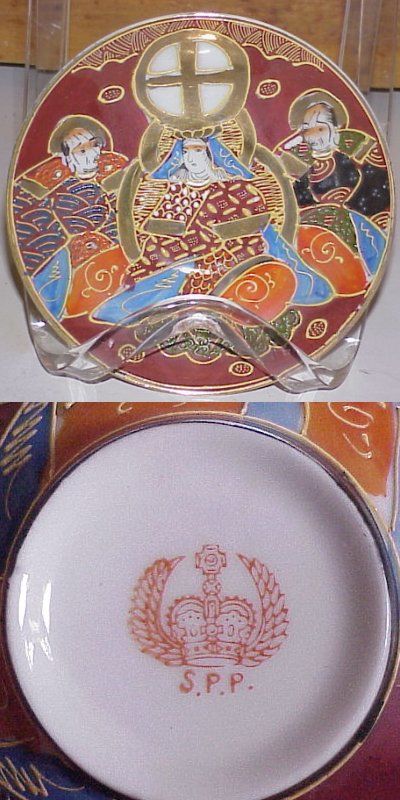
606. Mark "SPP". Marks featuring a crown like this, on the whole seems to date to the period immediately after the second WW, i.e. late 1940s-early 1950s.
Click here to see large picture
|
| SETO |
|---|
|
Owari Province is modern Aichi Prefecture. Owari produces so many varieties of porcelain and stoneware that the Japanese speak of porcelain and pottery in general as "Setomono" after the village Seto, slightly north of Nagoya. Nagoya is the commercial and industrial metropolis of Owari, and the greatest ceramic center in Japan so far as the amount of products counts. See page: Seto
|
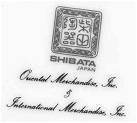
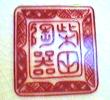
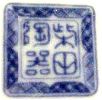
| SHIBATA |
|
78. Shiba ta To-ki - "Shibata Porcelain", Late 20th century |
|
88. Shiba ta To-ki - "Shibata Porcelain", Late 20th century |
|
123. Shiba ta To-ki - "Shibata Porcelain", Late 20th century |
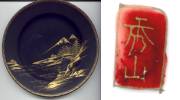
| Shuzan |
|---|
|
535. Mark: Shuzan. Fukiyaki?
|
| Suzuki Co. |
| Japanese distribution company. Mark can occur on any wares they were reselling and trading in. |
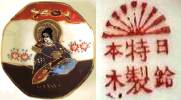 |
17. In the top line, the top right and top left characters are read together as "Nippon" (as in No.6 above). The centre top and centre bottom characters are the vertical characters in No.10, whilst the lower right and lower left characters may read from right to left as "SUZUKI". The two characters written vertically read Nippon Tokusei i.e. "Japan special make" or "Specially made in Japan".
Click here to see large picture
|
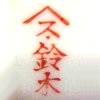 |
423. Mark: Suzuki [two characters] below a cipher/mark of a company/establishment.
|
|
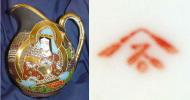
984. Mark is for Suzuki Company, a distributor which had pieces made with its mark for sale and distribution. Presumably mid-20th century.
Click here to see large picture
|
|
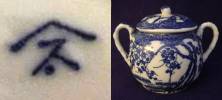
1133. Mark is for Suzuki Company, a distributor which had pieces made with its mark for sale and distribution. Presumably mid-20th century. This piece dates to around 1958.
Click here to see large picture
|
|
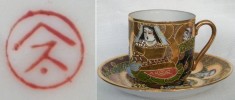
1354. Mark is for Suzuki Company, a distributor which had pieces made with its mark for sale and distribution. Presumably mid-20th century. Date likely to be around the 1950.
Click here to see large picture
|
|
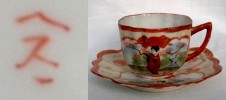
1355. Mark is for Suzuki Company, a distributor which had pieces made with its mark for sale and distribution. Presumably mid-20th century. Date likely to be around the 1950.
Click here to see large picture
|
|
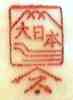
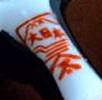
30. Mark: Dai Nippon Suzuki. The 3 rather shadowy characters within the square appear to be "Dai" + "Nichi" + "Hon" which would be read as "Dai Nippon" (= Great Japan). Under the square Suzuki Unconfirmed identity but looks like it could be Mount Fuji and a stream. Mark similar to Fukagawa.
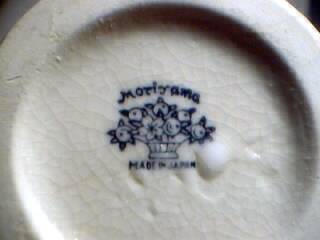
|
|
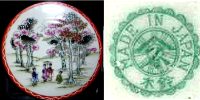
936. Mark: Suzuki "Made in Japan", Date: early 20th century
Click here to see large picture
|
|
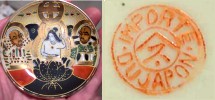
949. Mark: Suzuki, imported to France.
Click here to see large picture
|
|
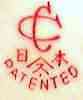
73. Mark: "Nippon Suzuki Co. Patented" combined with a double "C". This mark is the import mark of Carl Claussen & Co. Berlin-Lankwitz, Germany, in short C. & Co.. The company was in operation from 1920-1974. This mark is likely to have come into use after 1945, when Carl Claussen returned home after WW II. After 1965 the company was run by his daughter. (Interview in May 2008, by Simone Loebsin.)
|
| TMK |
|
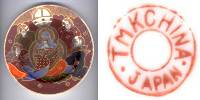
588. Mark: "TMK CHINA". Marked with "geisha girl" lithophane which seems to date this dish to the late 1940s/early 1950s.
Click here to see large picture
|
| Takahashi Company |
| San Francisco based import company selling wares from various factories. Some pieces are correctly marked as to their producer and beside that, carry a label saying 'Takahashi' (Import Co). |
|
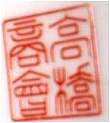
67. Seal reading Takahashi Shokai (shokai also means company). Late 20th century.
|
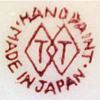
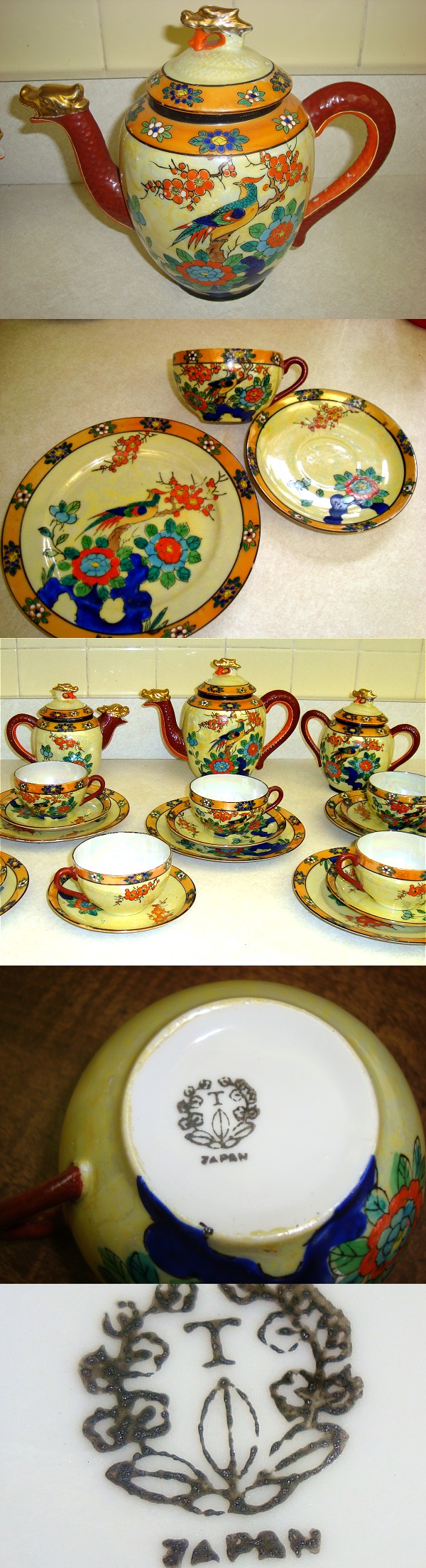
| TAKITO COMPANY 1909-1948 |
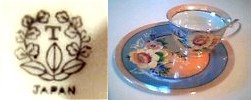
| The Takito Company, a Japanese porcelain manufacturer, was established in 1909 and operated until its dissolution in 1948. Throughout this period, it produced a wide range of porcelain items, including decorative objects, tableware, and figurines. The company was well-known for specializing in lusterware decoration, which was originally developed by the Noritake Company in 1904. However, Takito Company also produced pieces with moriage decoration similar to "Kyoto Satsuma" on porcelain. Among several Japanese porcelain manufacturers specializing in lusterware during the early 20th century, the company's lusterware pieces were famous for their intricate patterns and designs, and they gained particular popularity in the United States during the Art Deco period of the 1920s and 1930s. Before 1921, all Japanese porcelain products were required to be marked 'Nippon,' and marks from later than 1945 typically include the addition of "Made in Occupied Japan". |
|
849. Mark: "T T" in two rectangles. Date: probably late 20s to early 1930s when this type of ware was mostly in vougue.
|
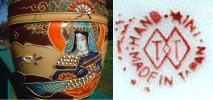 |
904. Mark: "T T" in two rectangles. Date: probably 1922-44.
Click here to see large picture
|
| Tecuka |
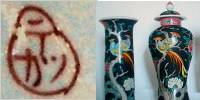 |
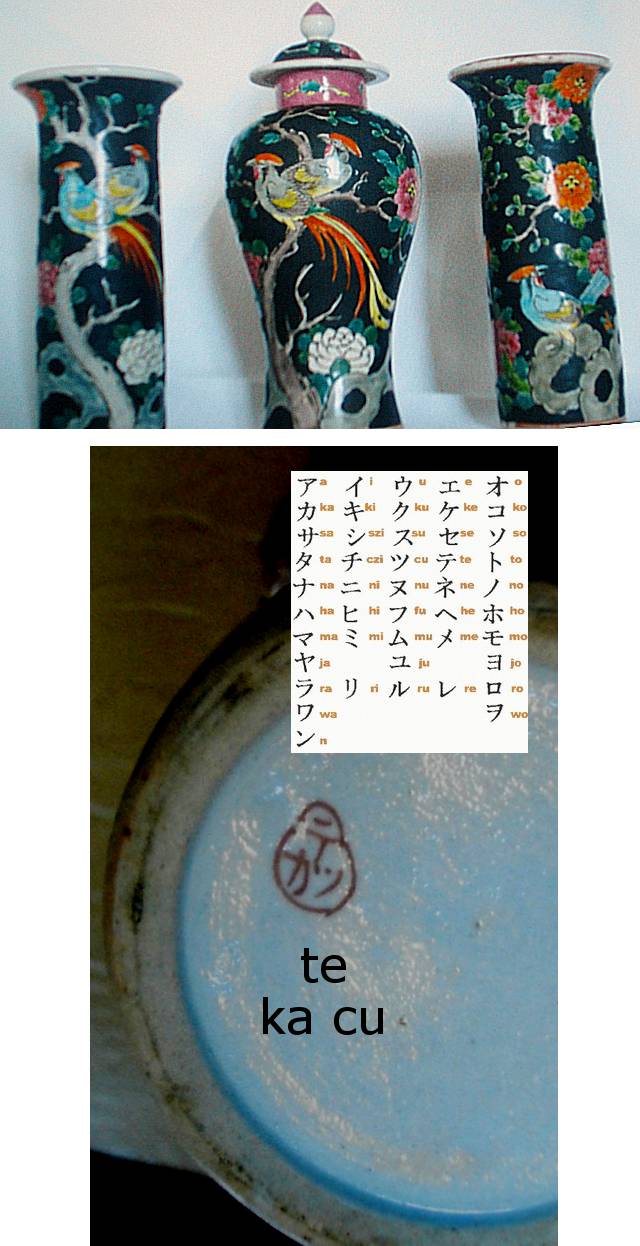
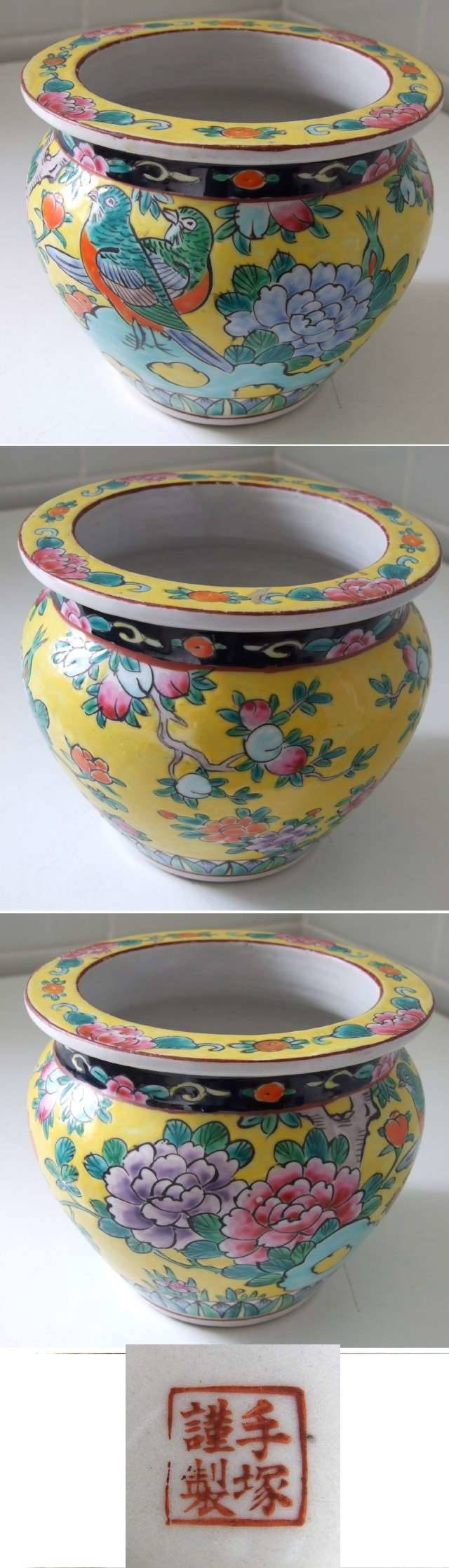
1342. Mark: Te cu ka or Te ka cu depending on reading direction, tentative date first half of 20th century, maybe 1910-20
Click here to see large picture
|
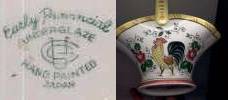
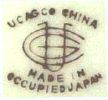
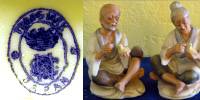
| Ucagco - United China and Glass Company |
| UCAGCO actually means United China and Glass Company. Its offices were based in New Orleans and New York. Ucagco was primarily a distributor of dinnerware and glassware. They were the distributor of many Japanese china patterns during the early 1950s. United China & Glass Co. Inc., better known as UCAGCO, dating back to 1850. Founded by Abe Mayer and originally called Abe Mayer & Co., the importer did business throughout the Southeast U.S. as well as Central and South America. It wasn't until the 30s that the company took on the official trademark of UCAGCO and began expanding overseas. In fact, after the war, the company's agent in Japan, S.A. Stolaroff signed the very first contract allowing imports from Japan. A talented ceramic designer himself, Stolaroff worked alongside many Japanese potteries to lead the company's line of ceramics. In 1956, UCAGCO was sold to Sammons Enterprises and in 1962, Stolaroff, who had become the company's president, retired. |
|
445. Ucagco company. They were very prolific during the Occupied Japan era, this mark is found on some of the better pieces. Most pieces marked this way dates from c. 1947 to 1961. Mid 20th cent. |
|
1072. Ucagco company "Occupied Japan". Date 1945-52. |
|
1202. Ucagco company mark under a crown mark. Tentaive date, c. 1950
Click here to see large picture
|
| Uchida |
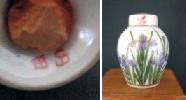 |
348. Mark: Uchida. |
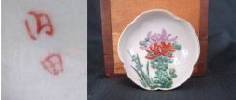 |
349. Appears to be Uchida.
|
| W |
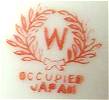
| I have started to wonder if maybe all these "wreath"-marks maybe are Noritake porcelain in disguise. The W could be an up-side down M and so on. In 1941 the offices of the Morimura Brothers Export Co were closed and the "M" as in Morimura inside the wreath was changed to an N as in "Noritake", a name it would not officially have before 1981. Still the trade must have continued even under the OJ period. |
|
576. Mark: W in a wrerath.
|
| WH |
|
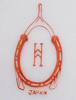
819. Mark: WH. Wishbone and Horseshoe mark. Japanese porcelain. Possible date 1950s.
|
| Yamaguchi Sei (Arita) |
|---|
|
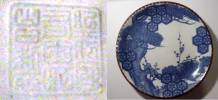
1299. Izegara type dish, transfer printed decoration, impressed mark: Hizen no kuni, Arita Machi, Yamaguchi Sei. From Hizen (old term for that area) Arita Town, made by Yamaguchi. Early 20th century
Click here to see large picture
|
| Yoshiyama |
|---|
| Yoshi meaning 'luck' could also be read as kichi. |
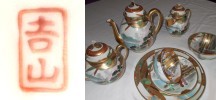 |
1523. Stamped mark of a name Yoshiyama, yoshi meaning luck could also be read as kichi. Mark from a Japanese egg shell type porcelain tea set that was sent from Shanghai in 1931 according to family tradition. The set is of 41 pieces incl: 12 cups, saucers & plates, 2 serving plates, 1 bowl, covered sugar bowl, creamer and a Teapot. Tentative date ca. 1930.
Click here to see large picture
|
| Kutani - Kaga No Kuni. Meiji (1868-1913) - Taisho (1913-1926) period |
| Mark including "Kaga no Kuni" meaning that these ceramics were produced in Kaga Han (today Kanazawa). Kaga Han and Daishoji Han merged in 1871 to make up the Ishikawa prefecture. However at this period the name Kaga was widely used in Japan and also overseas to designate more generally the ceramic produced in the area. For a period Kaga No Kuni appears on some marks togehter with Kutani to later be replaced with only Kutani. Kutani marks are most commonly met with as a two character "generic" Ku (Nine) tani (Wallys) name, meaning that the individual potter or even kiln cannot be identified. However occasionally the inscriptions details both the area, the kiln, the potter and the decorator. |
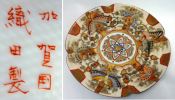
|
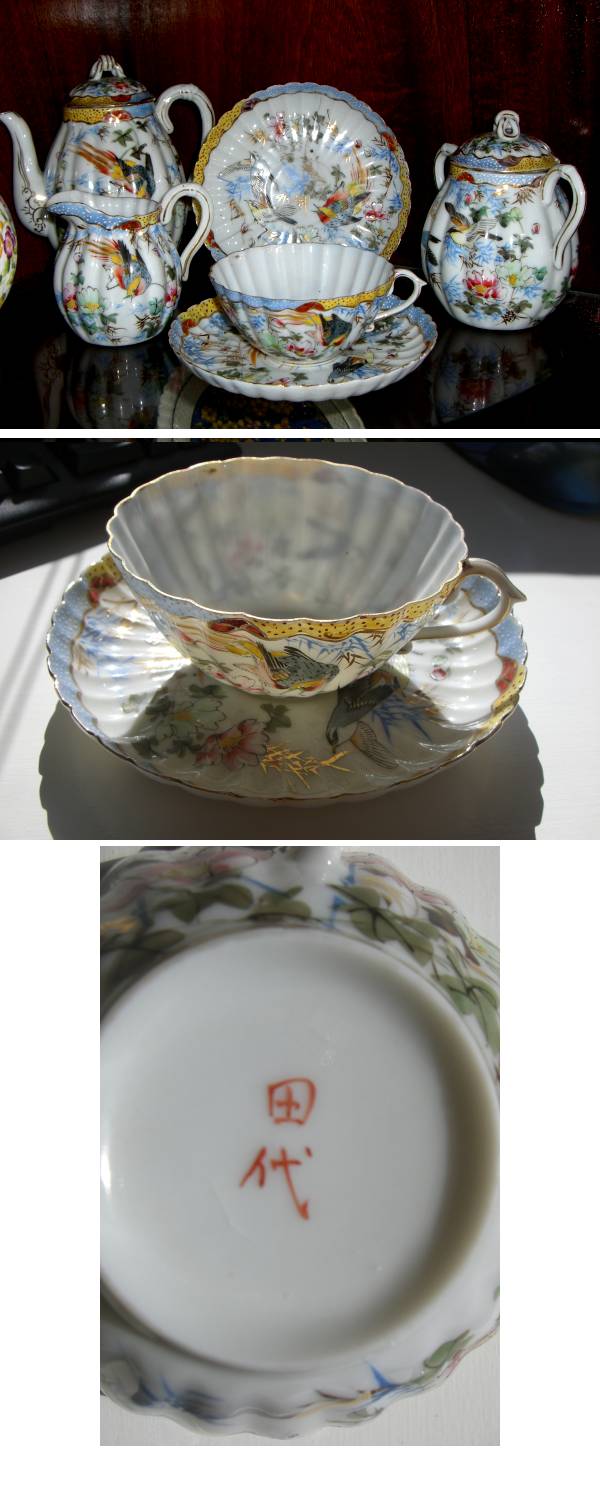
1365. Dish of "egg shell" quality. Japanese Kutani porcelain with enamel decoration. Iron red six character hand painted mark "Kaga no kuni Oda Sei". Mid 19th century to early 20th century.
Click here to see large picture
|
The marks section of Gotheborg.com was initially established in May 2000 thanks to a generous donation of approximately one hundred images of Japanese porcelain marks, by Karl-Hans Schneider from Euskirchen, Germany. This contribution provided a modest yet substantial beginning of the Marks Section. It was a kind gesture that I really appreciated.
Of the many later contributors, I would especially want to mention Albert Becker, Somerset, UK, who was the first to help with some translations and comments on the Japanese marks. His work was then greatly extended by Ms. Gloria S. Garaventa, after which Mr. John Avery looked into and corrected some of the dates. Most of the Satsuma marks were originally submitted by Ms. Michaela Russell, Brisbane, Australia. A section which was then greatly extended by Ian & Mary Heriot, a large amount of information from which still awaits publication.
A warm thank you also goes to John R. Skeens, Florida, U.S.A., and Toru Yoshikawa for the Kitagawa Togei section, and to Susan Eades for her help and encouragement towards the creation of the Moriyama section. For the last full overhaul of the Satsuma and Kutani sections, thank you to Howard Reed, Australia. The most recent larger contribution was made by Lisa M. Surowiec, New Jersey, USA.
In 2004 and from then on, my warm thank you goes to John Wocher and Howard Reed, whose knowledge and interest have sparked new life into this section and given reason for a new overhaul. Thank you again and thank you to all I have not mentioned here, for all help and interest in and contributions to our knowledge of 20th-century Japanese porcelain.
The Chinese marks section would not have been possible without the dedicated help of Mr. Simon Ng, City University of Hong Kong, whose translations and personal efforts in researching the origin and dates of the different marks have been an invaluable resource. It has since been greatly extended by several contributors such as Cordelia Bay, USA, Walt Brygier, USA, Bonnie Hoffmann, Harmen Lensink, 'Tony' Yalin Zhang, Beijing, 'ScottLoar', Shanghai, Mike Harty, and many more expert members of the Gotheborg Discussion Board.
A number of reference pieces have also been donated by Simon Ng, N K Koh, Singapore, Hans Mueller, USA, Hans Slager, Belgium, William Turnbull, Canada, and Tony Jalin Zhang, Beijing.
All images and text submitted by visitors and published anywhere on this site are and remain the copyrighted property of the submitter and appears here by permission of the owners which can be revoked at any time. All information on this site, that are not specifically referenced to peer reviewed sources, are the personal opinions given in good faith by me, my friends and fellow experts, based on photos and the owners' submitted descriptions. They are not to be used for any financial or commercial decisions, but for educational and personal interest only, and can and will be changed as further information merits.
For further studies, Encyclopedia Britannica is to be recommended in preference to Wikipedia, which, not being peer-reviewed, might contain misleading information.
Web design and content as it appears here © Jan-Erik Nilsson 1996-.

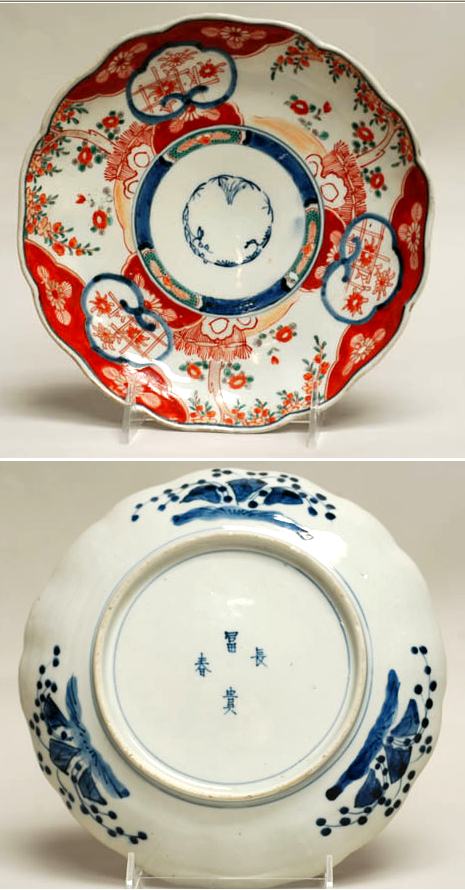
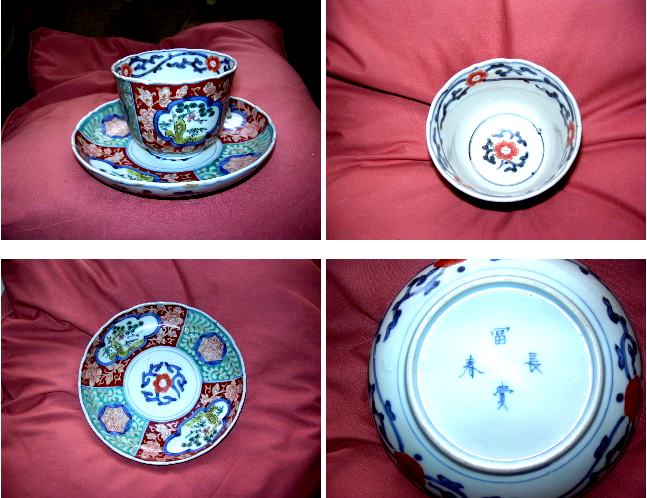
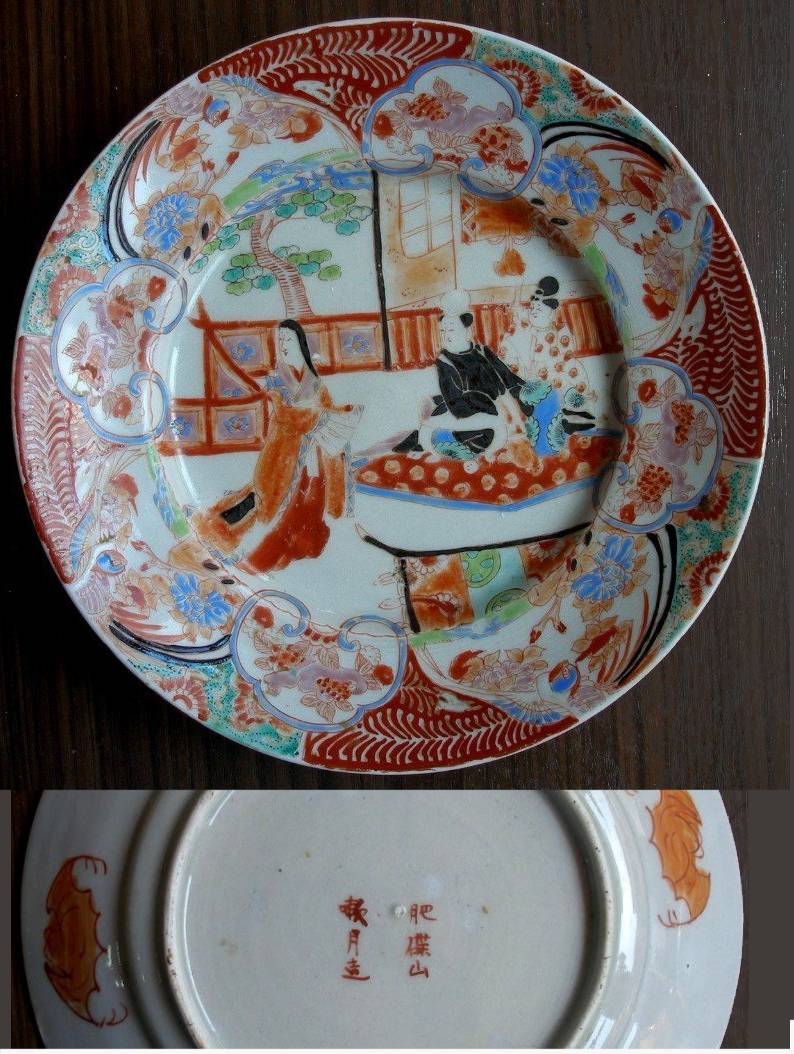
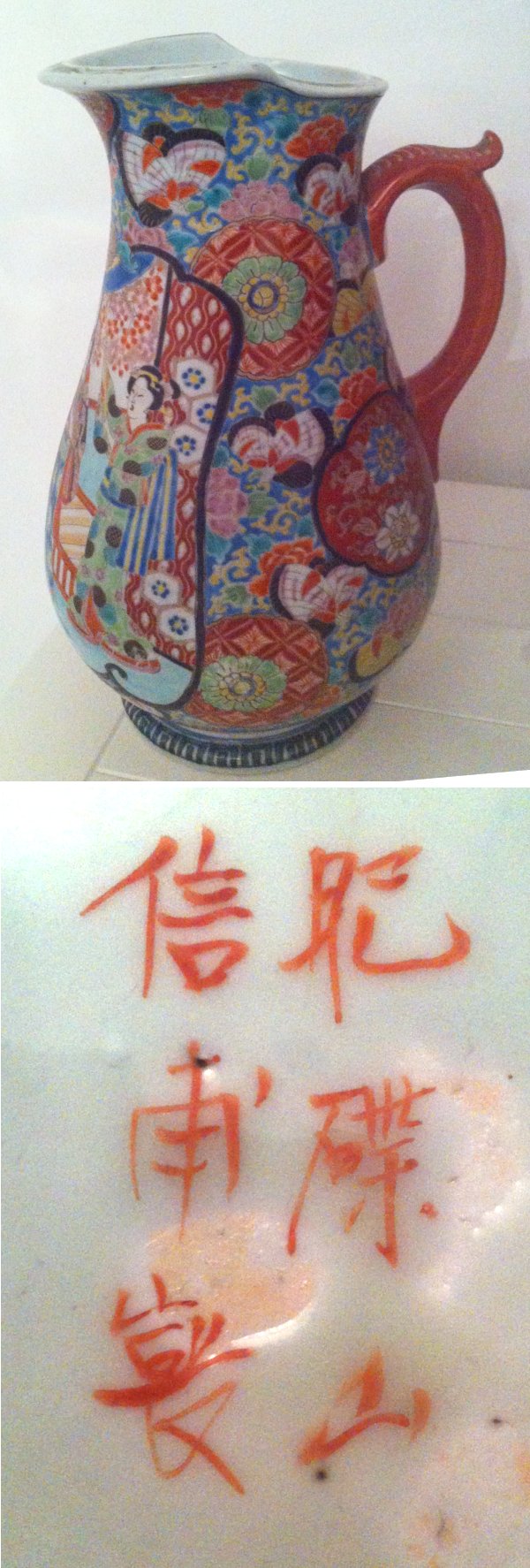



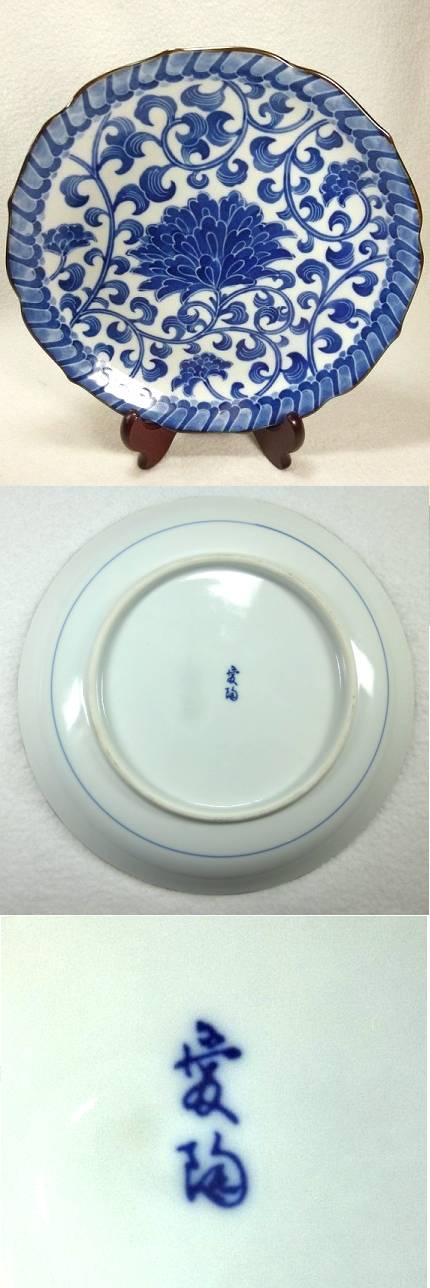
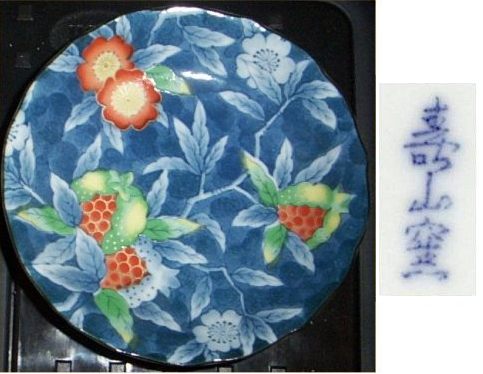

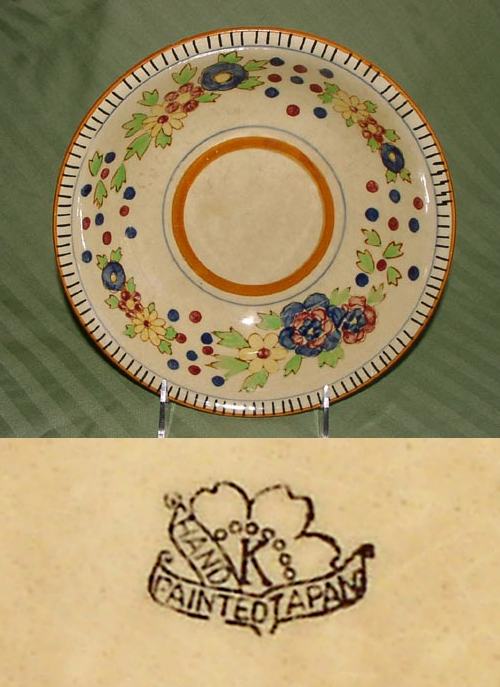
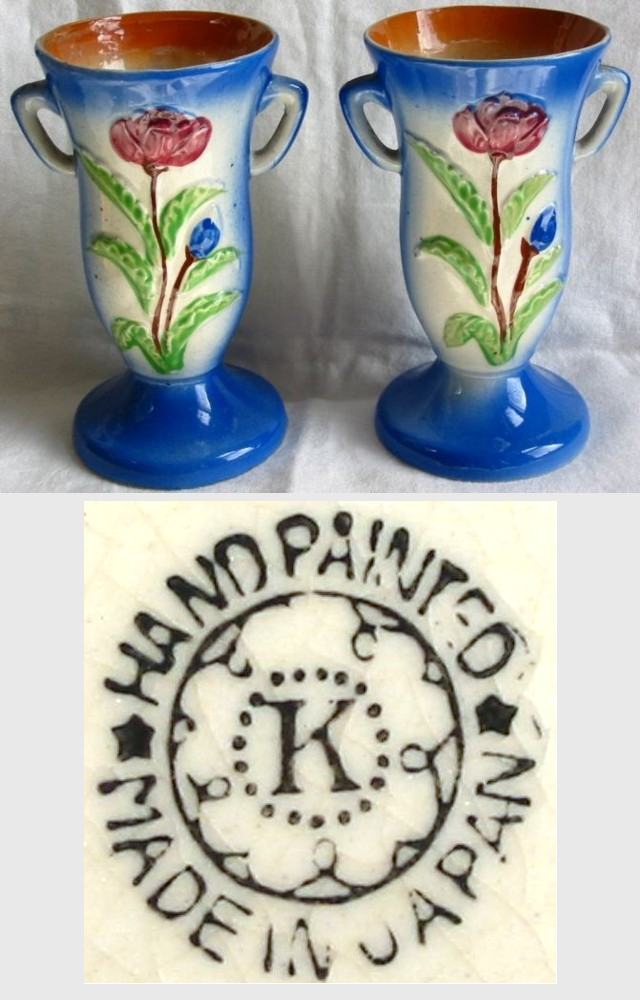
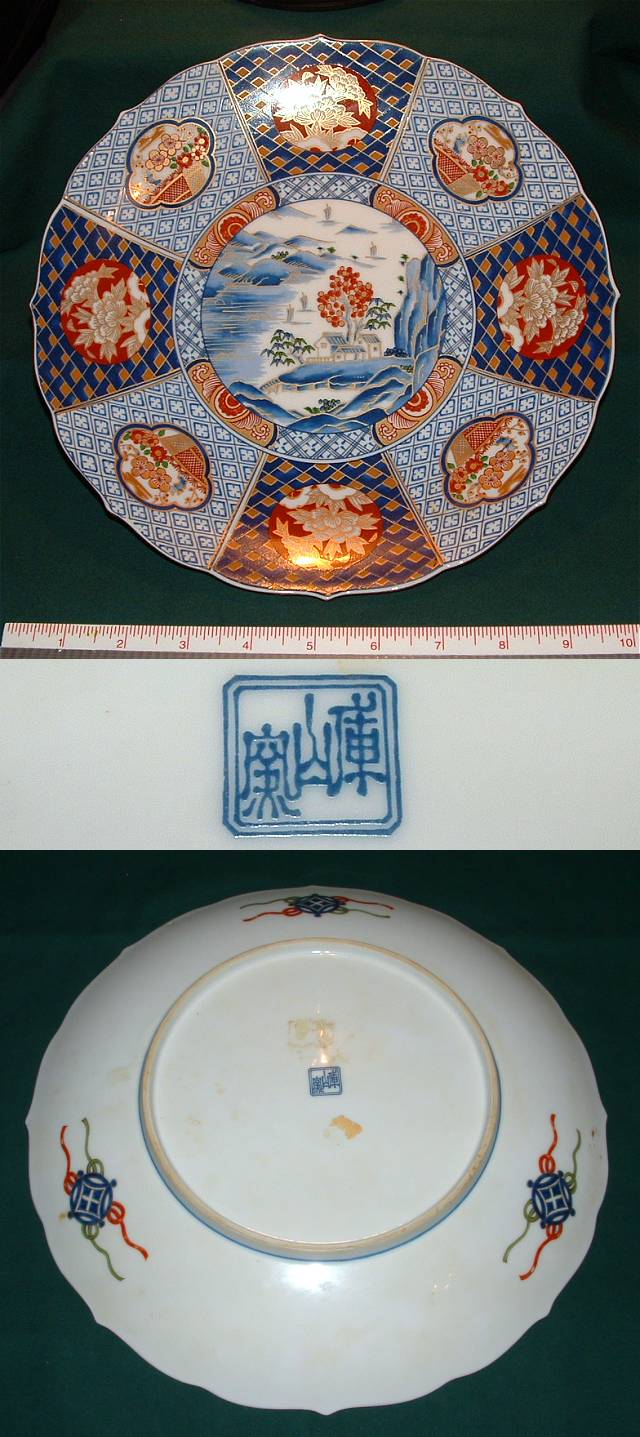
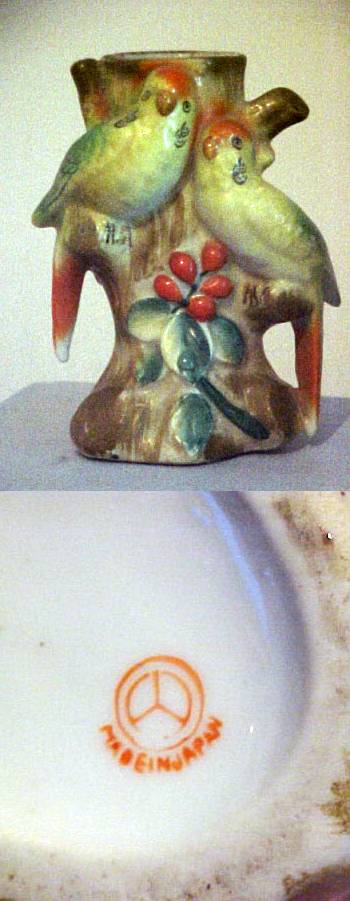
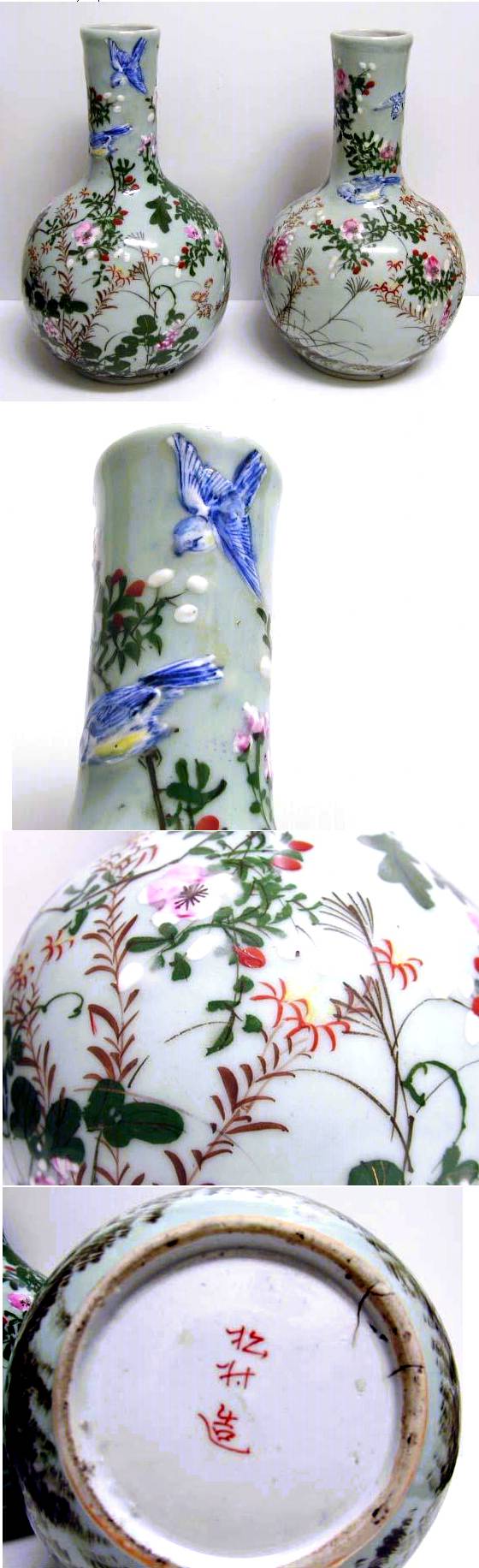
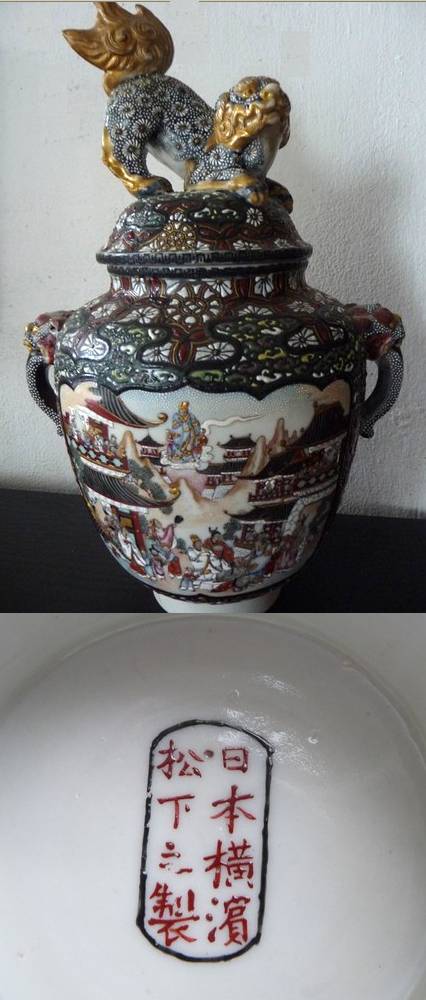
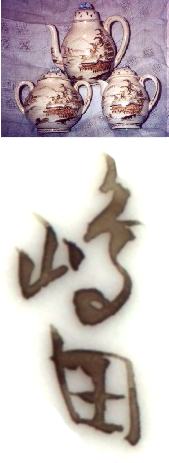
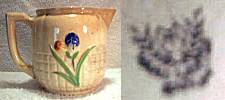
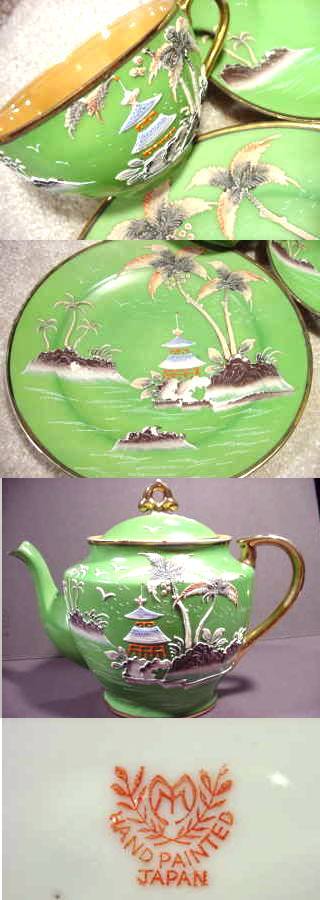
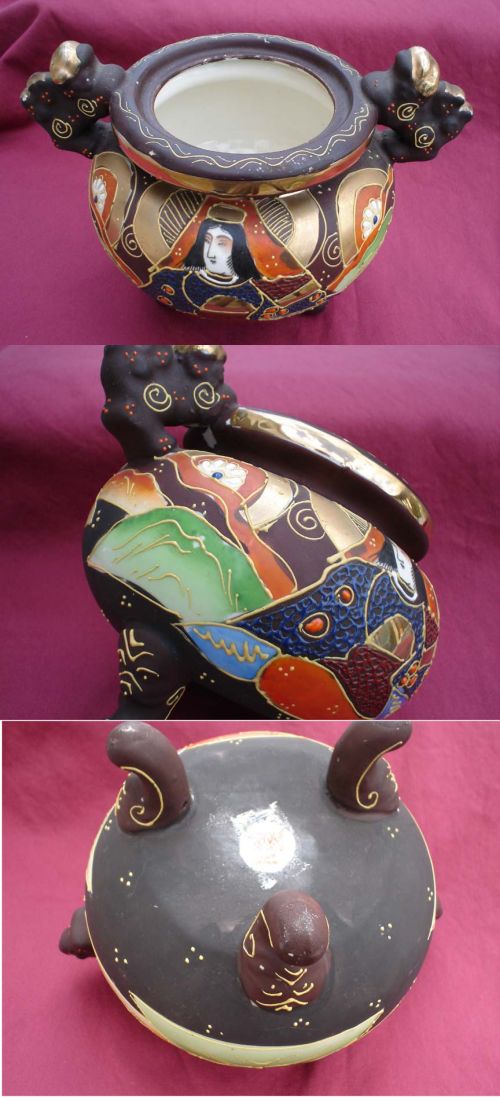
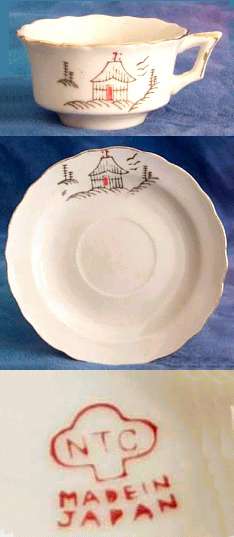
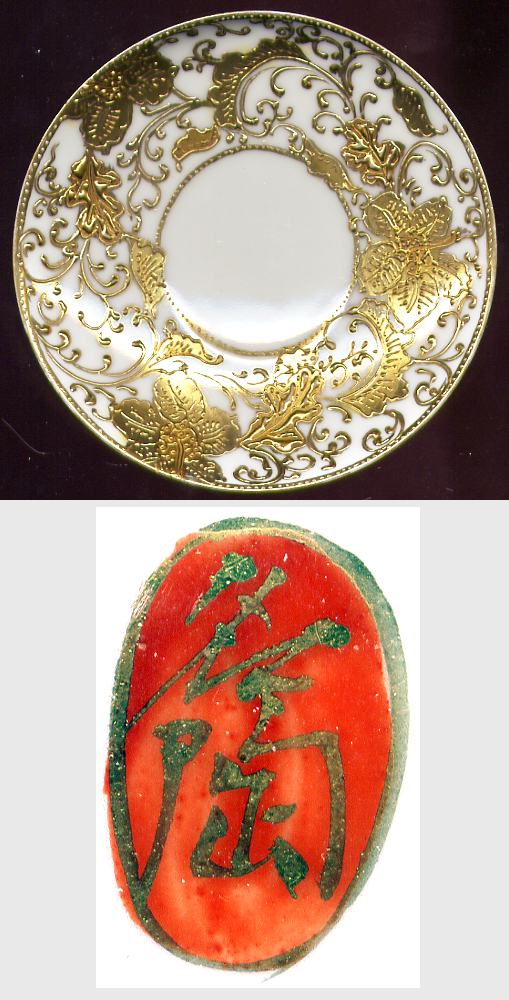
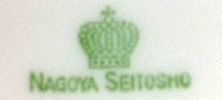
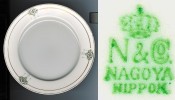
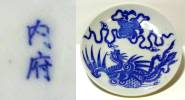

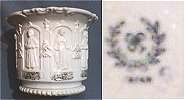
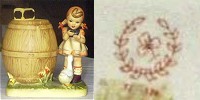
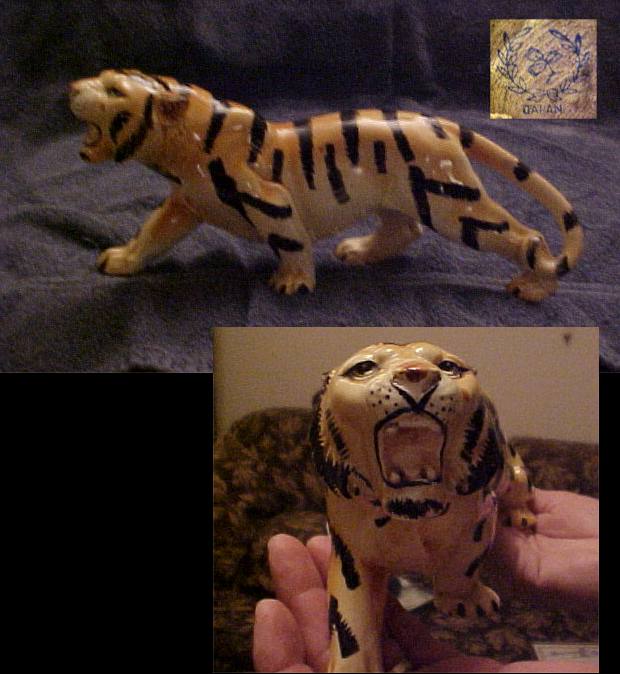
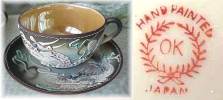

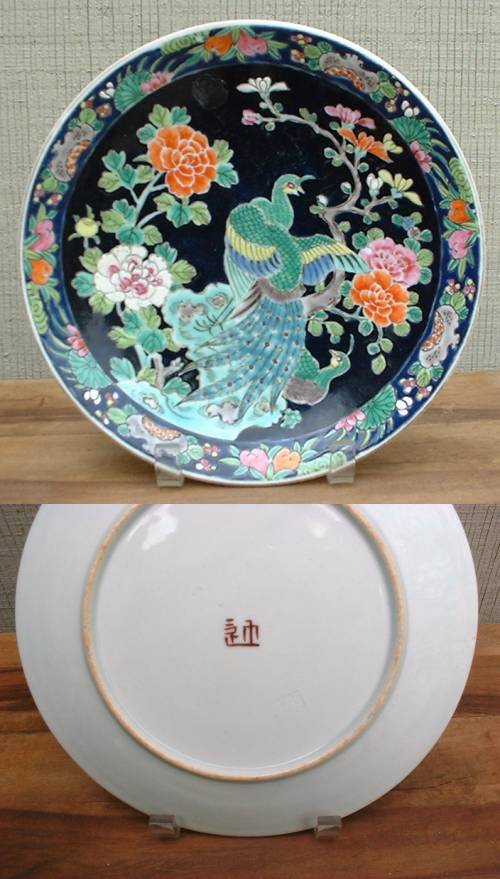
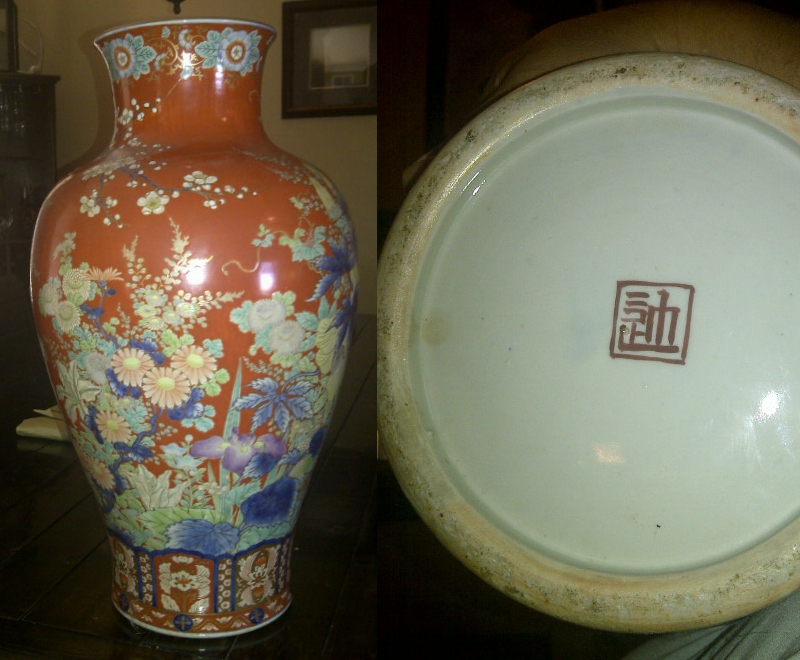
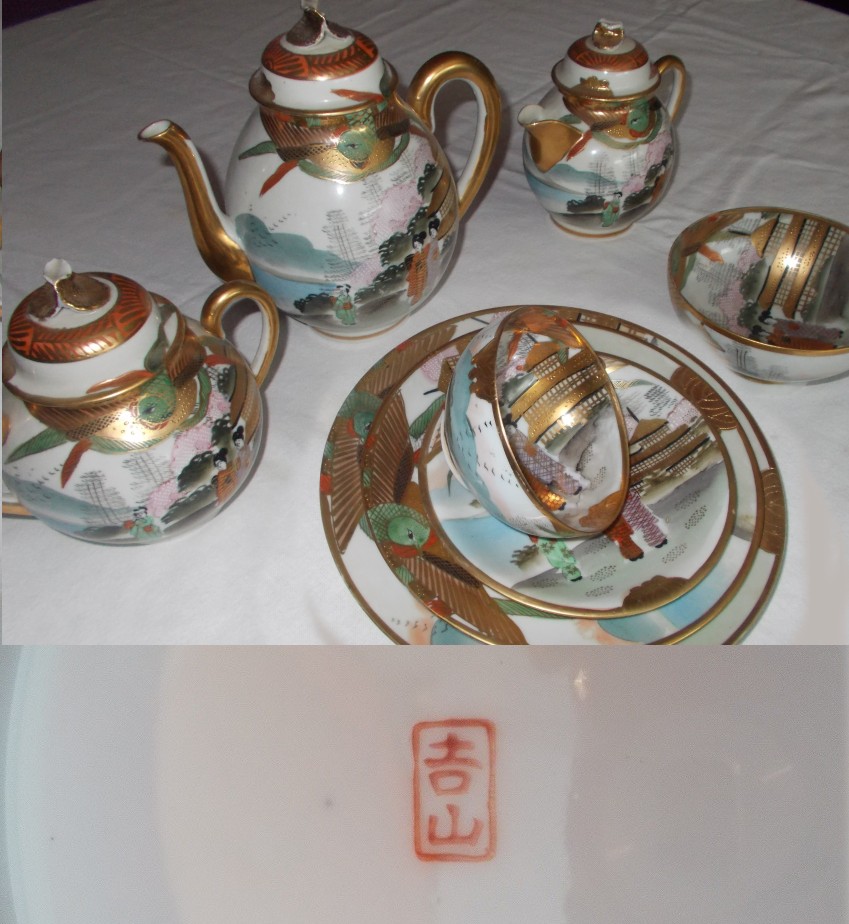
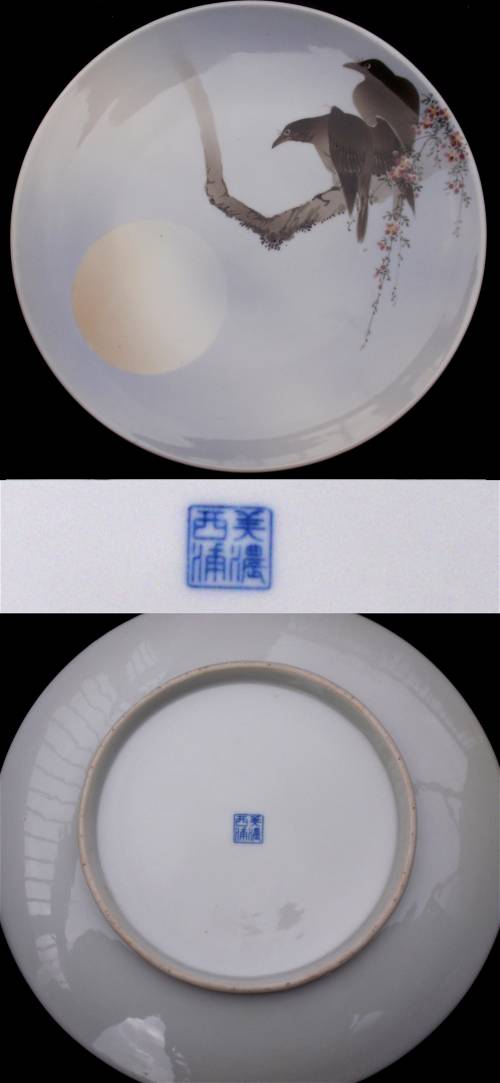
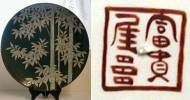
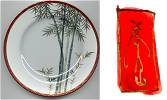
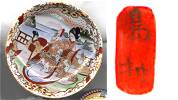

 Mail order catalogue 1917. Vantine's, the Oriental Store. New York
 Click here to see large picture
 Click here to see large picture
 Click here to see large picture
 Click here to see large picture
 Click here to see large picture
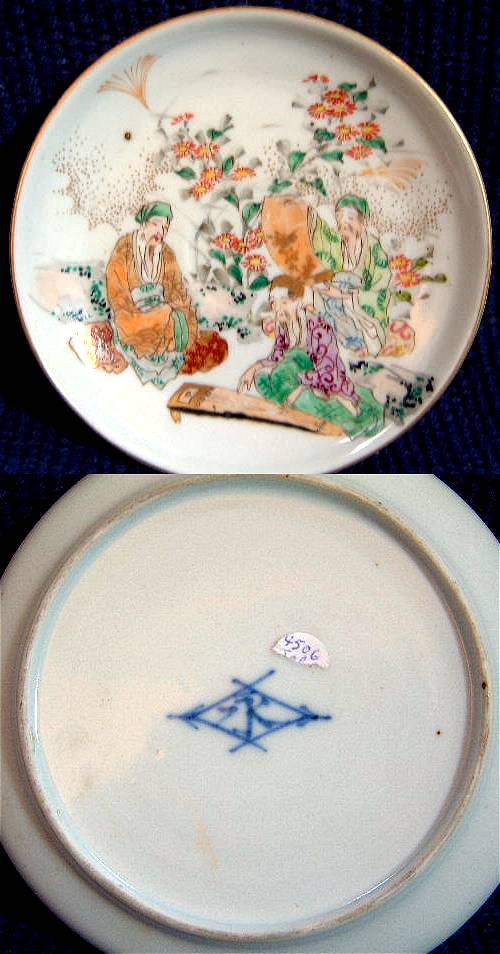 Click here to see large picture
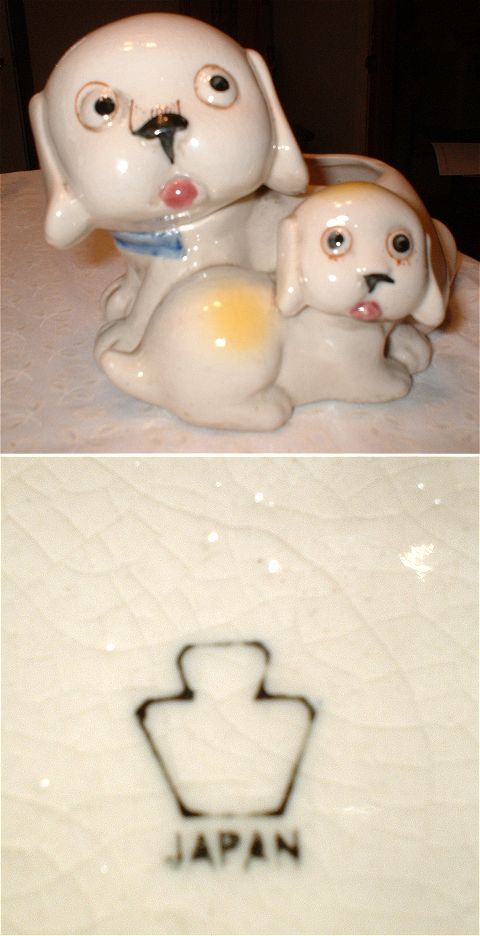 Click here to see large picture
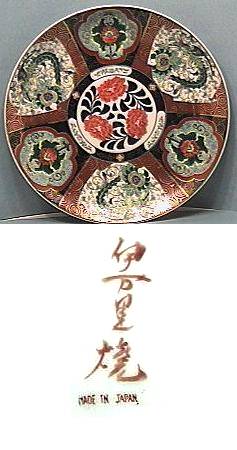 Click here to see large picture
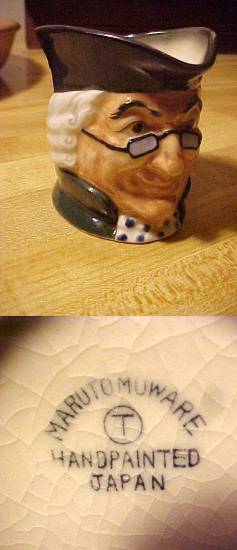 Click here to see large picture
 Click here to see large picture
 Click here to see large picture
 Click here to see large picture
 Click here to see large picture
 Click here to see large picture
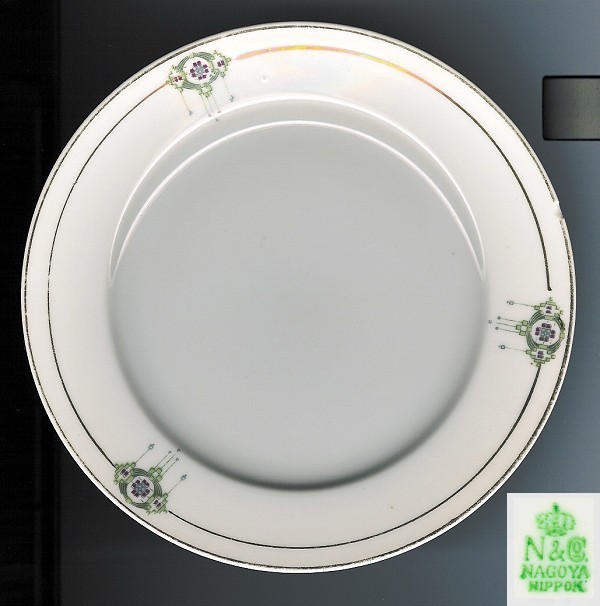 Click here to see large picture
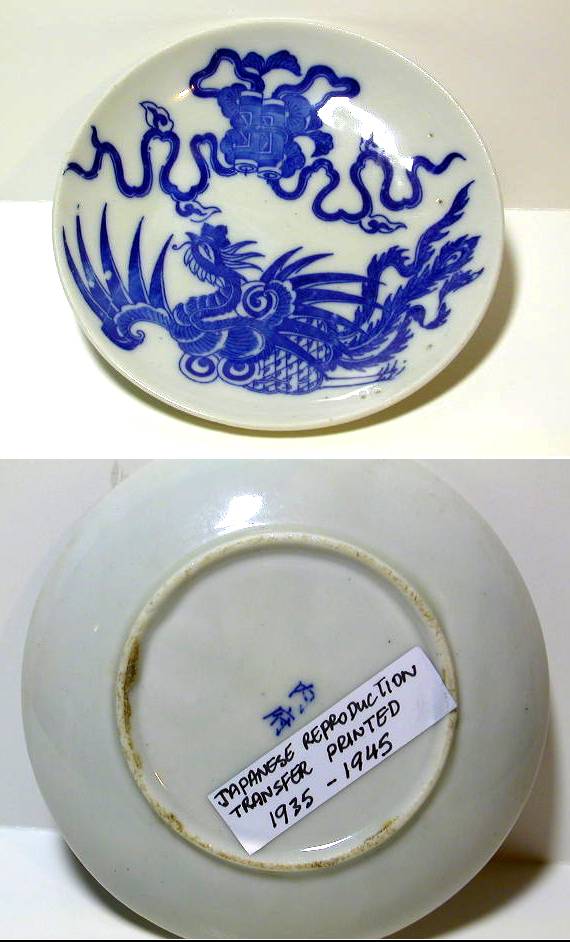 Click here to see large picture
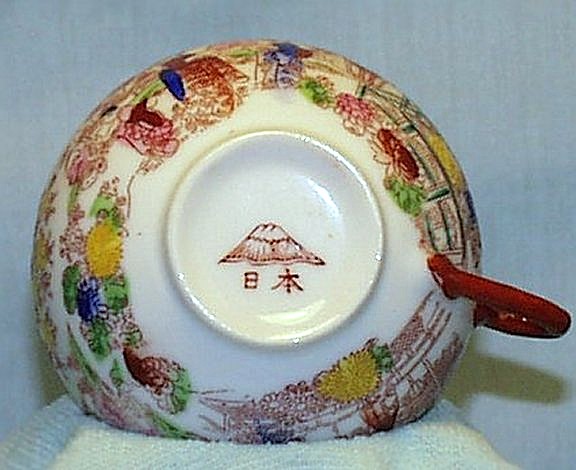 Click here to see large picture
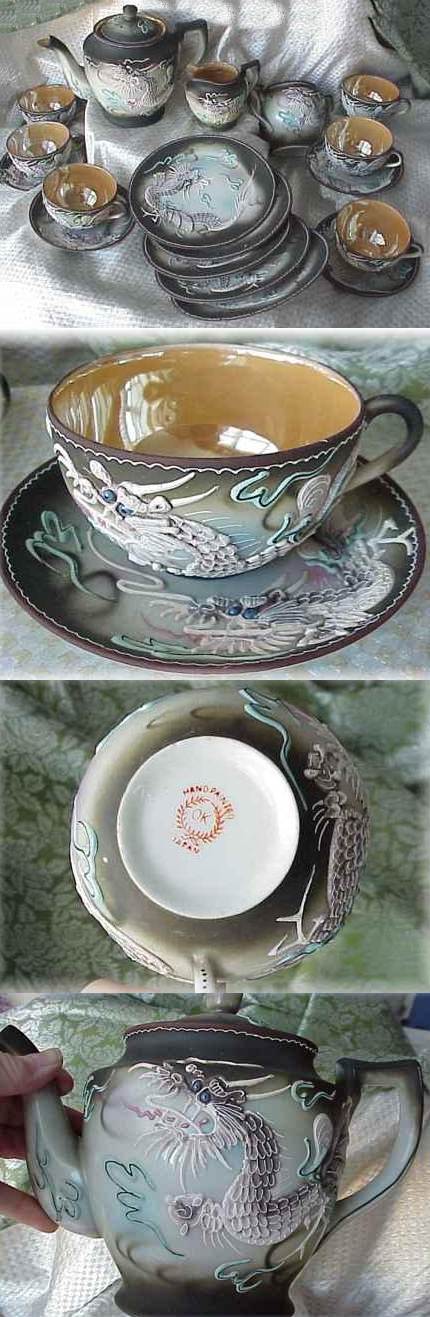 Click here to see large picture
 Click here to see large picture
 Click here to see large picture
 Click here to see large picture
 Click here to see large picture
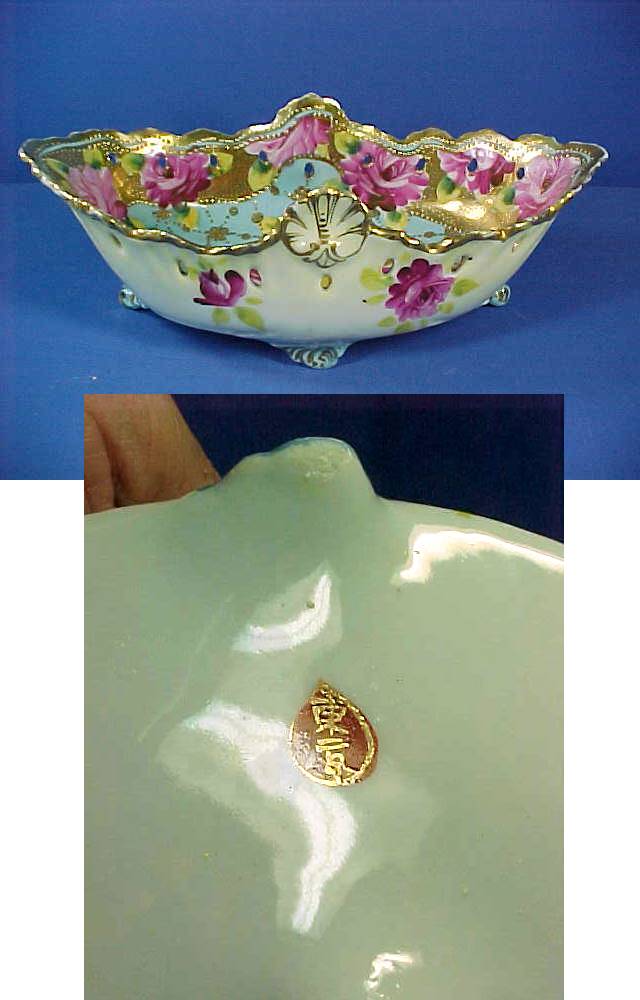 Click here to see large picture
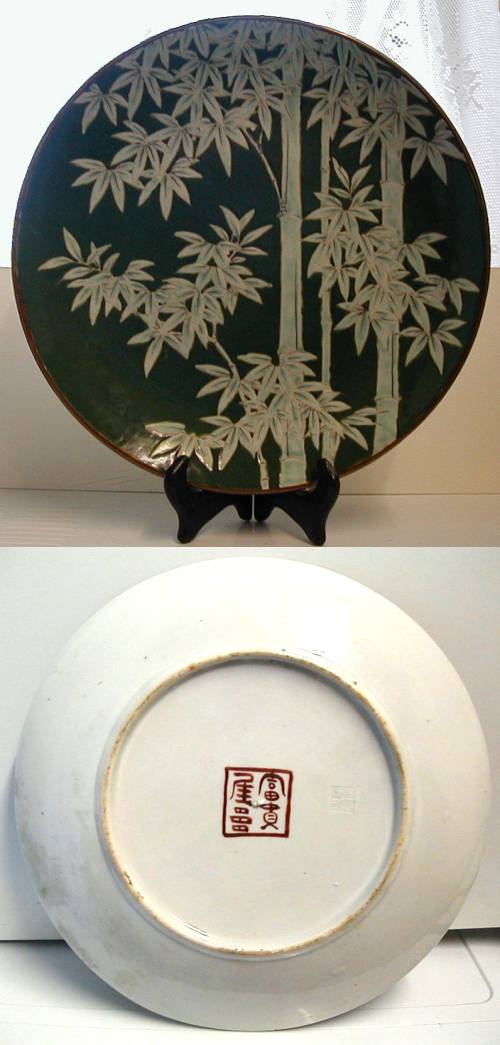 Click here to see large picture
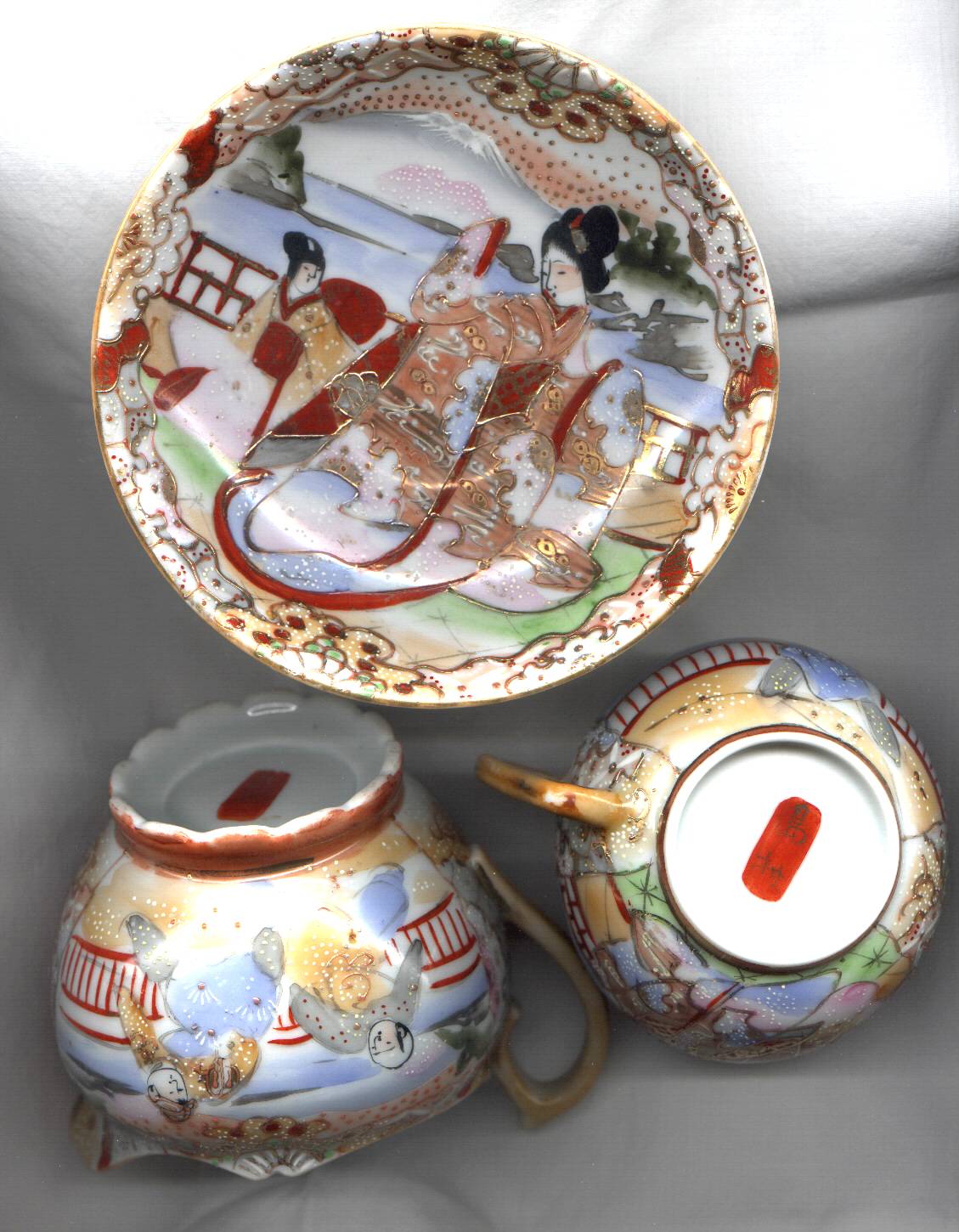 Click here to see large picture