
Japanese Porcelain Marks
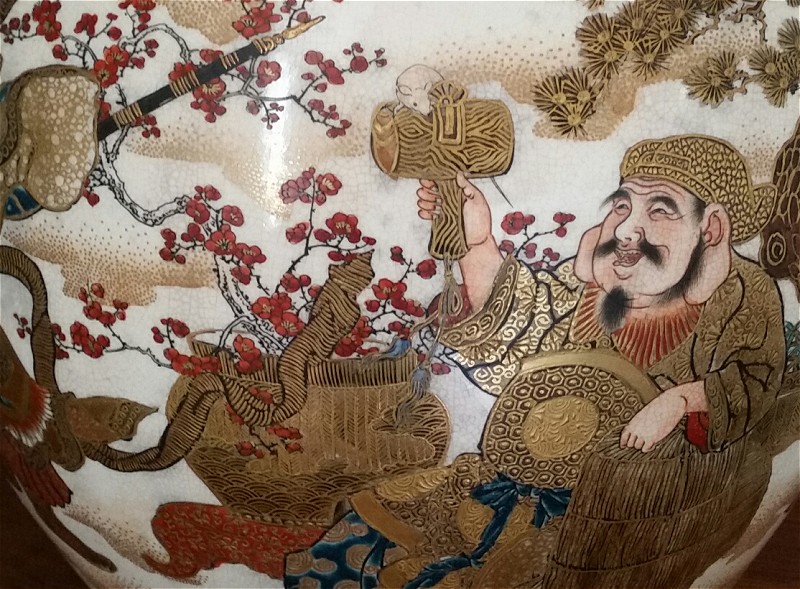
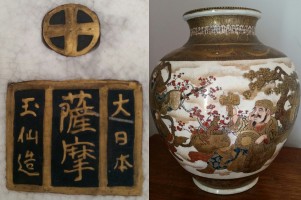
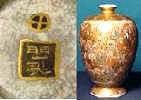
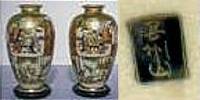
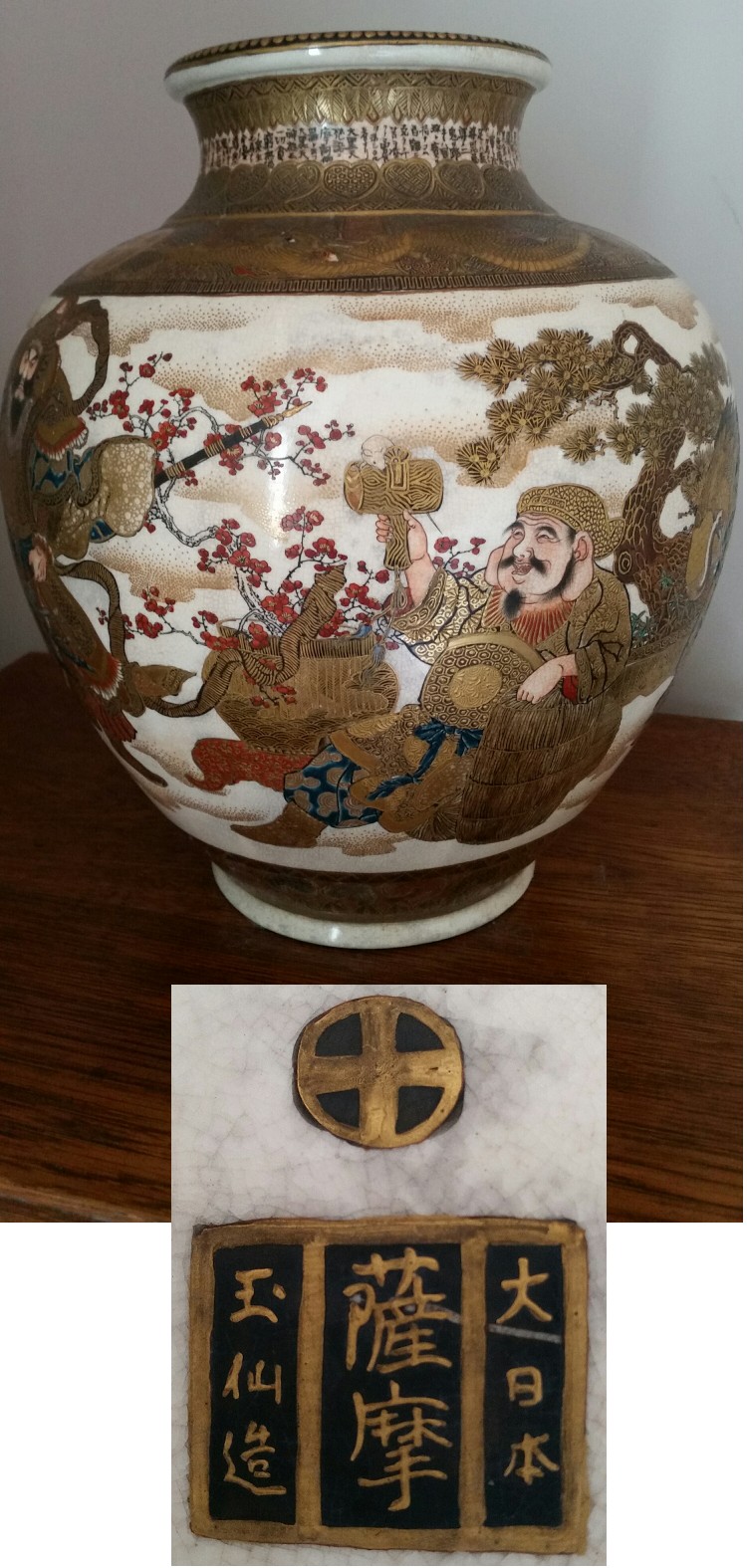
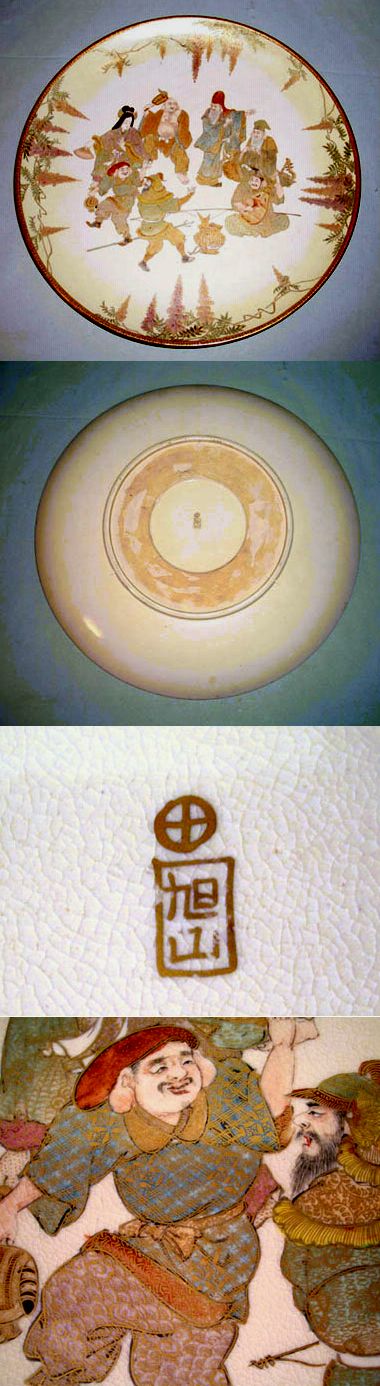
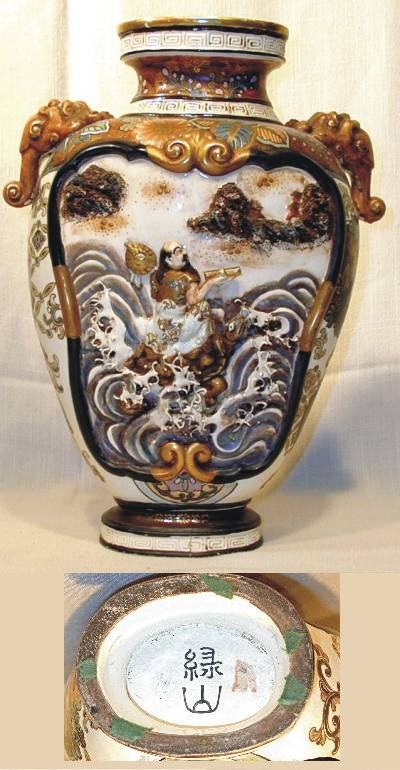
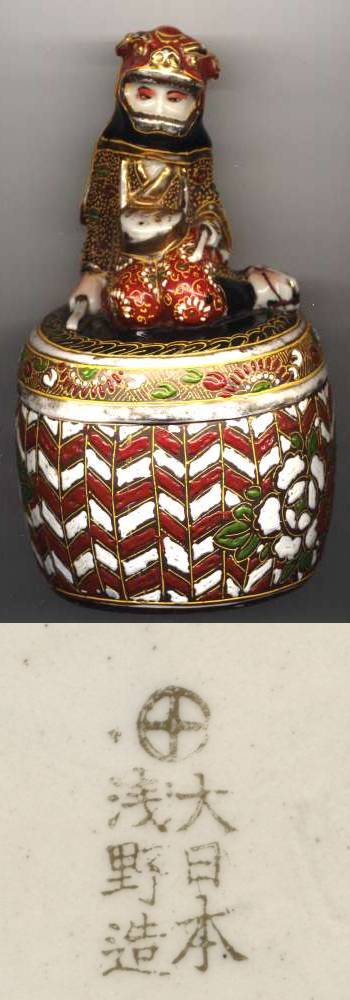
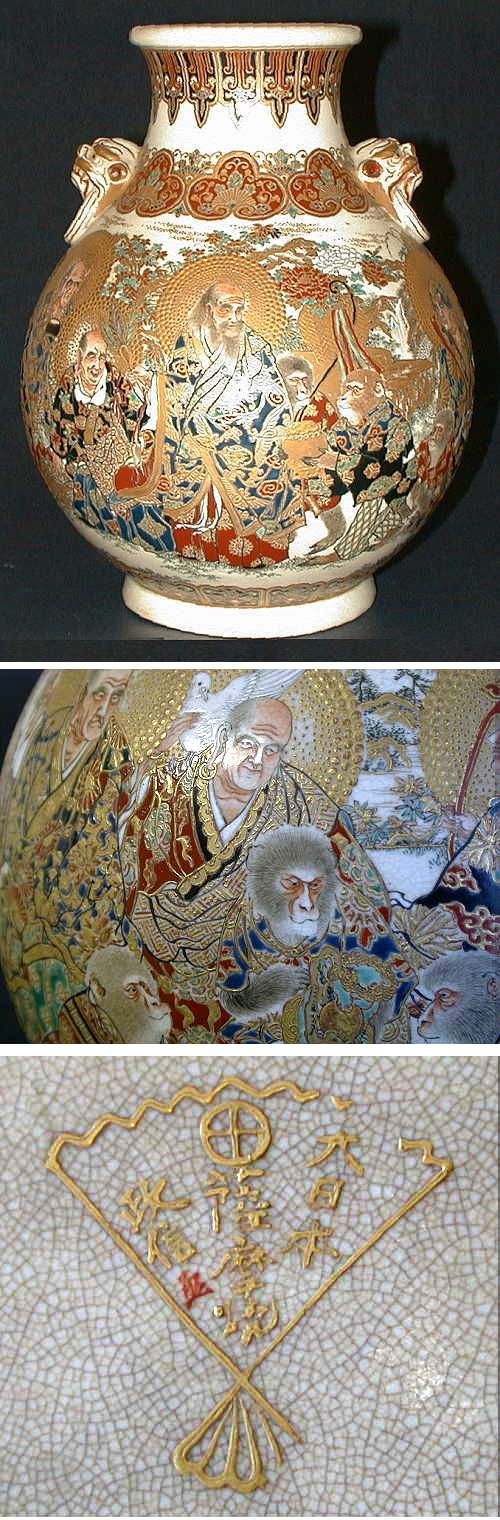
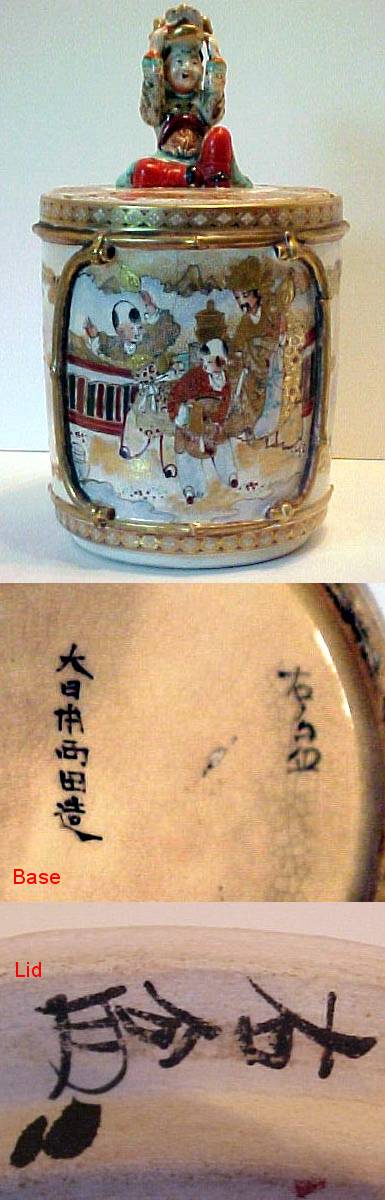
Large Satsuma vase depicting the seven gods of good fortune. Height: 38 cm. Mark: Dai Nihon Satsuma Gyokusen zo. Meiji period, circa 1880s.
Photo: Curtesy Ian and Mary Heriot Coll., New Zealand 2019.
 The typical Satsuma ware we most of the time comes into contact with is a yellowish earthenware usually decorated with a minute decoration with Japanese figures, expressive faces or detailed oriental landscapes, or sometimes embellished with vivid dragons in relief. This ware is in fact an export product specifically designed in the mid 19th century to cater to the western export market. The Japanese themselves had very little interest in this ware.
From around the 1890s to the early 1920s more than 100 artist at least twenty larger studios or factories were producing "Satsuma" wares of which much were of low quality and destined for the European and American export markets. Most of the marks below will detail this latter wares since this is what we see most of.
At the same time, other artists were producing exquisite wares of the highest quality. There were many masterpieces created during its heyday and several studios have created eternal fame for their names with these magnificent wares. Most high quality export 'Satsuma' is easily recognized by its finely crackled glaze and by the fact that its yellowish earthenware body does not "ring" when tapped. The production soon spread to several cities such as Kyoto, Tokyo, Nagoya, Yokohama and elsewhere throughout Japan, from the Meiji period (1868-1912) up until today.
The typical Satsuma ware we most of the time comes into contact with is a yellowish earthenware usually decorated with a minute decoration with Japanese figures, expressive faces or detailed oriental landscapes, or sometimes embellished with vivid dragons in relief. This ware is in fact an export product specifically designed in the mid 19th century to cater to the western export market. The Japanese themselves had very little interest in this ware.
From around the 1890s to the early 1920s more than 100 artist at least twenty larger studios or factories were producing "Satsuma" wares of which much were of low quality and destined for the European and American export markets. Most of the marks below will detail this latter wares since this is what we see most of.
At the same time, other artists were producing exquisite wares of the highest quality. There were many masterpieces created during its heyday and several studios have created eternal fame for their names with these magnificent wares. Most high quality export 'Satsuma' is easily recognized by its finely crackled glaze and by the fact that its yellowish earthenware body does not "ring" when tapped. The production soon spread to several cities such as Kyoto, Tokyo, Nagoya, Yokohama and elsewhere throughout Japan, from the Meiji period (1868-1912) up until today.
Wares of the Original Satsuma Han
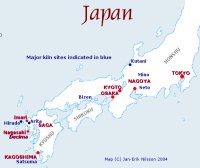
The original Satsuma Han however has a much longer history than that. If you click the map icon to the right you will find this as the Satsuma area on the southern Kyushu island. The first historical kilns here were established by Korean potters in the late 16th century. These first wares were a massive and hard stoneware, covered with a thick dark glaze, a ware that are so rare that only museums might have a few to show.
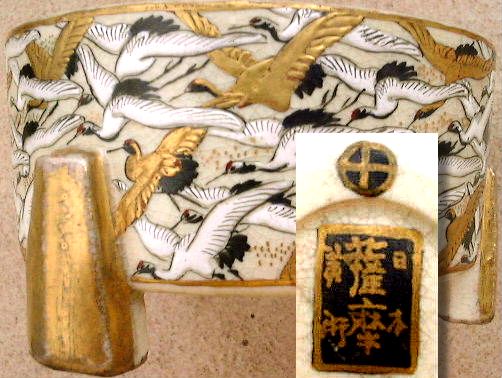
The circle with a cross that often make up a part of the marks, are the Shimazu mon or the family crest of the clan that ruled Satsuma Han however I doubt that any one of the Shimazu clan ever owned or, let alone ordered one Satsuma export style ware piece to be made. If that however had been the case, the crest would in that case been blue, since that was also the Shimazu clan colors.
Satsuma export decorative style
The success of the Satsuma export decorative style inspired many followers, some of which have a stoneware body or one of pure white porcelain. Just to make it easier for the interested collector to find his way to the information offered here, I have chosen to collect any and all Satsuma looking wares, here.
Ceramics bearing the Satsuma Kamon were made well outside of the borders of Kyushu. Items for export were often decorated with obscure and unrelated themes chosen for their drama and exoticism. These wares thus inspired a whole design movement in the West known as Japonism.
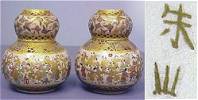
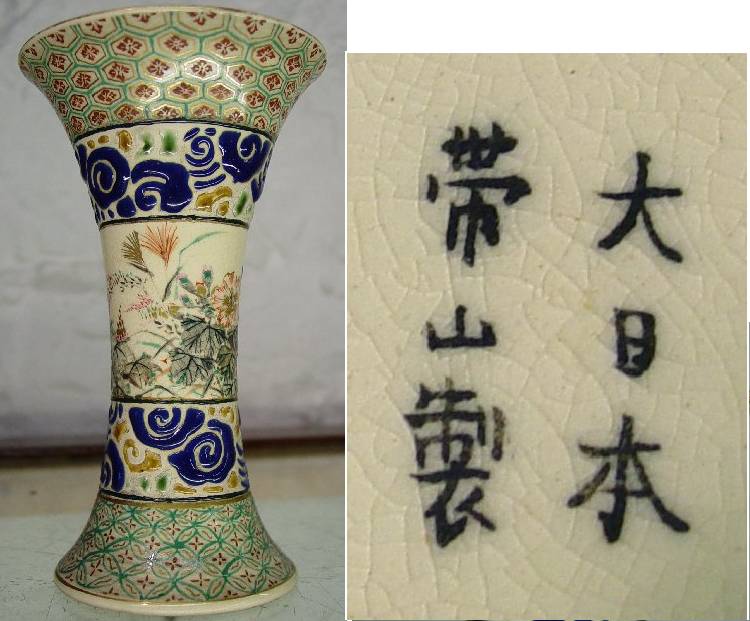
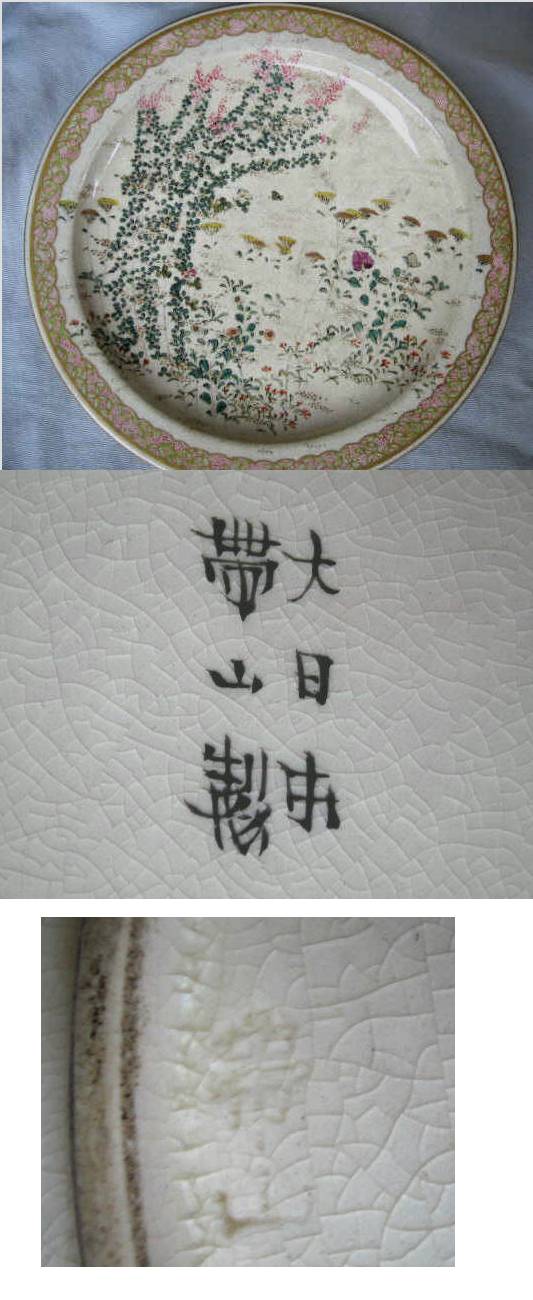
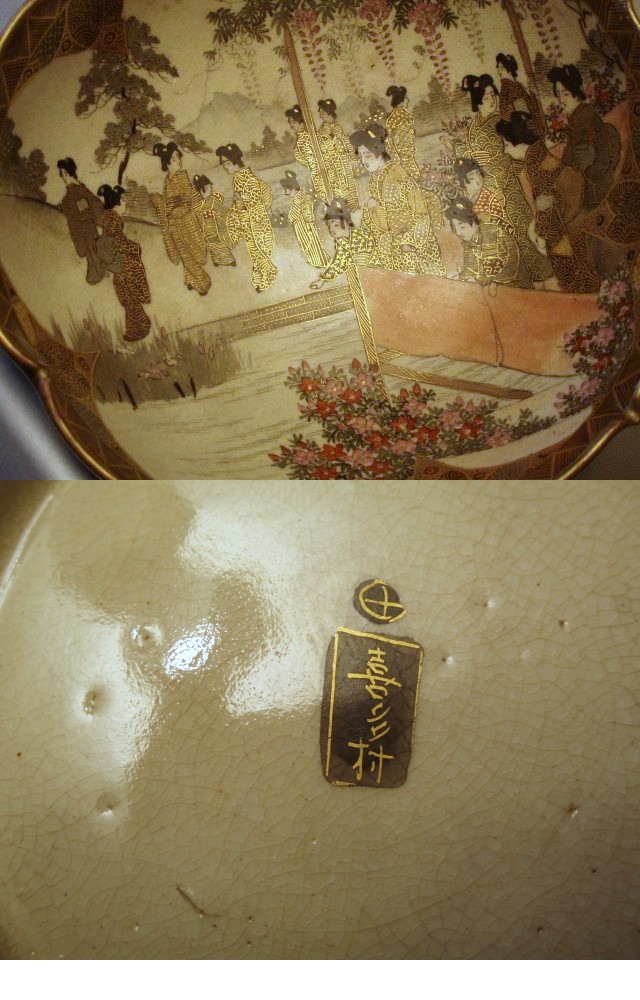
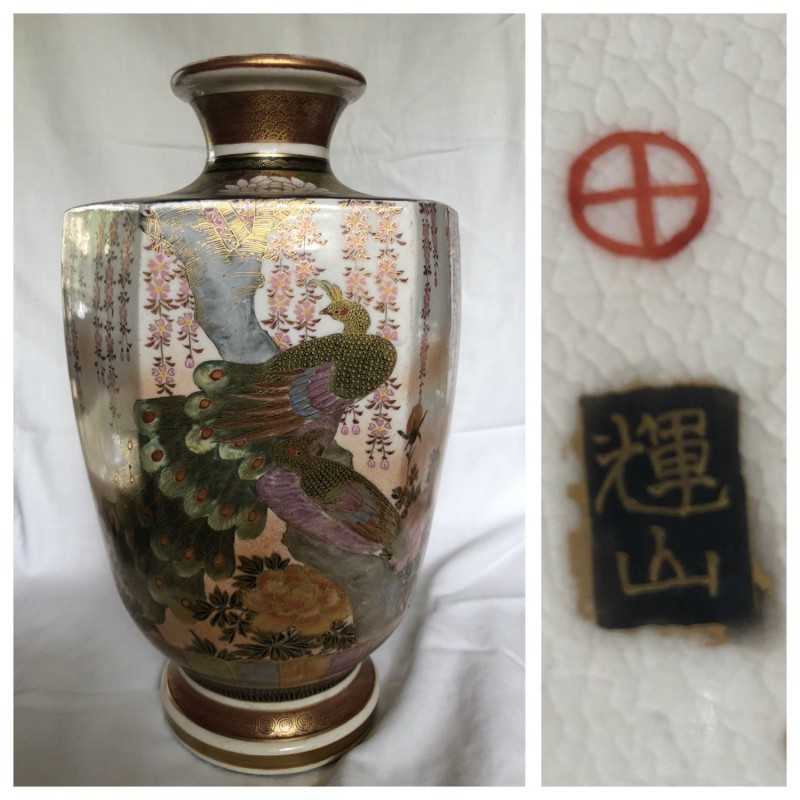
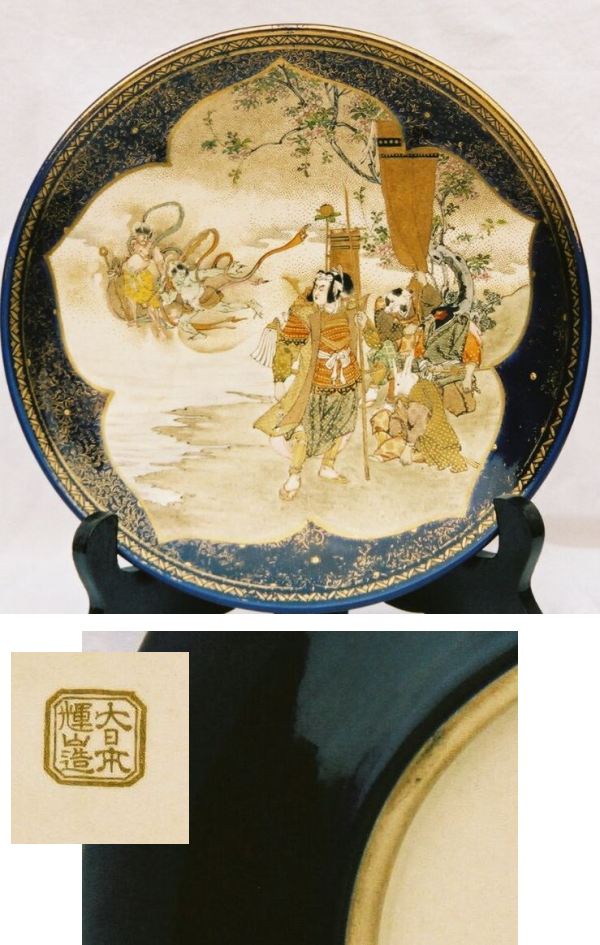
Satsuma was produced in Kagoshima, Kyoto, Tokyo, Osaka, Kobe, and Kanazawa by hundreds of known artists, in many styles and by literally thousands of unknown decorators. Meizan has pieces authenticated as being done in Kanazawa (Kutani). For most of the "Zan brothers" (marks incorporating the Japanese character for mountain = zan) nothing is known. In spite of very good quality work, many good pieces are simply unmarked.
The colour Gosu Blue is found on a type of Satsuma which used to be called Imperial Satsuma circa late 19 century. Gosu Blue is distinctive with a very thick glaze that can be either dark blue, green or black depending on the firing. "Satsuma Gosu Blue" was produced in very limited quantity in Kyoto in the mid-19th century, and is now the most sought after of the Satsuma wares.
A comment on Kyoto or Awata wares as compared to Satsuma ware is that pieces manufactured in Awata near Kyoto, after the Edo period, are all called Kyoto Satsuma. Later on, Satsuma style wares was also produced in Yokohama and Tokyo. The paste and glaze is probably the same as on Satsuma ware while the style of decoration is different. Sandra Andacht, in her Treasury of Satsuma book, quotes a 19th century visitor to the Kinkozan factory, saying that "the same glazed pots were decorated in two styles, the one being called Kyoto or Awata ware, and the other Satsuma".
Please also notice that the authenticity of many of the more important marks below are uncertain.
Jan-Erik Nilsson
Introductory text written by and together with several expert members of the Gotheborg Discussion Board
.
| Satsuma or Satsuma Yaki, generic marks |
|---|
| Generic Satsuma marks refer to marks added to a Japanese ceramic piece to indicate a style in general instead being the name of a specific company, studio or any individual artist.
|
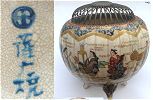 |
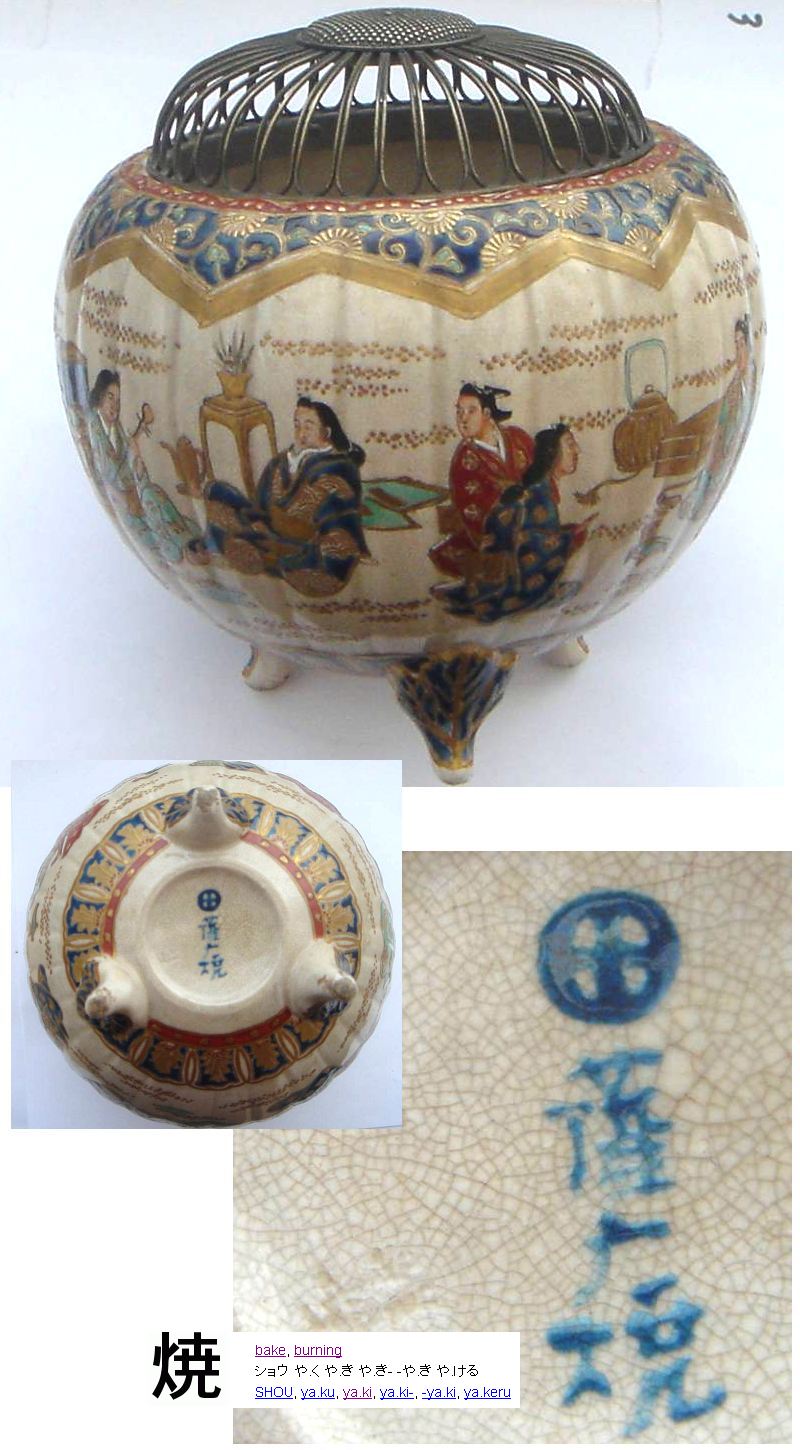
1244. Koro. Mark: Satsuma yaki under the Shimazu family crest. As all the blue, including the mark, is Gosu blue, Presumed date to the earlier part of the Meiji period, around 1880 or thereabouts.
 Click here to see large picture
|
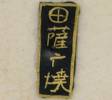 |
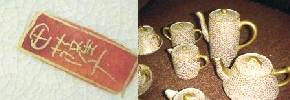
1306. Mark: Shimazu family crest and below that Satsuma Yaki, the last character in Satsuma is abbreviated. Date: Probably latter part of the Meiji (1868-1913) period.
|
 |
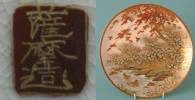
367. Satsuma. Mark: Shimazu family crest; Satsuma; [last character is abbreviated]. 20th cent.
|
|
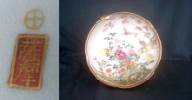
1265. Mark. Satsuma tsukuru.
Click here to see large picture
|
 |
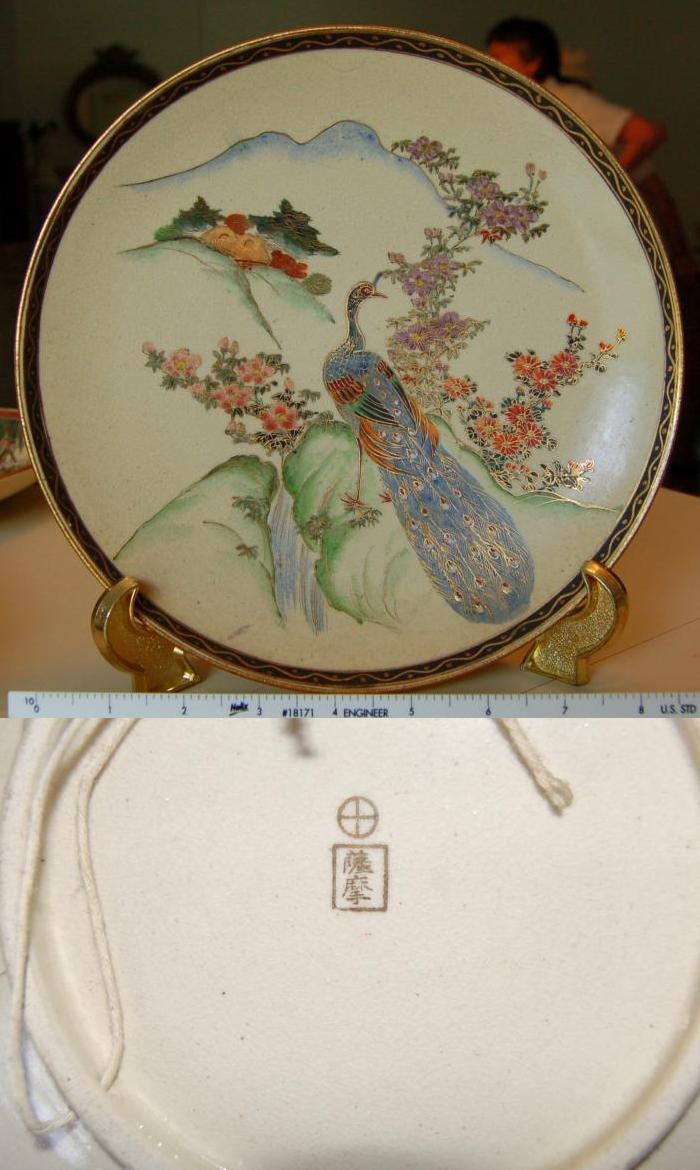
342. Mark: Satsuma under the Shimazu family crest. Taisho period (1912-1926).
|
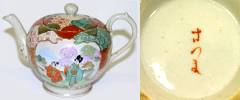 |
927. Mark: Satsuma in Japanese hiragana characters (their native syllabary). |
|
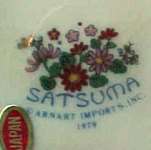
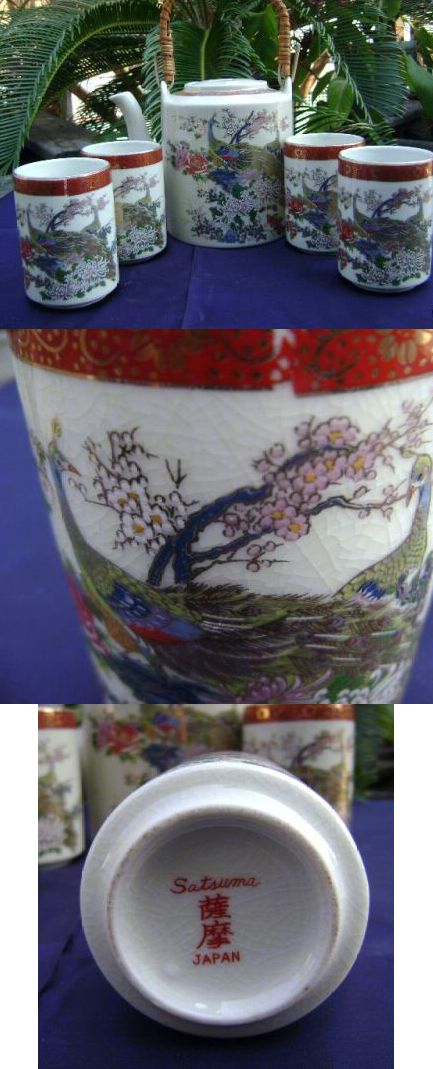
61. Mark: Satsuma, modern mark dated 1979. Imported by, or ordered by the Arnart Import Company. |
|
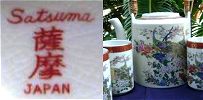
417. Mark: Satsuma, modern mark, c. 1980s.
Click here to see large picture
|
|
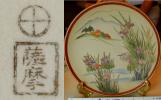
1259. Mark, stamped Satsuma under the Shimazu family crest, c. 1947. These were mass produced during this time and sold to western military personnel on the bases and to visitors and tourists.
Click here to see large picture
|
| Baikei (see also: Nakamura Baikei) |
|---|
| Bizan |
| This mark reads Bizan where 'Bi' = Utsukushi = Beautiful. This Bizan is one of several workshops working for the export industry of the time. It is also not Shimizu Bizan of Kutani fame whose work is extraordinary.
There were a number of Bizans working over the years. |
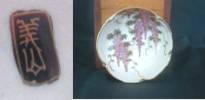 |
343. Bizan, Taisho period (1912-1926)
|
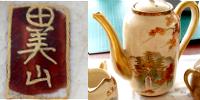 |
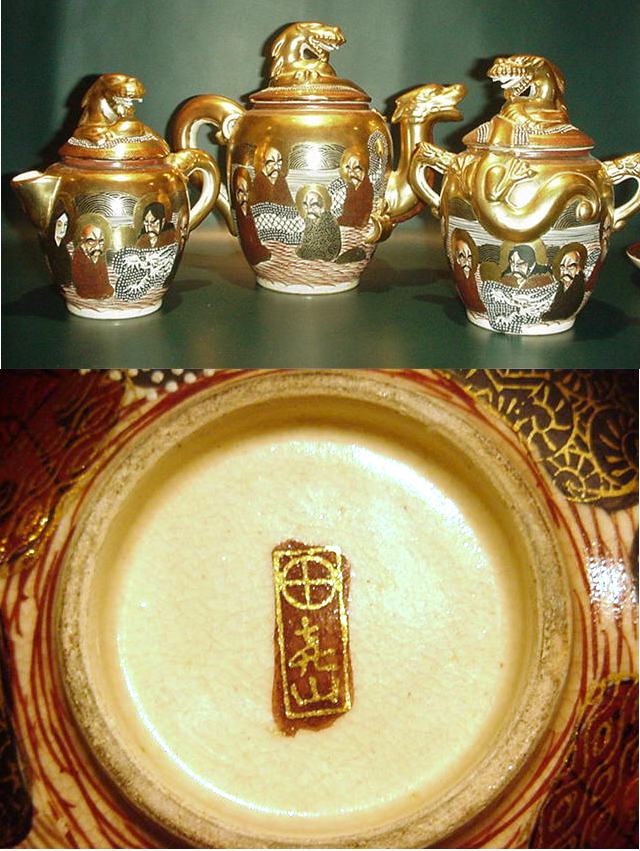
1331. Tea or coffe set. Mark: Bizan under the Shimazu family crest. Taisho period (1912-1926) or sligtly later.
|
| Chin Jukan |
|---|
| Chin Jukan (Jukan zo, Jukan sei, Gyokuzan zo) occurs under many signatures. Most important was Chin Jukan XII (1835-1906) who was the founding father of the satsuma industry in Kagoshima, Satsuma province. He exhibited at many international exhibitions during the years 1873-1906. The factory produced blanks for Satsuma decorators across Japan, notably Yabu Meizan and Gyokushu. Chin also used the name Gyokuzan between 1874-1897. Other artists are Chin Jukan XIV (1926-), (Satsuma Jukan sei) and Chin Jukan XV (1959-) |
| Choshuzan |
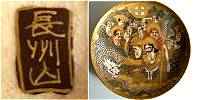
| Choshuzan, alternative reading ZHO (or naka), SHU and ZAN (yama). Large factory producing low to middle quality wares. Often complex marks including Dai Nippon and name of individual potter. One of the most common marks on Kyoto Satsuma dragonware during the second half of the Meiji period (1868-1912) is that of Choshuzan, mostly in conjuction with another artist and some kind of commendatory mark such as respectfully made. Marks can in addition to Choshuzan have Dai Nippon (Great Japan), Satsuma Koku, Jissei in, Choshuzan saku (made), Kagetsu hitsu (decorated).
|
|
1267. Tea cup and saucer, Kyoto Satsuma ware, Mark: Choshuzan. Decoration of dragons with white slip (moriage) on a heavy gilded ground, often referred to as dragonware. Date second half of the Meiji period (1868-1912).
Click here to see large picture
|
|
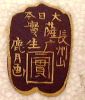
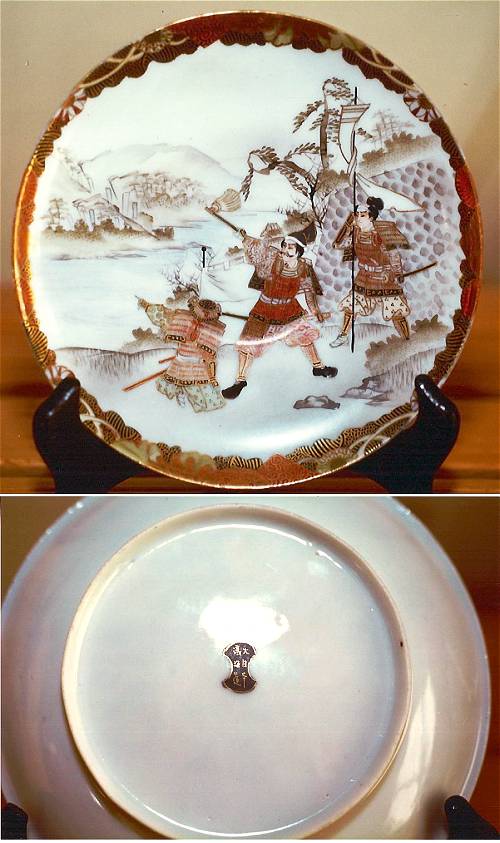
592. Satsuma. Mark: The three top characters read, from right to left - Dai Nippon. The four characters in the centre read Satsuma, Jitsu Sei. The three on the right read Choshuzan i.e. the potter, and the three on the left, Kagetsu Ga - painter. The large square character seems to read either Maru, or Tsubaru meaning round or circular, it may be a studio mark. Date: probably from the later part of the Meiji (1868-1912) period. |
| Daimyo |
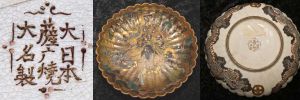 |
1435. Satsuma. Mark: Right colum: Dai Nippon. Middle column of 3 characters is best written as "Satsu ma (shortened form) yaki", rather than "Satsu ma sho", so "Satsuma ware". The decorator's name has just 2 characters, I think best written as Daimyo (perhaps, in this sense, meaning "great reputation"), with the LH column then reading "Daimyo made". Likely date, around 1900. |
| Eizan Kawamoto. |
|---|
| Specialized in large pieces carved in high relief. |
| Fujisan |
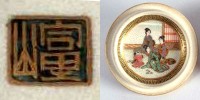 |
1555. Satsuma. Mark: Fujisan. Likely date around 1910-20. |
| Fuzan |
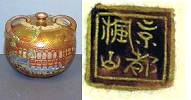
|
461. Satsuma. Mark: Kyoto Fuzan = "Kyoto, Maple Mountain". Meiji period (1868-1912) |
| Gyokusen |
|---|
|
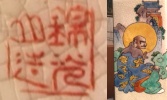
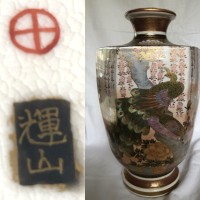
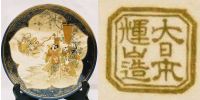
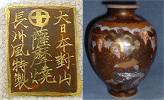
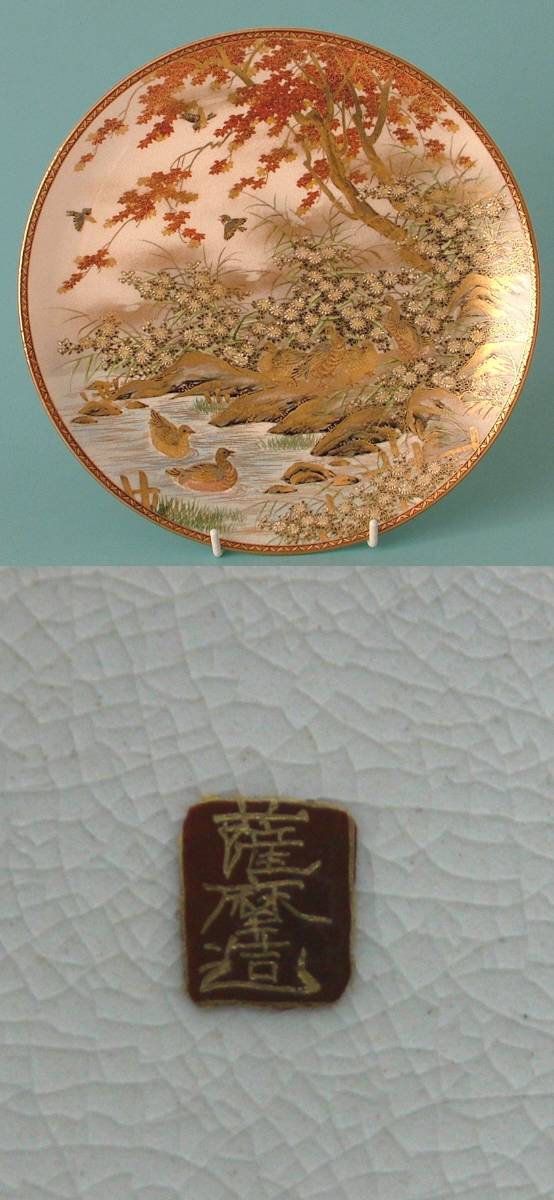
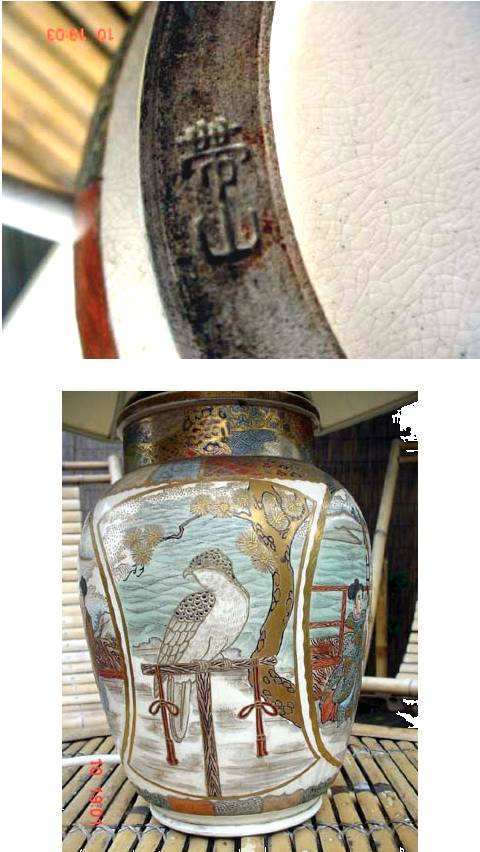
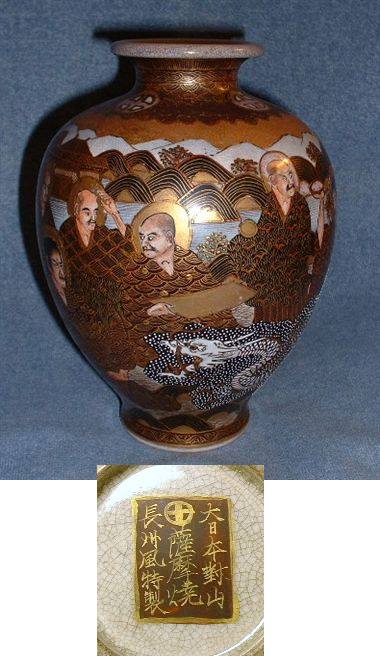
1569. Mark: Dai Nihon Satsuma Gyokusen zo. Large Satsuma vase depicting the seven gods of good fortune, height: 38 cm. Meiji period (1868-1913), ca 1880. Ian and Mary Heriot Coll., New Zealand 2019.
click here to see large picture
|
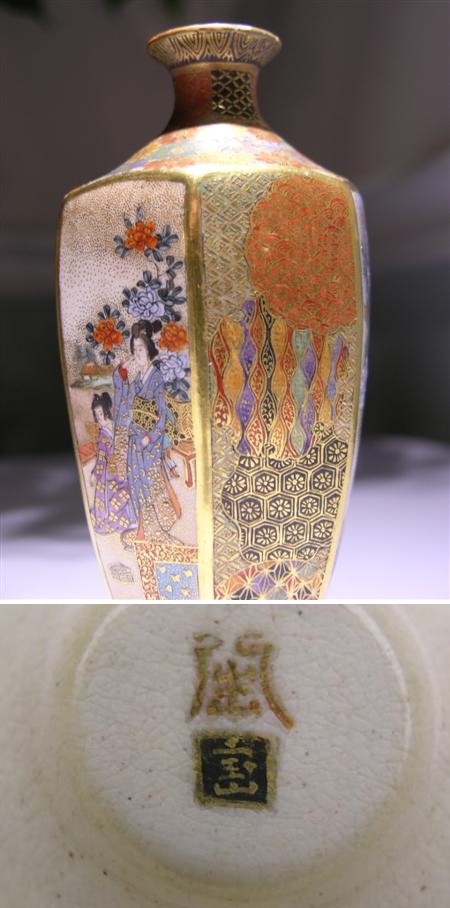
| Gyokuzan 玉 山 (Jade Mountain) |
|
Older spellings are Giokozan (Brinkley, 1900) and Giokuzan (Bowes, 1882). Depending on the age of the piece and actual artist, the family name Chin Jukan also occurs.
Chin Jukan (Jukan zo, Jukan sei, Gyokuzan zo)
Chin Jukan XII (1835-1906) was the founding father of the satsuma industry in Kagoshima, Satsuma province. He exhibited at many international exhibitions during the years 1873-1906. The factory produced blanks for Satsuma decorators across Japan, notably Yabu Meizan and Gyokushu. Chin also used the name Gyokuzan between 1874-1897.
Chin Jukan XIV (1926-) (Satsuma Jukan sei)
Chin Jukan XV (1959-)
|
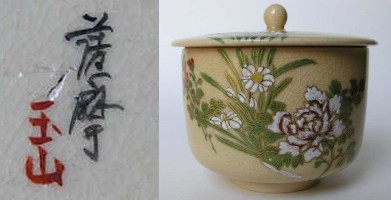
|
1561. Mark: Gyokuzan. Tentative date; mid 20th century.
Click here to see large picture
|
|
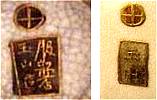
451. Satsuma. Mark: Gyokuzan. Shimazu family crest above cartouche. No 451. The right cartouche reads "Gyokuzan". The left deserves a separate description. Meiji period (1868-1912). |
|
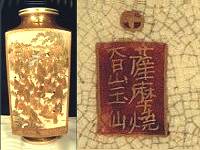
454. Satsuma. Mark: Gyokuzan. Shimazu circular crest above inscription. The three characters to the right read: Satsuma-yaki. Suggested reading of the left column despite a possibly error / extra "zan" character: Satsuma yaki, dai ni [hon], Gyokuzan
|
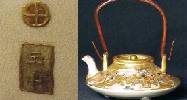 |
364. Mark: Gyokuzan, gold mark with separate 'mon' on dull gold. Meiji period (1868-1912) |
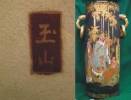 |
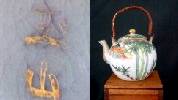
341. Gyokuzan, gold mark on red
|
 |
363. Gyokuzan, gold mark. Meiji period (1868-1912)
|
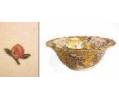 |
366. Gyokuzan, gold mark on two coloured flower bud. (Does not show mark, accept as correct) Early Meiji period (1868-1912).
|
|
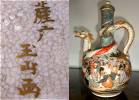
1339. Mark: Satsuma, Gyokuzan zo. Porcelain ewer "dragonware" on crackled Kyoto Satsuma style porcelain ware. Mid 20th century.
Click here to see large picture
|
| Hekizan |
|
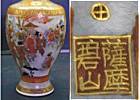
446. Satsuma. Mark: Shimazu family crest above a cartouche, reading: Satsuma Hekizan. The two characters to the right read "Satsuma". The bottom left is usually written as "zan", rather than "yama". Taisho period (1912-1926).
|
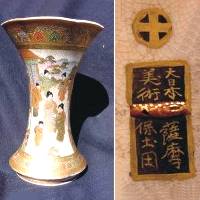
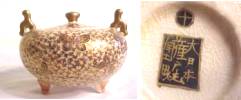
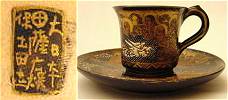
| Hododa 保土田 |
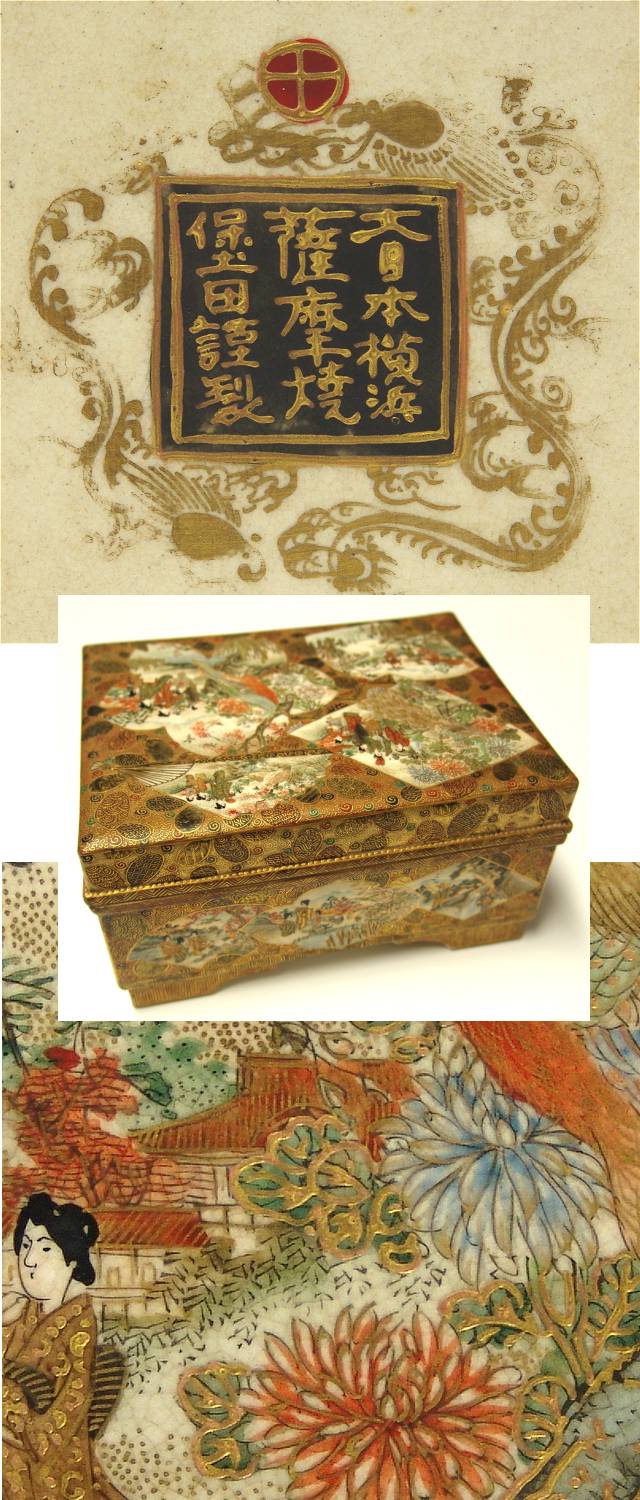
On some Japanese Satsuma wares the thee kanji characters 保土田 occurs in the mark. The middle character 土, can be read as to or do while 保 ho and 田 ta are pretty much fixed. While several readings are possible, Hododa is the most common among collectors. For the purpose of this marks page I have then settled for the Hododa transcription.
While I have no firm data to back this up, it has been suggested it is a safe guess that the Hodota signature is a late Edo / Meiji period Yokohama merchant name and not that of any particular studio or pottery family. Various porcelain carries this name separate or in combination with others in their marks, of which some are listed below. Lawrence I believe have this as "Hododa Biten or Hododa Meizan (Hododa company, large company in Yokohama)"
|
 |
356. Shimazu family crest; cartouche reads Meizan Hododa. Meiji period (1868-1912).
|
|
453. Satsuma. Mark: "Hododa". Shimazu family crest above cartouches.
Reading top to bottom, right to left the top cartouche is: Dai Nippon, Bi jutsu. The lower cartouche is: Satsuma, Hododa. Meiji period (1868-1912). |
|
470. Satsuma. Artist signature: "Hododa". Mark: Shimazu family crest above cartouche. Dai Nippon Satsuma Hododa. If considered, two further characters at the bottom left and center. While unsure, I think they say tsukuru kore (i.e. made this). Therefore (reading top to bottom, right to left) the full mark might read: Dai Nippon, Satsuma, Hododa made this. Meiji period (1868-1912) |
|
1074. Satsuma. Artist signature: "Hododa". Mark: Shimazu family crest above cartouche. Dai Nippon Satsuma Hododa. The full mark might read: Dai Nippon, Satsuma, Hodota made this. Meiji period (1868-1912).
Click here to see large picture
|
|
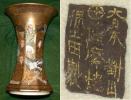
889. Mark: Top to bottom, left to right, it reads Dai Nippon ? zan (shimazu mon) Satsu ma yaki, Ho do da sei. Meaning: "(made in) Great Japan (by) ? zan, Satsuma ware, manufactured (by) Hododa." The artist name is possibly the bottom two characters on the right (? san). "Hodata (unconfirmed info supplied) was a large Tokyo producer which made many pieces in this style early in the 20th C."
Click here to see large picture
|
|
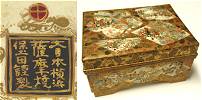
1085. Mark: Under the circular Shimazu clan mark, Dai Nippon, Yokohama, Satsuma yaki, Hododa, Kinzo or tutushinde meaning 'respectfully made'.
Click here to see large picture
|
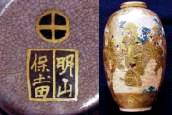
| Hozan, Matsumoto |
|
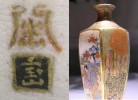
1562. Mark: Hozan, under the Yasuda trademark. When signed in full it reads Matsumoto Hozan. Some of his work is of very high quality.
Click here to see large picture
|
| Hyozan |
|
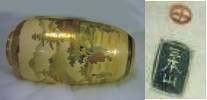
474. Satsuma. Hyozan or Hiozan. Taisho period (1912-1926) |
| Ji, Kyoto Satsuma |
|
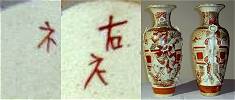
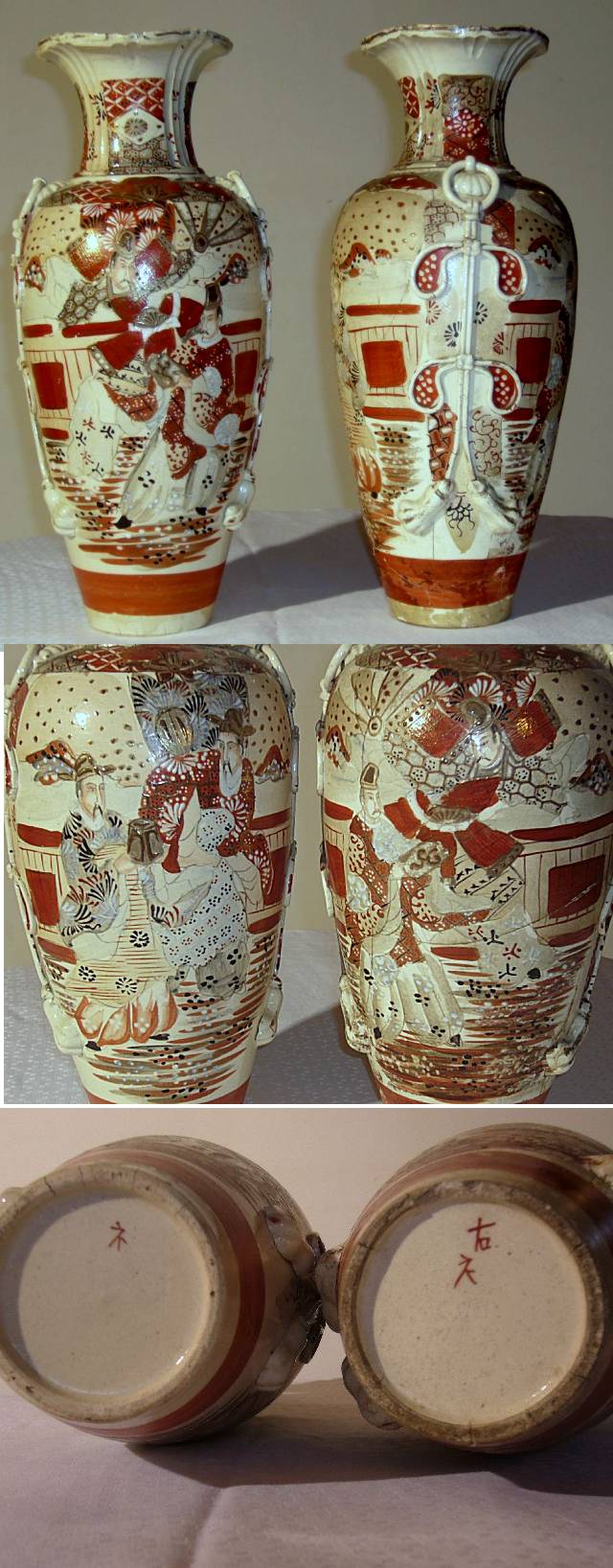
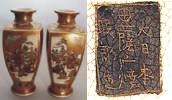
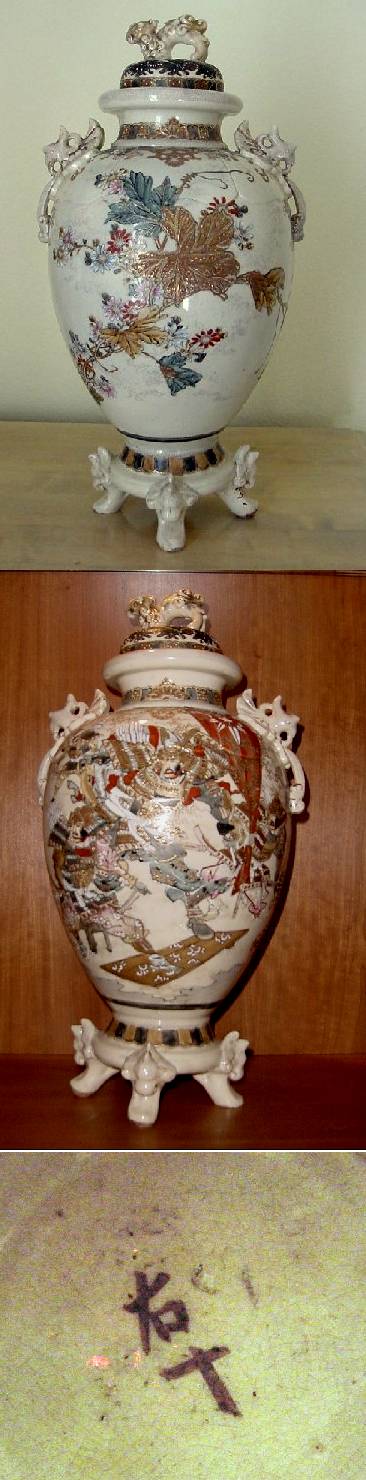
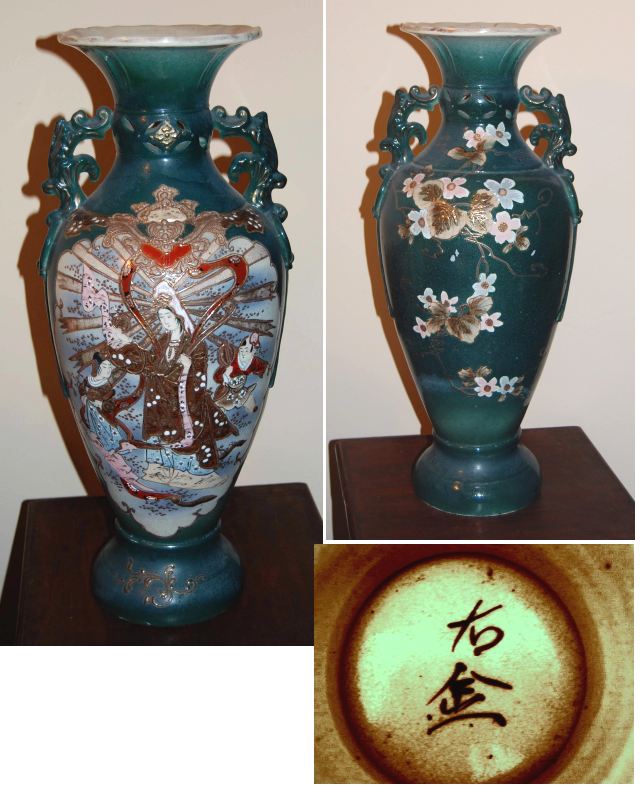
1341. Pair of vases, Kyoto style Satsuma. Marks: Japanese kanji Ji This symbol occurs on both these vases plus that on one we also find the word nigi "Right" 右. It is not difficult to suggest a meaning of the mark as that one of the vases should be shown on the right hand side. Tentative date 1920-30.
Click here to see large picture
|
| Jitsu |
|---|
|
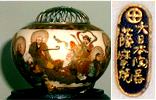
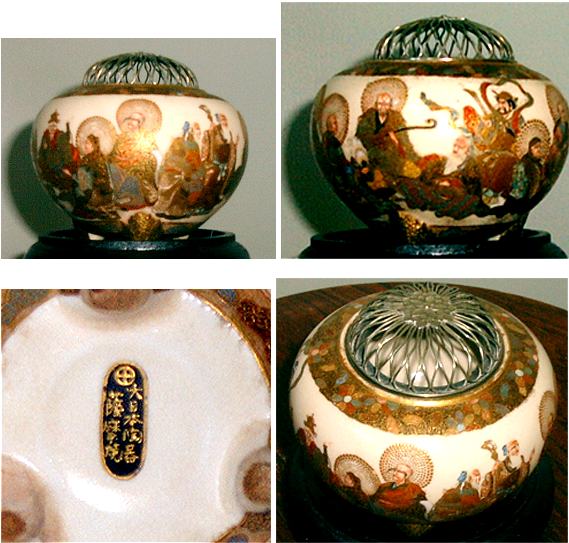
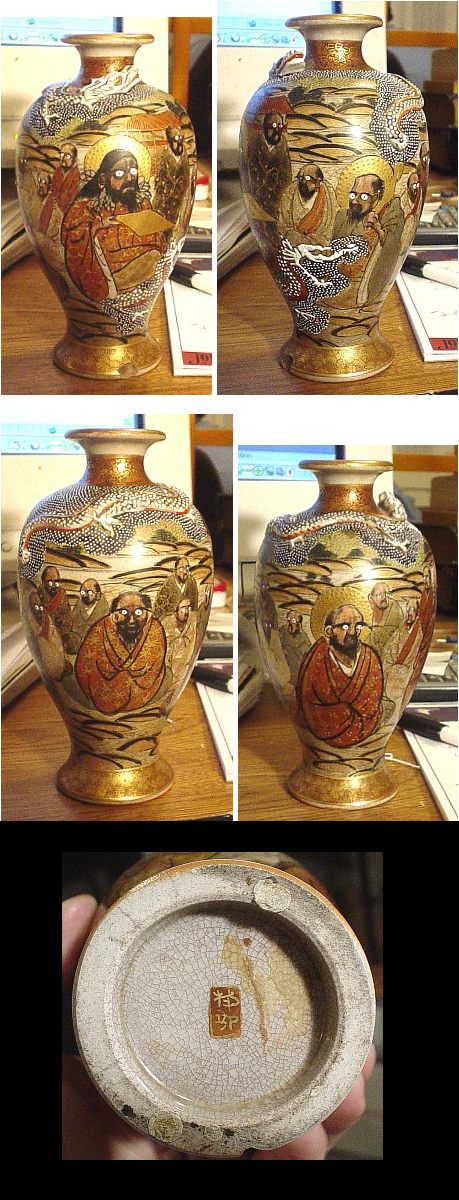
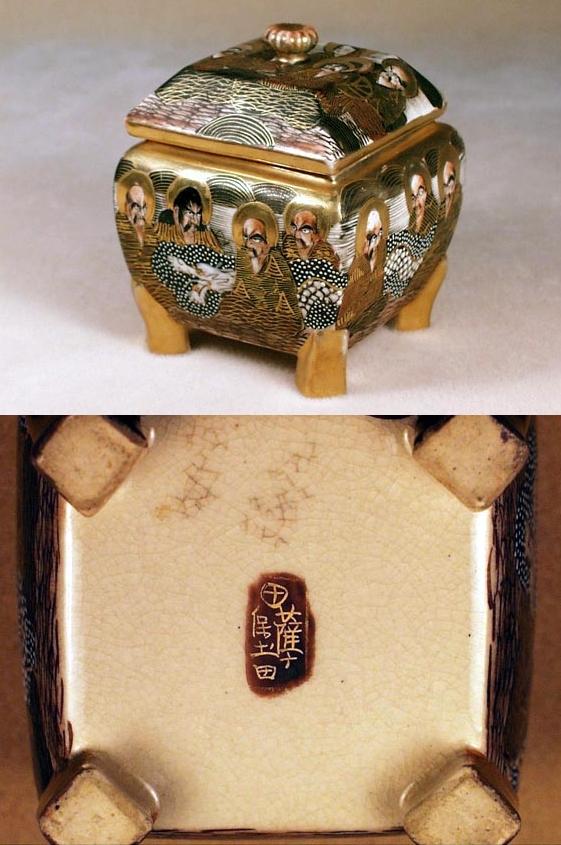
892. Koro, with decoration of "Arhats" (sages) etc., Mark: Dai Nippon, jitsu hin, satsuma yaki. Date: Late Meiji 1895-1912
Click here to see large picture
|
| Juzan |
|
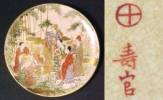
455. Satsuma. Mark: Juzan. The third character is a seal or the kakihan of the artist |
| Kaizan |
|---|
| Likely to be a commissioning agent and not a manufacturer |
| Kanzan |
|---|
| See also Kyoto Tojiki Goshigaisha |
| Kazan |
|---|
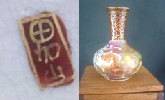 |
346. Shimazu family crest; cartouche reads Kazan. Taisho period (1912-1926).
|
| Keida |
|
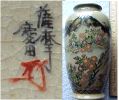
1065. Mark: Keida. The mark appears to read "Satsuma" "Keida" with a Kakihan, ie the red mark at the bottom, an unreadable mark of the artist/potter. Tentative date around 1920s.
Click here to see large picture
|
| Kinkozan Sobei |
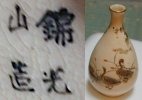
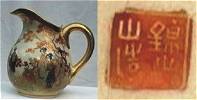
| The Kinkozan family have been associated with pottery since 1645. They went on to become the largest producer of Satsuma ware, from the end of the 19th century until 1927 after which the factory closed. By the 1850s Kobayashi Sobei (1824-84), Kinkozan Sobei (artist name Kinkozan IV), started to export his products together with the Kyoto manufacturer Taizan VIII. The market was in particular America. Their main production period was approximately between 1875-1927 under the leadership of Kinkozan V (1868-1927). Regarding styles, in her book Treasury of Satsuma, Sandra Andacht quotes a 19th century visitor to the Kinkozan factory, saying that the same glazed pots were decorated in two styles, the one being called Kyoto or Awata ware, and the other Satsuma. |
|
1447. Vase. Mark: Kinkozan tsukuru. Meiji (1868-1913) period.
Click here to see large picture
|
|
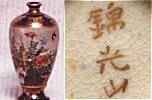
448. Satsuma. Kinkozan. |
|
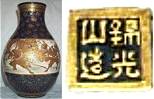
449. Satsuma. Kinkozan tsukuru. |
|
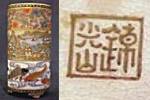
456. Satsuma. Kinkozan tsukuru. |
|
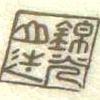
452. Satsuma. Mark: Kinkozan. |
|
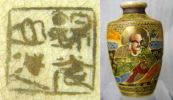
875. Mark: Kinkozan tsukuru. Date uncertain.
Click here to see large picture
|
|
1241. Vase, height 5 inch / 12.5 cm. Mark: Kinkozan tsukuru. Date early 1920s. The vase is one of a pair.
Click here to see large picture
|
|
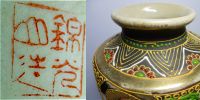
1551. Square Vase. Mark: Kinkozan tsukuru. Tentative date 1920s.
Click here to see large picture
|
|
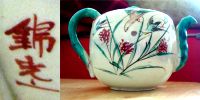
1241. Vase, height 5 inch / 12.5 cm. Mark: Kinkozan tsukuru. This vase is marked with a sticker on the base saying 1934, it is however not known if this is a date. According to the family history it might be the year of acquisition.
Click here to see large picture
|
|
1064. Mark: Kinkozan. Perhaps near turn of the century or slightly before. In the book "Treasury of Satsuma" there seems to be several similar illustrated dated to ca. 1885-1900.
Click here to see large picture
|
| Kitamura Yaichiro |
|---|
|
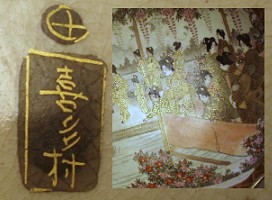
1571. Mark: Kitamura Yaichiro. Mentioned in Master Potter of Meiji Japan Makuzu Kozan and his workshop, by Clare Pollard.
Click here to see large picture
|
| Kizan |
|
1556. Mark: Kizan under the Shimazu family crest, a cross within a circle.
Click here to see large picture
|
 |
359. Mark: ? KIZAN, gold mark on red
|
 |
360. Mark: ? KIZAN, gold mark on black
|
 |
362. Mark: Kizan, gold mark in double gold lines. characters to right illegible. Meiji period (1868-1912)
|
|
582. Dai Nippon, Kizan, Tsukuru - "Great Japan, Kizan, (artist). made". It is generally accepted that marks that includes "Dai Nippon" in Japanese characters on the whole date to the Meiji (1868-1912) period, reflecting the greatly increased nationalism of that period. This mark Meiji period, around 1880 - 1900.
Click here to see large picture
|
| Koshida |
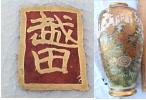
| Koshida seems to have been a prolific maker of Satsuma from at least the 1880,s. Much of their production was decorated by some of the best artists and bears their marks as well as Koshida's. Koshida would have closed about the same time as the Kinkozan factory and the business seems to have reopened post war, either by a family member or by someone simply using a well known name as a cachet. |
|
1262. Vase. Mark: Koshida. Date likely to be 1950s or later.
Click here to see large picture
|
|
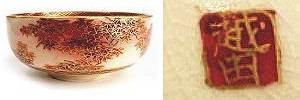
457. Satsuma. Koshida. This is a company, rather than artist, name. Taisho period (1912-1926) |
|
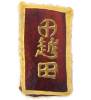
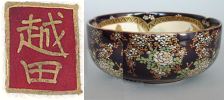
1307. Mark: Koshida under the Shimazu family crest. This is a company, rather than artist, name. |
|
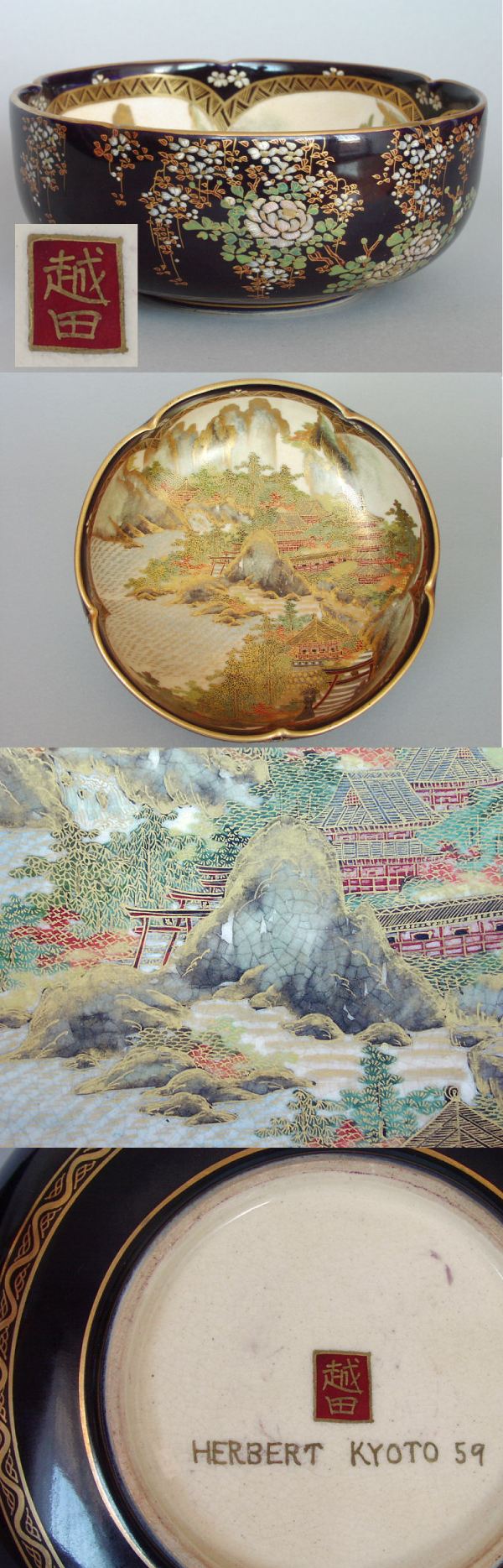
1242. Bowl, Kyoto Satsuma ware, Mark: Koshida. Bowl dated Kyoto 1959.
Click here to see large picture
|
|
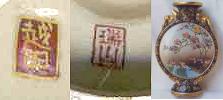
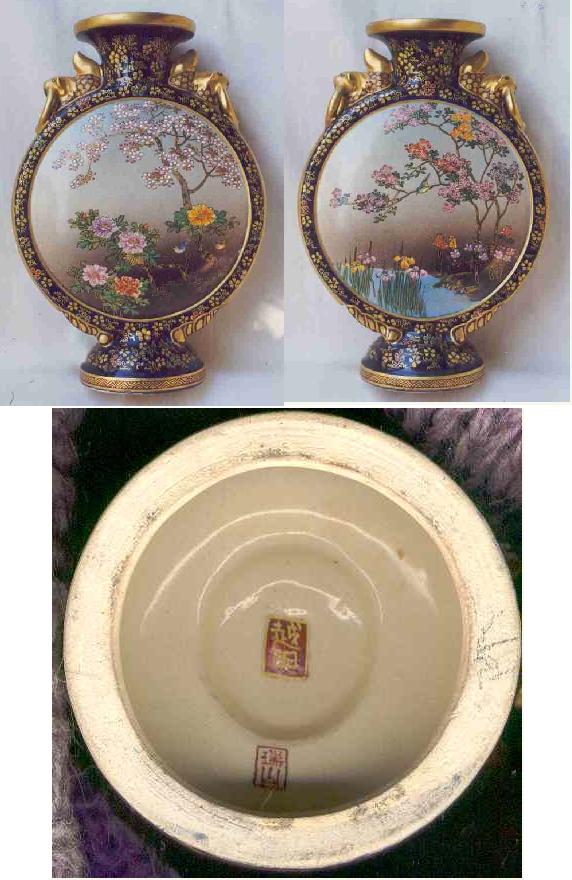
1263. Moon flask, height 8 1/2 inch, signed Koshida + Suizan.
Click here to see large picture
|
| Kozan 光山 Light Mountain |
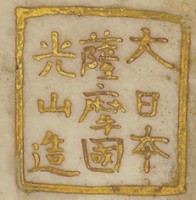 |
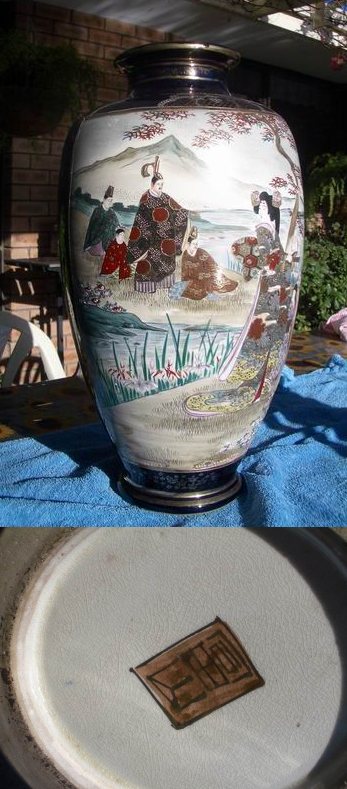
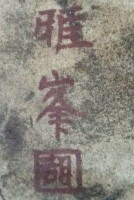
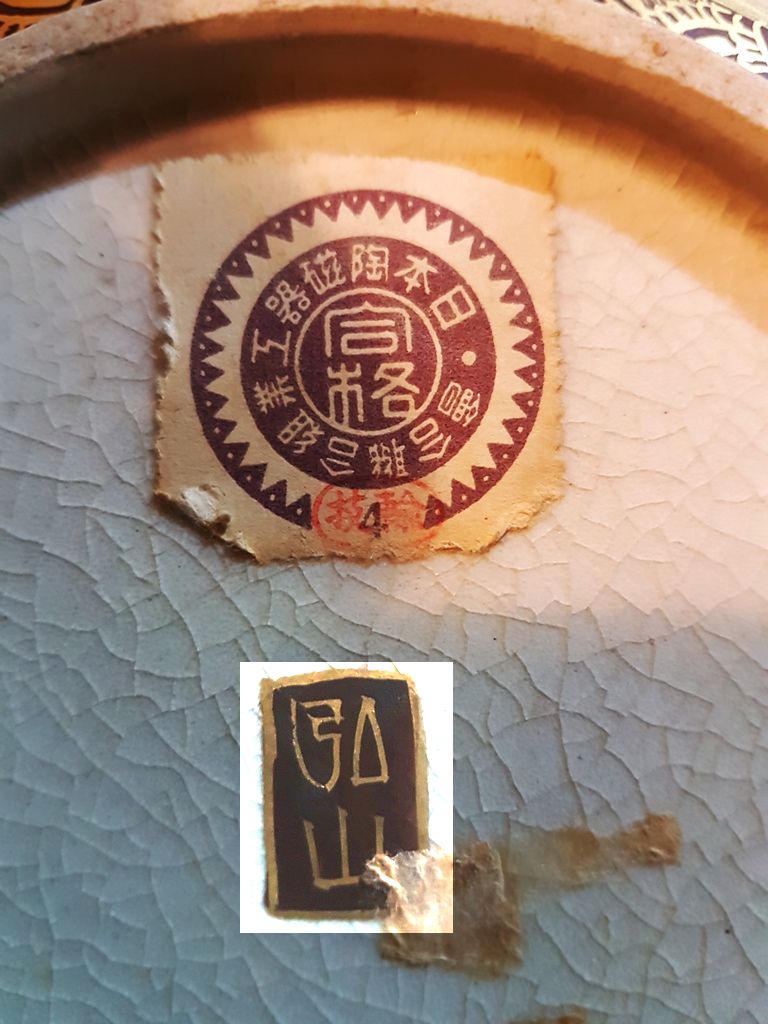
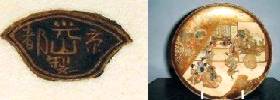
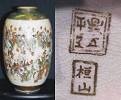
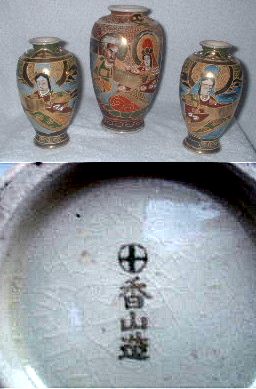
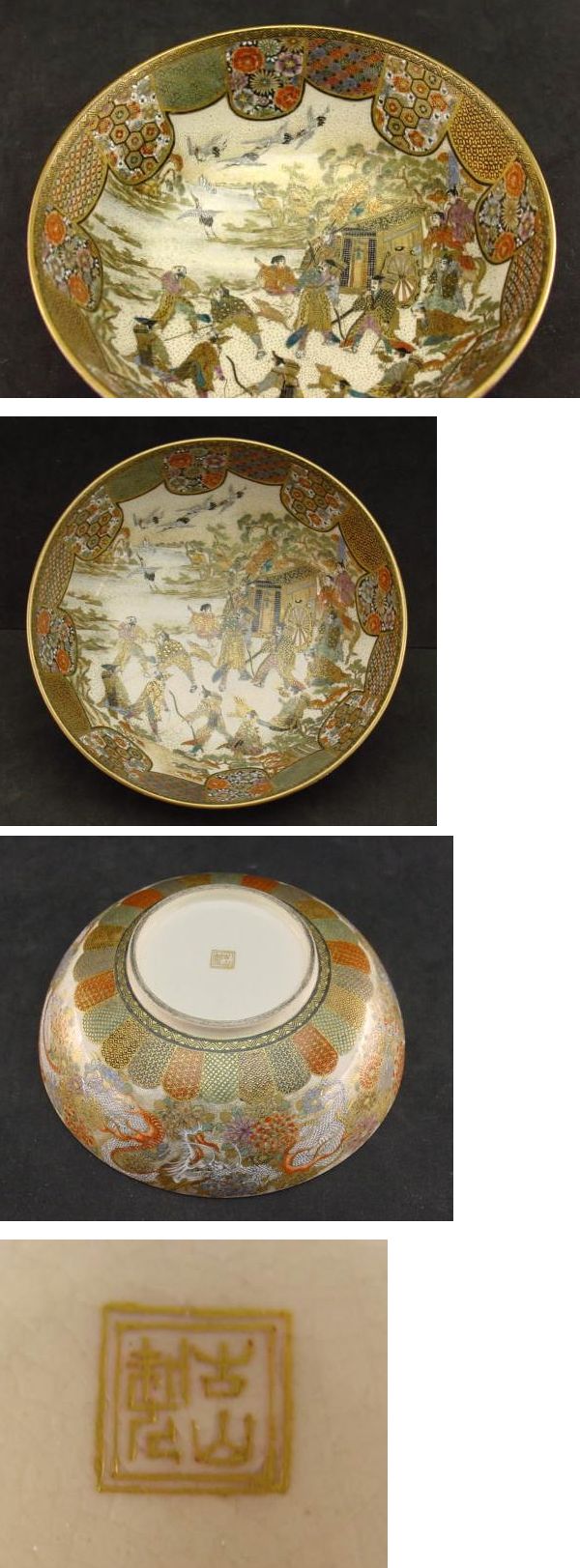
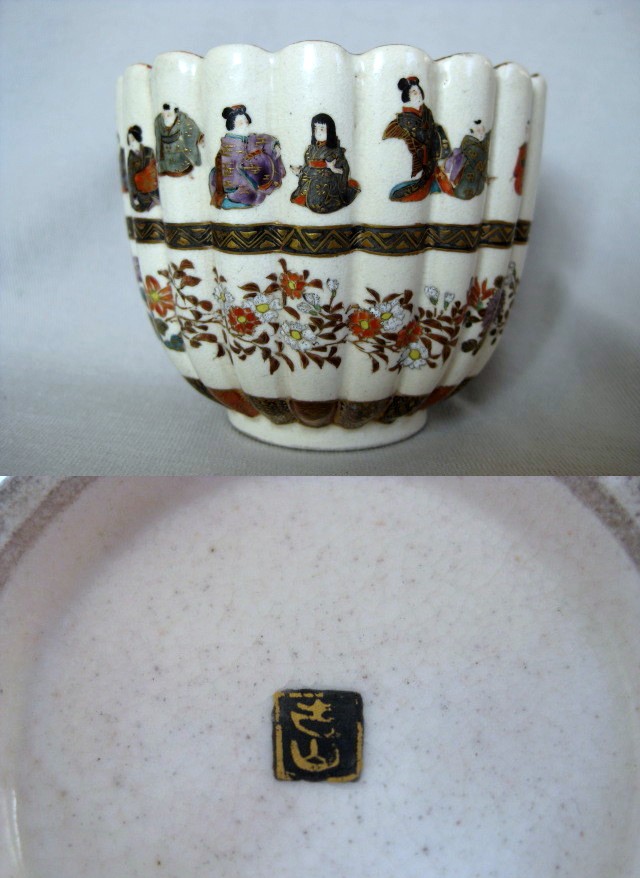
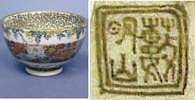
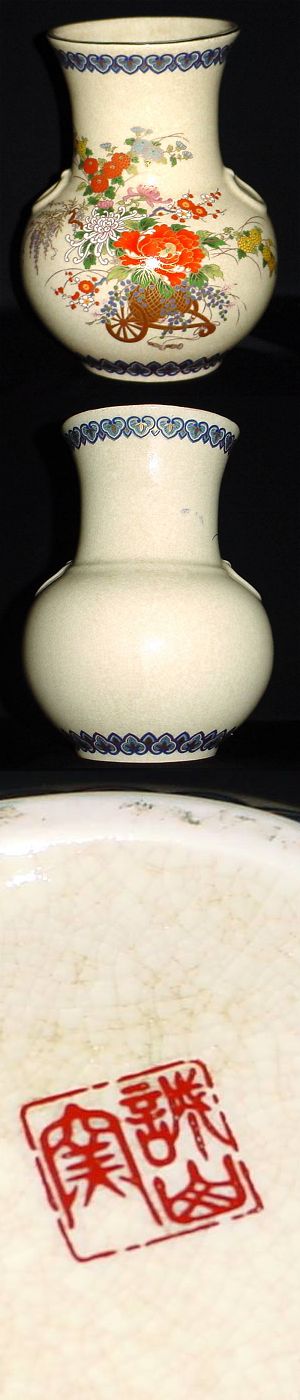
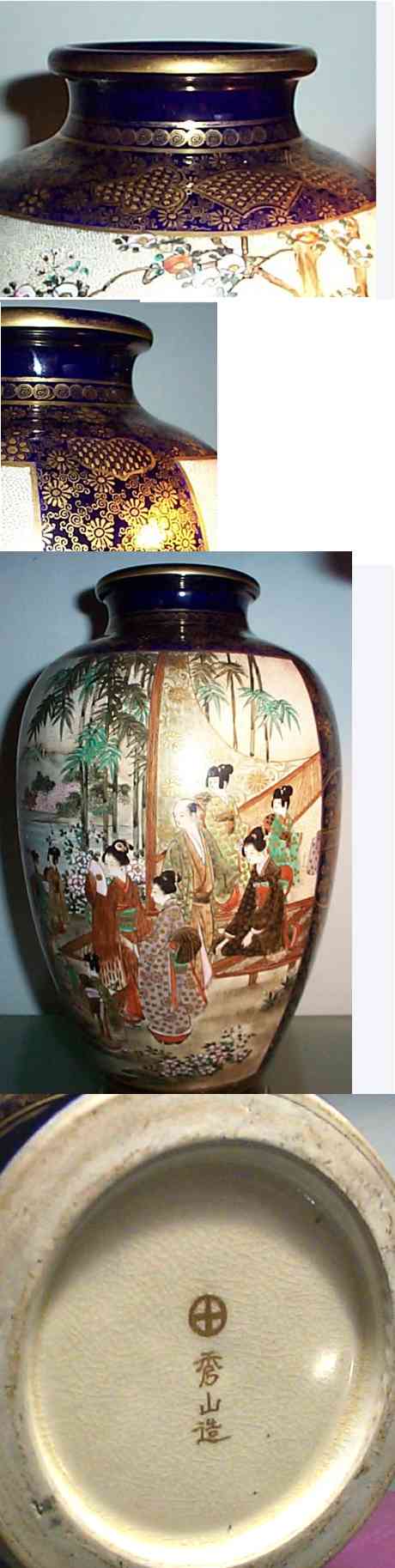
1559. Mark, from right to left: Dai Nippon ... Kozan Zo 光山 (light). |
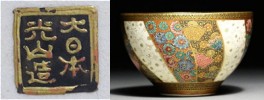 |
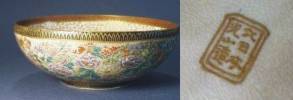
1560. Satsuma tea bowl, by Kozan. Mark: Dai Nippon Kozan Zo. Not to be confused with Makuzu (Miyagawa) Kozan 1842-1916 This mark is that of Kozan, a Kyoto artist/maker who uses the character Ko=light 光 as opposed to Makuzu who uses the character Ko meaning fragrance. |
|
459. Satsuma. Dai Nihon, Kozan zo with the character Ko=light 光. Meiji period (1868-1912) |
| Kozan, Makuzu Miyagawa (1842-1916) |
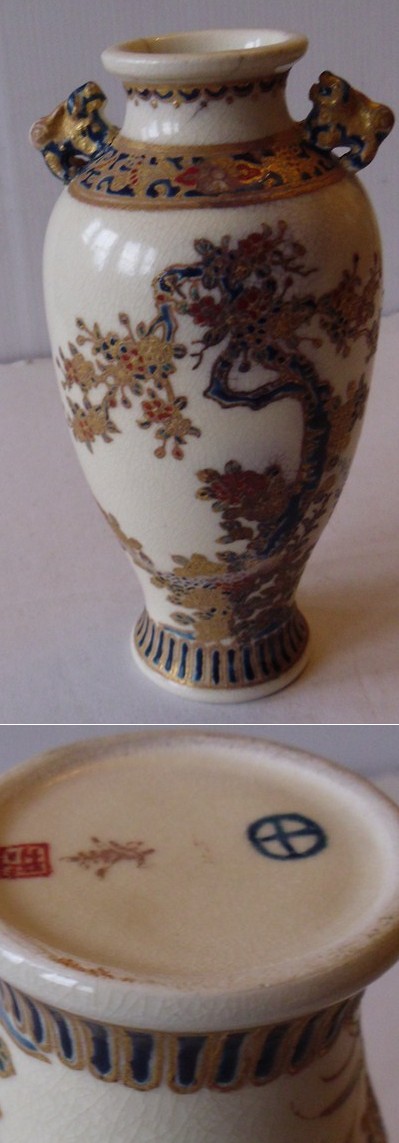
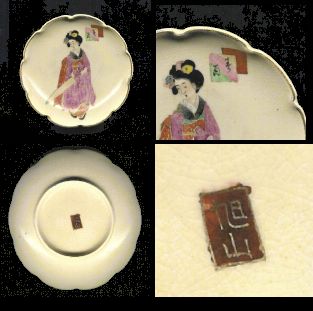
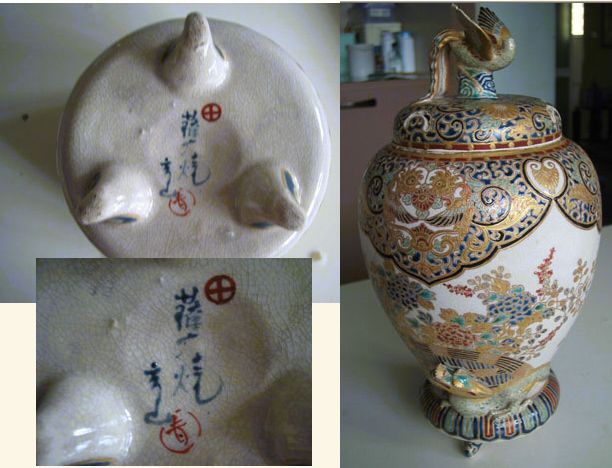
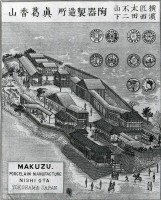 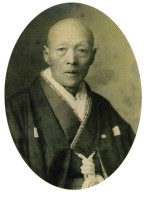 The Makuzu workshop (the official kiln name) was established in Yokohama in 1871 by the Kyoto potter Miyagawa Kozan (1842-1916). It initially produced Satsuma-style pottery painted in polychrome enamels and gold, but during the 1880s it focused increasingly on the making of porcelain decorated in Chinese style. Satsuma-style pieces marked 'Kozan' can also be classified as a Makuzu ware or a Yokohama ware. Link to Makuzo ware introduction video. The Makuzu workshop (the official kiln name) was established in Yokohama in 1871 by the Kyoto potter Miyagawa Kozan (1842-1916). It initially produced Satsuma-style pottery painted in polychrome enamels and gold, but during the 1880s it focused increasingly on the making of porcelain decorated in Chinese style. Satsuma-style pieces marked 'Kozan' can also be classified as a Makuzu ware or a Yokohama ware. Link to Makuzo ware introduction video.
Pieces are marked Kozan, or Makuzu, or both, marks being drawn or impressed. Kozan I became a Teishitsu Gigeiin or Imperial Artist in 1896, and died in 1916. His first son, Hanzan, succeeded as head of the kiln in 1912 that was run by him through the early Showa era. In 1917 Hanzan officially took the name Kozan II after one year mourning for his fathers passing.
The Kozan studio produced some of the highest quality ceramics made in Japan and participated in many of the great international expositions in Europe and America during the Meiji era. Among other achievements the kiln was commissioned for works to be presented to the Prince of Wales, the 25th wedding anniversary gift for the Taisho emperor and the Showa Emperors coronation gift.
During the areal bombing of Yokohama in 1945 the Makuzu kiln and showroom were completely destroyed.
|
| Matsumoto Hozan, see Hozan |
|---|
| Meizan (Yabu Tsuneo) |
|
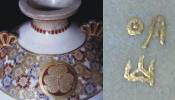
477. Satsuma. Meizan. This mark or a mark in this manner was used by Yabu Tsuneo, Meizan's adopted son, after Meizan's retirement in 1926. |
| Meizan, workshop |
|---|
| Workshop located in Kanazawa, Kaga prefecture producing good to exceptional work. Worked for Seikozan and can be the actual source for many of their pieces. Differences in calligraphy occurs suggesting that several artists worked under the Meizan name. (Ming Mountain). The Meizan Studio (1880-1920) produced fine quality Satsuma ware, generally signed or impressed Meizan which is not the artist Yabu Meizan. |
| Meizan |
 |
357. Illegible, maybe ... Meizan.
|
| Motonubu, Kishuen Motonobu |
|---|
| Nakamura Baikei |
|---|
| Exceptional artist, very rare. |
| Nikko |
|---|
| Nikko, Nikko-ya, dealer located in Nagasaki |
| Nishida, Kyoto |
|
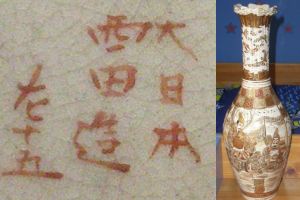
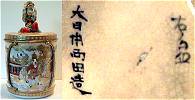
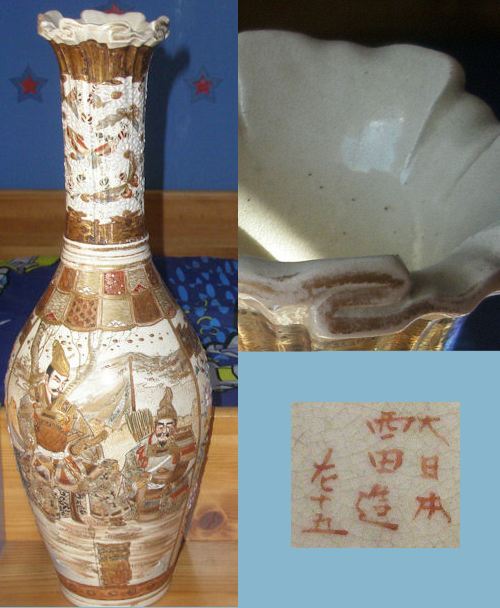
1367. Vase. Mark Dai Nippon, nishi 西 da 田 zo 造 (made), 'right 15' Date: Meiji period (1868-1912), my guess, the later part of Meiji.
Click here to see large picture
|
| Omura |
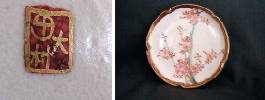 |
347. Shimazu family crest; cartouche reads Omura. Taisho period (1912-1926).
|
| Rei or Rai |
|---|
|
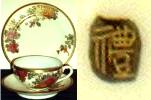
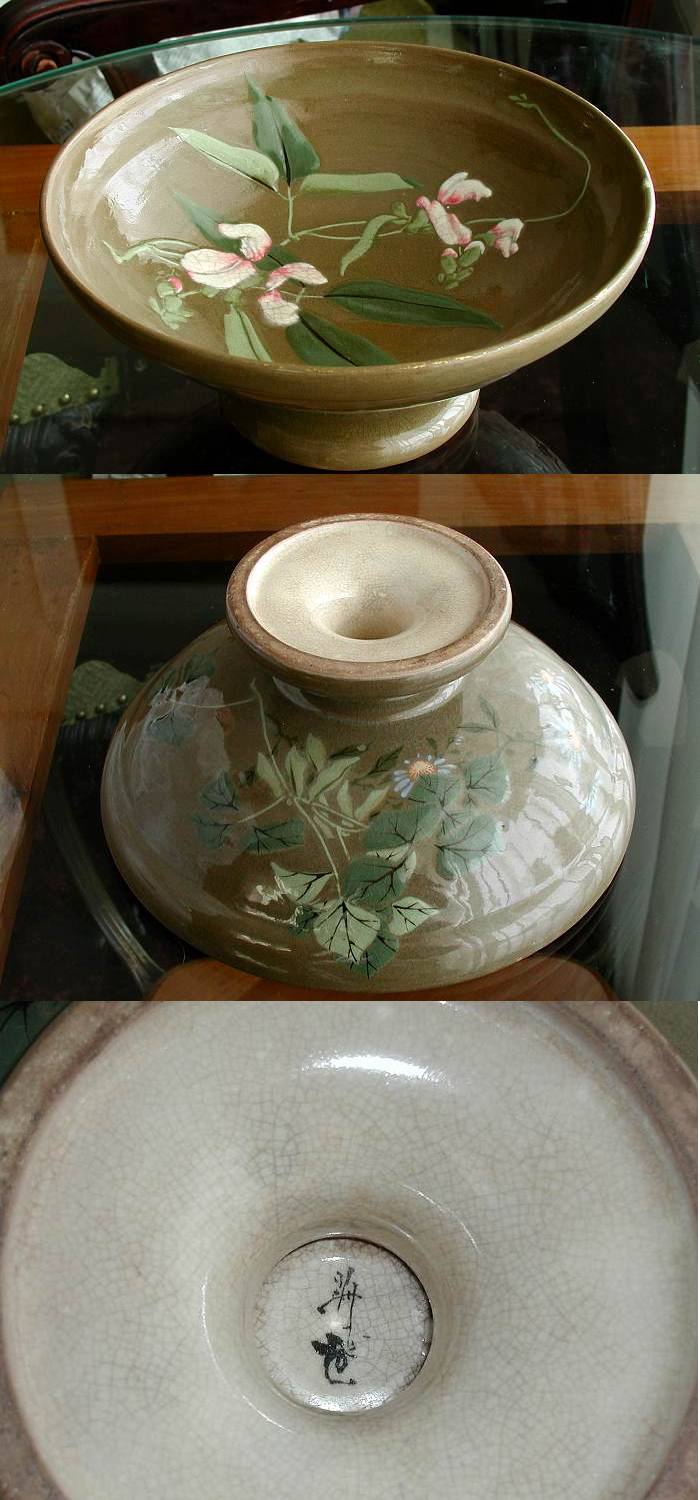
822. Japanese porcelain in Satsuma style. Shape suggests 1920-30s. Porcelain of this type were made in huge volumes, often in 144 piece sets.
Click here to see large picture
|
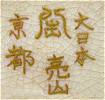
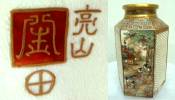
| Ryozan Okamoto 亮山 Yasuda Co. |
| Ryozan , leading decorator for the Yasuda Company. Style name Ryozan 亮山 (real name Nakamura Tatsunoske) Ryozan Okamoto is the most famous of the artists working for the Yasuda company. See: Yasuda, Ryozan> |
| Ryuzan |
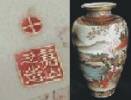 |
354. Ryuzan (?), gold mark with separate 'mon', on red. (Illegible). Taisho period (1912-1926). There are also various Kutani Ryuzan (eg Ryuzan Ishino) which would comfortable explain the apparently white porcelain body or the piece. |
| Seikodo (Seikado?), Saikyo (Kyoto) Seikado zo |
|---|
| Seikozan |
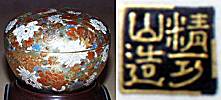
| An exceptional artist located in Kobe, deducted from early signatures including his location. His finest pieces are exceptional. It has been speculated that several artists might have worked under this name from differences in the calligraphy of the mark. |
|
623. Satsuma. Seikozan sei/tsukuru Late 19th / First half 20th century.
Click here to see large picture
|
| Seikozan Yasuda Co |
|
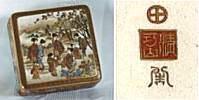
472. Satsuma. Seikozan with Satsuma Mon above + Yasuda Co mark below. Meiji period (1868-1912) |
| Seiya |
|---|
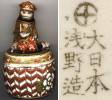 |
715. Stamped mark Dai Nippon, seiya zo under a Shimazu family crest. It is generally accepted that marks that includes "Dai Nippon" in Japanese characters on the whole date to the Meiji (1868-1912) period, reflecting the greatly increased nationalism of that period. This mark: Probably c. 1910-30.
Click here to see large picture
|
| Senzan |
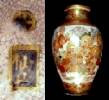 |
351. SENZAN, gold mark with 'mon' on black. Taisho period (1912-1926).
|
|
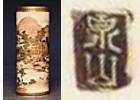
462. Satsuma. "Senzan" |
| Sessan |
|
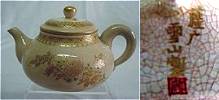
471. Satsuma. Satsuma Sessan Sei. Meiji period (1868-1912) |
| Setsuzen |
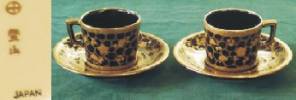 |
350. SETSUZEN, gold mark with 'mon' and JAPAN in gold. |
| Shizan |
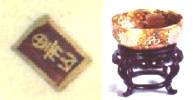 |
344. Shimazu family crest; cartouche appears to read Shizan? Taisho period (1912-1926).
|
| Shoko Takebe |
| Little is known about Shoko Takebe besides that this mark appears on a number of pieces commissioned by the English merchant Thomas Blow. Blow who lived in Japan and supplied many European collections with fine works of art including Alfred Baur in Geneva. See The Baur Collection (E113,HC) for a pair of vases, also signed on the base in seal form Shoko Takebe and with Tomasu Bi Buro [Thomas B. Blow] name inscribed in katakana. Little appears to be known about Takebe, although Thomas Blow is known to have worked in Japan during the latter years of the Meiji Period. Blow lived in Japan at least from 1906 until 1914 and returned there in 1930. An inscription on a postcard indicates that he was still living in 1932. As a member of the Red Cross, Blow may have assisted with the Loan Exhibition of Japanese Art and Handicraft held in aid of the British Red Cross, October to November 1915.
|
|
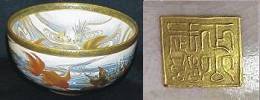
465. Satsuma. Mark: Shoko Takebe. Meiji period (1868-1912). |
| Shozan 章山 |
| Japanese export ware in Satsuma style. Often available in tourist shops and on American military bases in Japan. Although hand painted, factory mass produced, and appearing with several decorator's marks. |
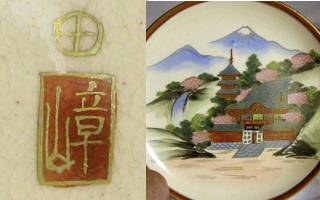 |
1507. Mark: Shozan. Japanese export ware in Satsuma style. Showa period, Post WWII, around 1950-1960s.
|
| Shozan 正山 |
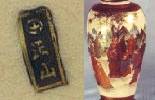 |
365. Mark illegible but might be Shozan. |
| Shozuzan |
|
450. Satsuma. Shozusan (illegible). |
| Sozan Suwa. Suwa Sozan I (1852-1922) |
|---|
| Taizan Yohei (1864-1922) |
| Adopted by the Taizan family in 1878. Transformed their pottery in Kyoto to large factory making Satsuma wares. The first generation of Taizan potters were active at the end of the 1670s. The family specialized in tea utensils, blue glazed pottery, porcelains with celadon glazes and pottery with overglaze enamels. Taizan VII died c. 1875. In 1872 the well-known and important Kyoto manufacturer Taizan VIII started to export of their products together with Kinkozan IV. The company name was Obi-ya or Obi-ya where 'tai' is another reading of the character 'Obi'. Takahashi Yohei, Go (art name) Taizan, was the head of the 9th and last generation of the Takahashi family of Awata potters. Under him the family produced mainly for the export market, in particular to America where his products were much sought after. The Taizan kiln appears to have closed around 1894. However in 1895 and 1901 reports have it that Taizan is still working "on a comparatively small scale". The production seems to have been maintained until 9th Taizan (Yohei) died in 1922. During the end of the Meiji period and into Taisho, Taizan decorated blanks from Kinkozan, Izumo Wakayama, etc. Pieces occurs that has both Kinkozan and Taizan markings where generally the Kinkozan mark is impressed in the piece itself and the Taizan mark is written. The firing of enamel decoration is an uncomplicated process compared to firing ceramics and could have been done anywhere. In 1922 the 9th Taizan Yohei died, putting an end to the production.
|
|
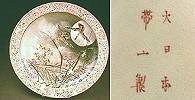
467. Satsuma. Dai Nippon Taizan Sei. This mark: Meiji period (1868-1912) |
|
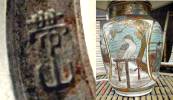
1268. Impressed mark: Taizan. Date: Meiji period (1868-1912), around 1905-1910 in age.
Click here to see large picture
|
|
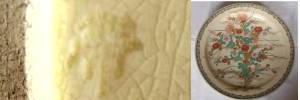
1269. Impressed mark: Taizan. Date: Meiji period (1868-1912), around 1875-1890 in age.
Click here to see large picture
|
|
1270. Mark: Taizan. Date: Meiji period (1868-1912), around 1910 in age.
Click here to see large picture
|
|
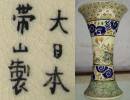
1271. Mark: Dai Nippon Taizan Sei. Date: Meiji period (1868-1912), tentative date c. 1880.
Click here to see large picture
|
|
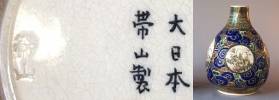
1273. Mark: Dai Nippon Taizan Sei. Date: Meiji period (1868-1912), Taizan Yohei IX, tentative date c. 1880.
Click here to see large picture
|
|
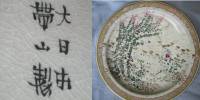
1272. Mark: Dai Nippon Taizan Sei. Date: Meiji period (1868-1912), Taizan Yohei IX.
Click here to see large picture
|
|
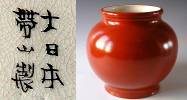
1274. Mark: Dai Nippon Taizan Sei. Date: Meiji period (1868-1912), Taizan Yohei IX. Tentative date, late Meiji.
Click here to see large picture
|
|
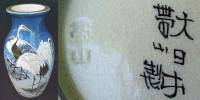
533. Mark: Dai nippon Taizan sei
|
| Takeuchi |
|
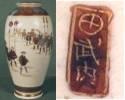
464. Satsuma. Mark: "Takeuchi". Cartouche with Shimazu circular family crest above name.
|
| Tomo |
|
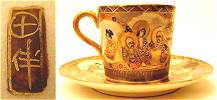
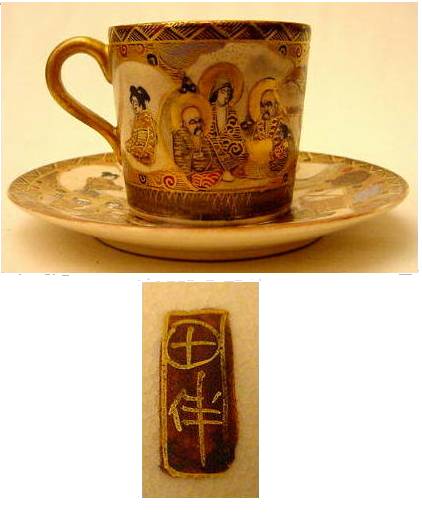
1086. Mark: Below the circular Shimazu crest, a single kanji character Tomo, "companion". Date: Meiji (1868-1912) period, 1868-1900.
Click here to see large picture
|
| Tozan Ito, Ito Tozan (1846-1920) |
|---|
| Tozan Ito established business I Kyoto 1867. Made table wares and earthenware in Satsuma style. |
| Uchida 内田 |
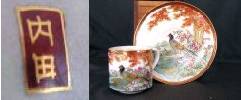 |
345. Cartouche reads Uchida. Date: Taisho to Showa period.
|
| Yasuda (Trademark) Yasuda Kyoto Tokiji Goshigaisha |
| Yasuda is a trademark. There were several artists working with Yasuda Kyoto Tokiji Goshigaisha. The best known & most regarded of the artists working for this company was Ryozan 亮山 and Seikozan. The thing to keep in mind with Yasuda is that apart from possibly Yabu Meizan whose output maintained a very high standard, most of the producers varied in quality, some great some so so.
|
| Yasuda trademark, Hozan |
|
|
1562. Mark: Hozan, under the Yasuda trademark. When signed in full it reads Matsumoto Hozan. Some of his work is of very high quality.
Click here to see large picture
|
| Yasuda trademark, Nikkozan |
|---|
| Yasuda trademark, Seikozan |
|---|
|
|
472. Satsuma ware. Mark from top to bottom: The circle and cross Satsuma Mon, the signature of Seikozan artist, and below, Yasuda Co trademark. Meiji period (1868-1912). Mark listed here as an example of the Yasuda trade mark. Beside this, see the respective artists. |
| Yosuke Matsuzawa (Satsuma dealer) |
|---|
| Unidentified marks - Help appreciated |
|
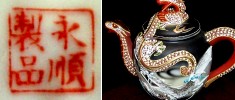
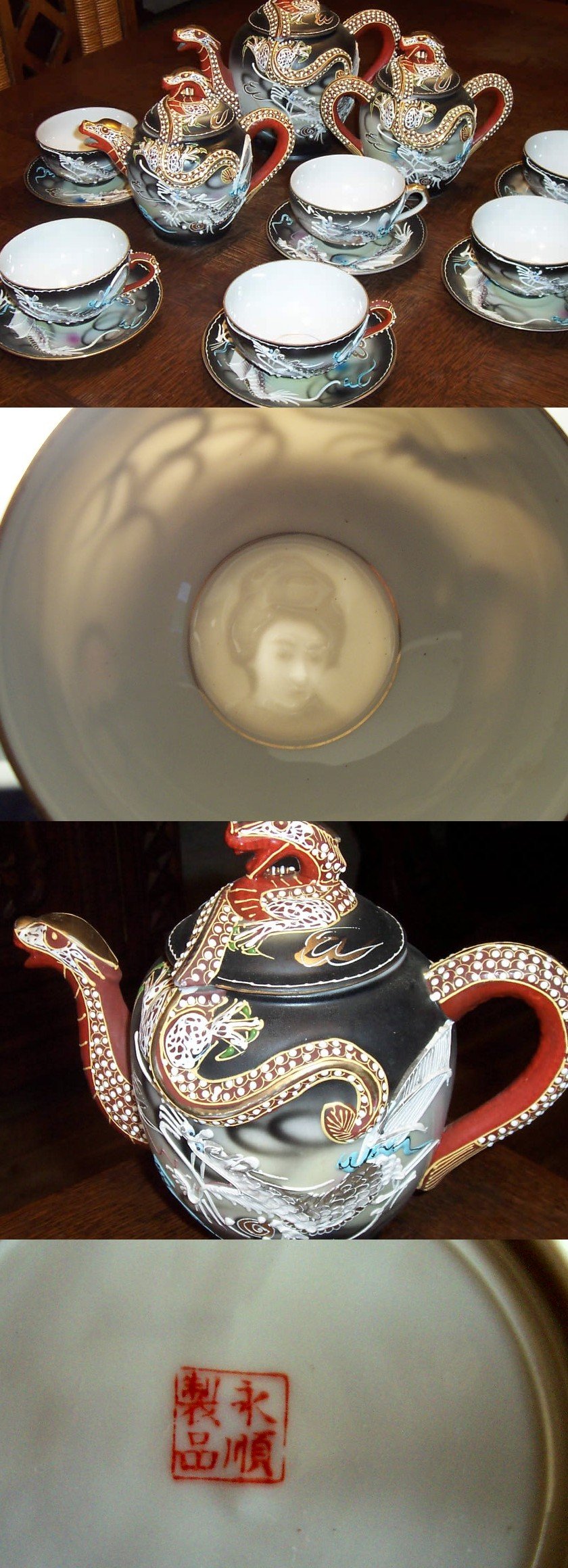
1321. Tea set, Mark: 1321. Mark: Naganune Sei. Dragon ware with lithophane, probably decorated in Hong Kong. Tentative date 1960s.
Click here to see large picture
|
|
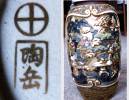
1228. Vase. Mark: 1228. Mark: Okadake. Tentative date Meiji period (1868-1912).
Click here to see large picture
|
|
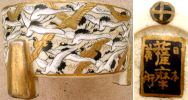
529. Satsuma. Two characters to the right - Nippon,
Two central characters - Satsuma,
Two left hand characters - yaki i.e. product, Final character ... ?
Click here to see large picture
|
|
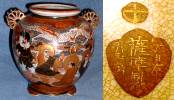
710. Mark: Dai Nippon Tsuizan Satsuma Yaki Choshufusi Sei. Satsuma.
Click here to see large picture
|
|
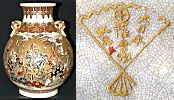
711. Mark: Meigyekudo. Satsuma.
Click here to see large picture
|
|
762. Mark: Dai Nippon Tsukuru, Masatane, followed by a kakihan. It is generally accepted that marks that includes "Dai Nippon" in Japanese characters on the whole date to the Meiji (1868-1912) period, reflecting the greatly increased nationalism of that period.
Click here to see large picture
|
|
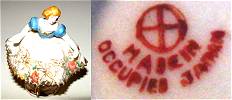
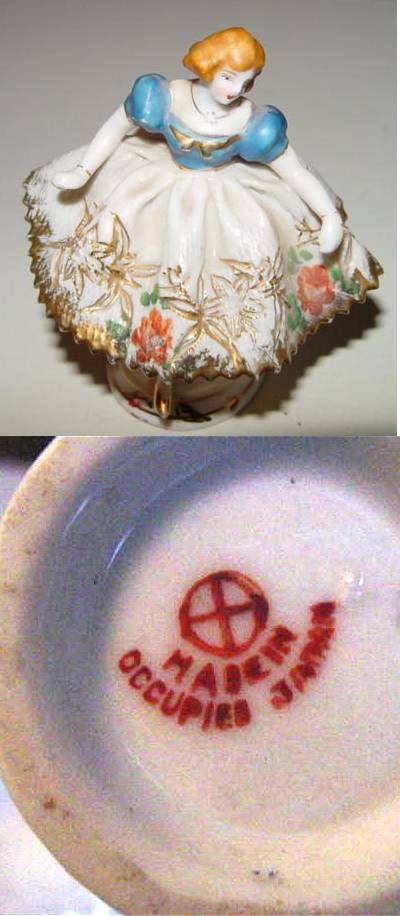
811. Japanese porcelain figure. Mark: Red stamped 'Shimazu' crest and "Made in Occupied Japan". Date 'OJ' period (1945-52).
Click here to see large picture
|
|
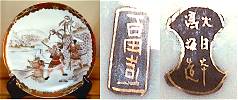
490. Dai Nippon Koda tsukuru, or Dai Nippon Mukoda tsukuru. The characters to the right and on the rim says "right(-most) box" 右盒. Satsuma pottery of the Kyoto School. Popular export ware. Late Edo/Early Meiji period 1868-1912 c. 1865.
Click here to see large picture
|
|
615. Dai Nippon ... tsukuru. It is generally accepted that marks that includes "Dai Nippon" in Japanese characters on the whole date to the Meiji (1868-1912) period, reflecting the greatly increased nationalism of that period. This mark tentatively. Late 19th / First half 20th century.
Click here to see large picture
|
|
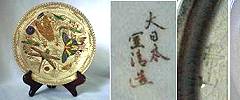
468. Satsuma. Right hand line reads Dai Nippon. Bottom left character is "zo". |
|
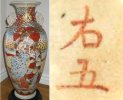
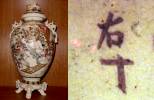
873. Mark: "Right 右, 5". Japanese porcelain. Satsuma looking ware. Possible 1920-30.
Click here to see large picture
|
|
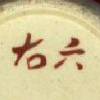
821. Mark: "Right 右, 6". Japanese porcelain. Satsuma looking ware. Possible 1920-30.
|
|
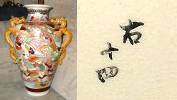
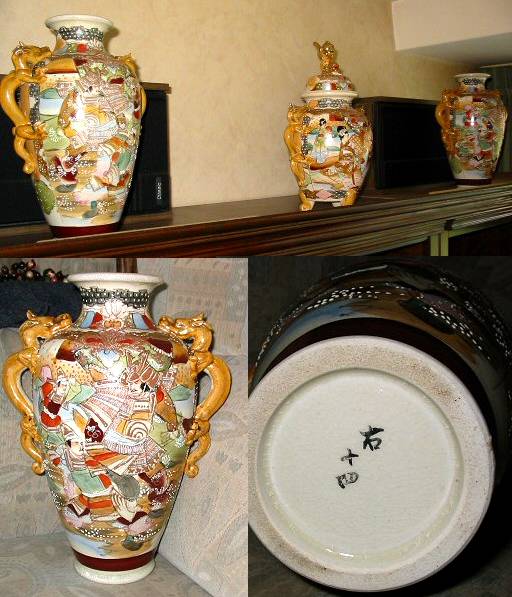
971. Mark: "Right 右, 10". Possible a mark indicating the place of the vase within a set. Japanese porcelain. Satsuma looking ware. Possible 1920-30.
Click here to see large picture
|
|
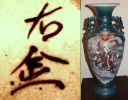
970. Mark: "Right 右, 14". Possible a mark indicating the place of the vase within a set. Japanese porcelain. Satsuma looking ware. Possible 1920-30.
Click here to see large picture
|
|
1240. Mark: "Right" 右 plus a character possible "Gold". Kyoto Satsuma ware. Date: Family history suggests 1950s.
Click here to see large picture
|
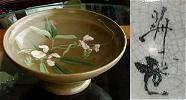
|
741. Tentative date c. 1910s.
Click here to see large picture
|
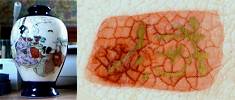
|
486.
|
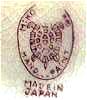
|
174. First half of the 20th century. Satsuma looking crackled glazed pottery. |
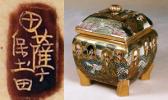
|
1092. Shimazu family crest and makers signature. Tentative date around 1940s.
Click here to see large picture
|
The gotheborg.com marks page was originally initiated by a donation of marks from the collection of Karl-Hans Schneider, Euskirchen, Germany in July 2000. The section have since then been greatly extended by a large number of contributing collectors. A big thank you goes among others to Sandra Andacht who are to be credited with some of the good information that makes this page interesting. Additional translations by John Wocher and I & M Heriot.
The marks section of Gotheborg.com was initially established in May 2000 thanks to a generous donation of approximately one hundred images of Japanese porcelain marks, by Karl-Hans Schneider from Euskirchen, Germany. This contribution provided a modest yet substantial beginning of the Marks Section. It was a kind gesture that I really appreciated.
Of the many later contributors, I would especially want to mention Albert Becker, Somerset, UK, who was the first to help with some translations and comments on the Japanese marks. His work was then greatly extended by Ms. Gloria S. Garaventa, after which Mr. John Avery looked into and corrected some of the dates. Most of the Satsuma marks were originally submitted by Ms. Michaela Russell, Brisbane, Australia. A section which was then greatly extended by Ian & Mary Heriot, a large amount of information from which still awaits publication.
A warm thank you also goes to John R. Skeens, Florida, U.S.A., and Toru Yoshikawa for the Kitagawa Togei section, and to Susan Eades for her help and encouragement towards the creation of the Moriyama section. For the last full overhaul of the Satsuma and Kutani sections, thank you to Howard Reed, Australia. The most recent larger contribution was made by Lisa M. Surowiec, New Jersey, USA.
In 2004 and from then on, my warm thank you goes to John Wocher and Howard Reed, whose knowledge and interest have sparked new life into this section and given reason for a new overhaul. Thank you again and thank you to all I have not mentioned here, for all help and interest in and contributions to our knowledge of 20th-century Japanese porcelain.
The Chinese marks section would not have been possible without the dedicated help of Mr. Simon Ng, City University of Hong Kong, whose translations and personal efforts in researching the origin and dates of the different marks have been an invaluable resource. It has since been greatly extended by several contributors such as Cordelia Bay, USA, Walt Brygier, USA, Bonnie Hoffmann, Harmen Lensink, 'Tony' Yalin Zhang, Beijing, 'ScottLoar', Shanghai, Mike Harty, and many more expert members of the Gotheborg Discussion Board.
A number of reference pieces have also been donated by Simon Ng, N K Koh, Singapore, Hans Mueller, USA, Hans Slager, Belgium, William Turnbull, Canada, and Tony Jalin Zhang, Beijing.
All images and text submitted by visitors and published anywhere on this site are and remain the copyrighted property of the submitter and appears here by permission of the owners which can be revoked at any time. All information on this site, that are not specifically referenced to peer reviewed sources, are the personal opinions given in good faith by me, my friends and fellow experts, based on photos and the owners' submitted descriptions. They are not to be used for any financial or commercial decisions, but for educational and personal interest only, and can and will be changed as further information merits.
For further studies, Encyclopedia Britannica is to be recommended in preference to Wikipedia, which, not being peer-reviewed, might contain misleading information.
Web design and content as it appears here © Jan-Erik Nilsson 1996-.
 The typical Satsuma ware we most of the time comes into contact with is a yellowish earthenware usually decorated with a minute decoration with Japanese figures, expressive faces or detailed oriental landscapes, or sometimes embellished with vivid dragons in relief. This ware is in fact an export product specifically designed in the mid 19th century to cater to the western export market. The Japanese themselves had very little interest in this ware.
From around the 1890s to the early 1920s more than 100 artist at least twenty larger studios or factories were producing "Satsuma" wares of which much were of low quality and destined for the European and American export markets. Most of the marks below will detail this latter wares since this is what we see most of.
At the same time, other artists were producing exquisite wares of the highest quality. There were many masterpieces created during its heyday and several studios have created eternal fame for their names with these magnificent wares. Most high quality export 'Satsuma' is easily recognized by its finely crackled glaze and by the fact that its yellowish earthenware body does not "ring" when tapped. The production soon spread to several cities such as Kyoto, Tokyo, Nagoya, Yokohama and elsewhere throughout Japan, from the Meiji period (1868-1912) up until today.
The typical Satsuma ware we most of the time comes into contact with is a yellowish earthenware usually decorated with a minute decoration with Japanese figures, expressive faces or detailed oriental landscapes, or sometimes embellished with vivid dragons in relief. This ware is in fact an export product specifically designed in the mid 19th century to cater to the western export market. The Japanese themselves had very little interest in this ware.
From around the 1890s to the early 1920s more than 100 artist at least twenty larger studios or factories were producing "Satsuma" wares of which much were of low quality and destined for the European and American export markets. Most of the marks below will detail this latter wares since this is what we see most of.
At the same time, other artists were producing exquisite wares of the highest quality. There were many masterpieces created during its heyday and several studios have created eternal fame for their names with these magnificent wares. Most high quality export 'Satsuma' is easily recognized by its finely crackled glaze and by the fact that its yellowish earthenware body does not "ring" when tapped. The production soon spread to several cities such as Kyoto, Tokyo, Nagoya, Yokohama and elsewhere throughout Japan, from the Meiji period (1868-1912) up until today.
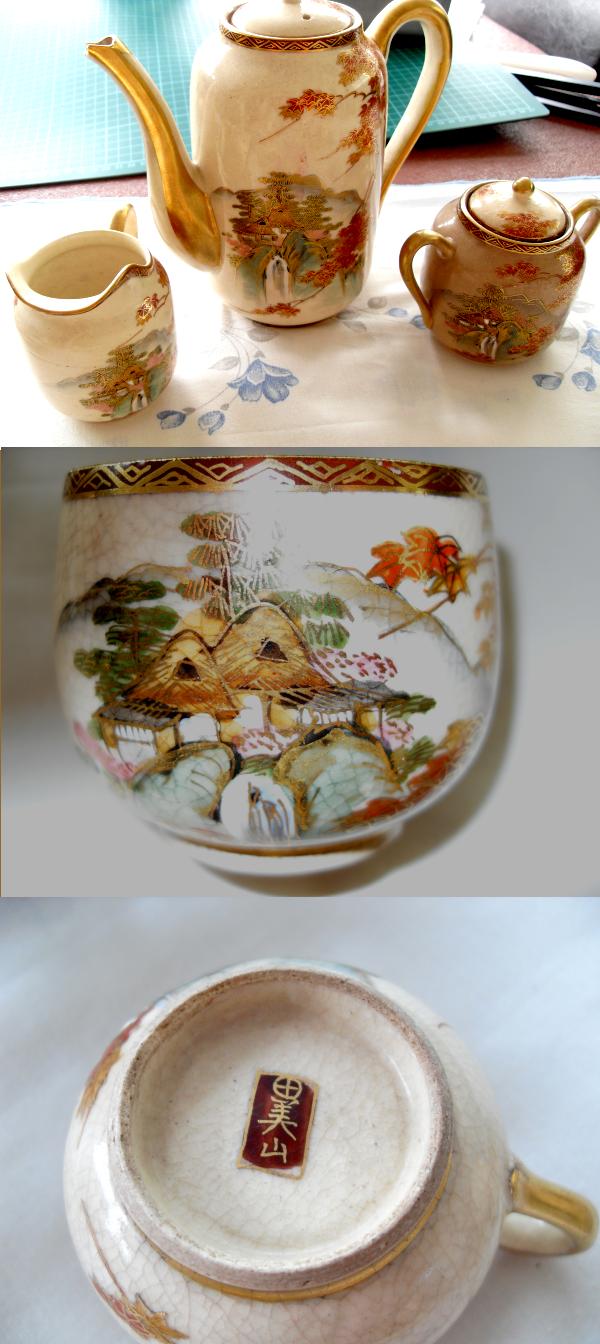


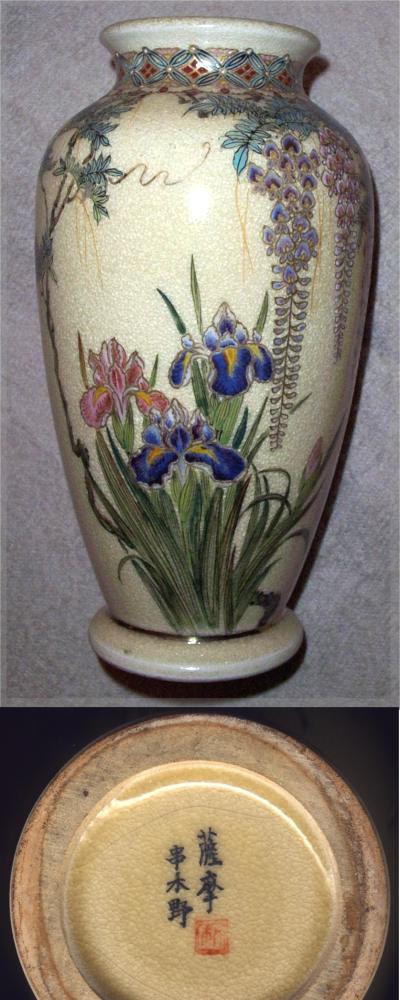
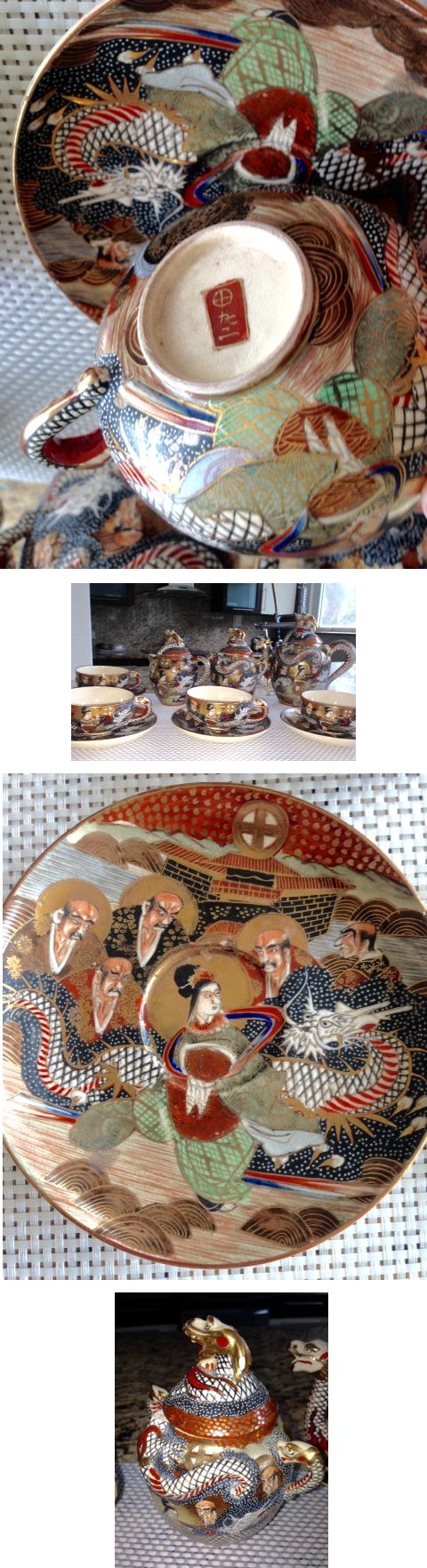
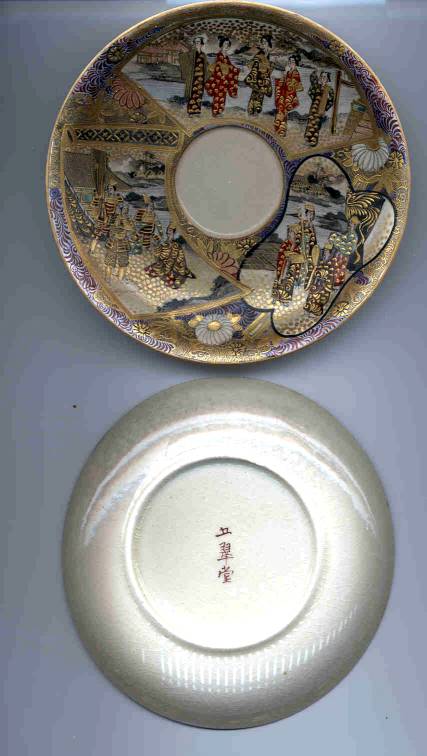
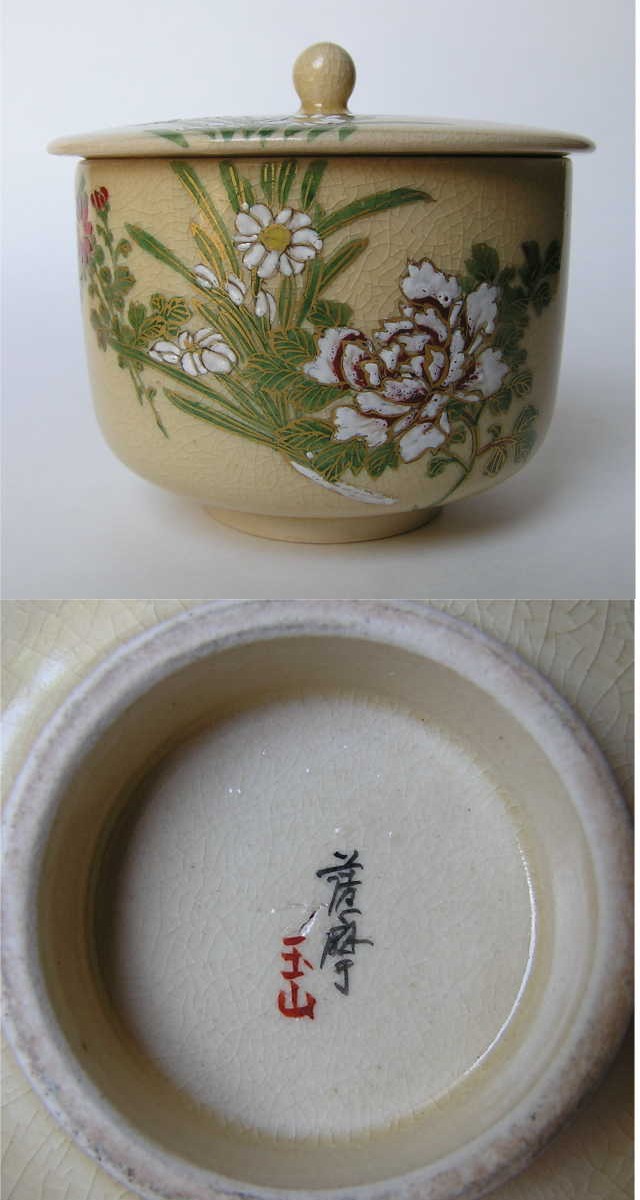

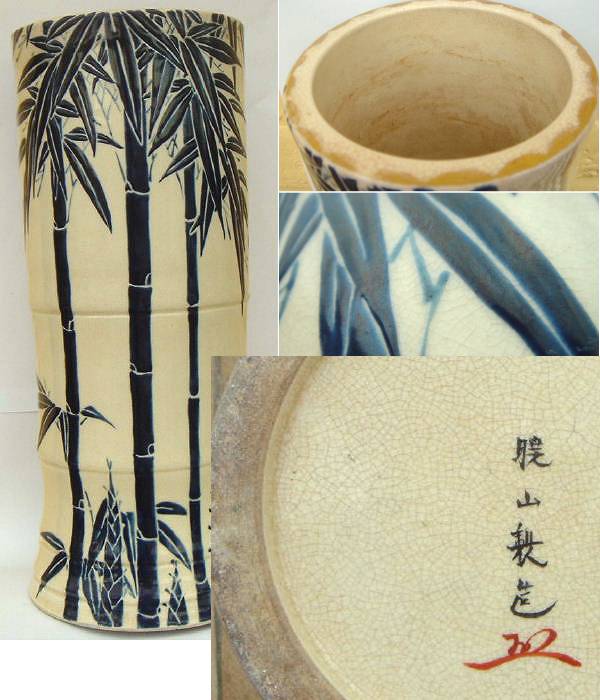
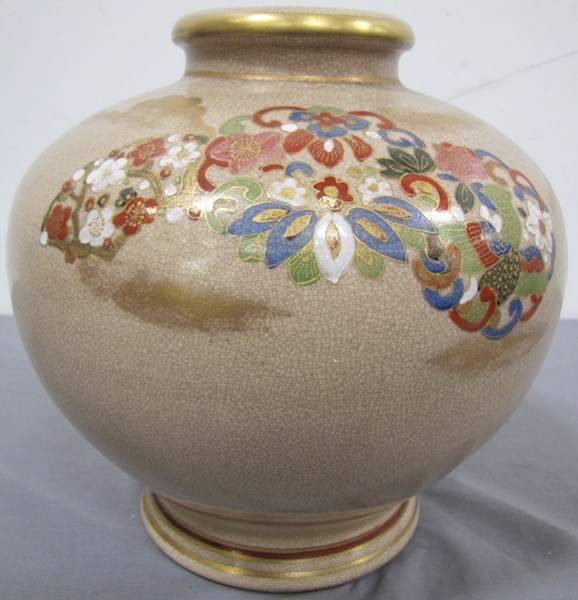

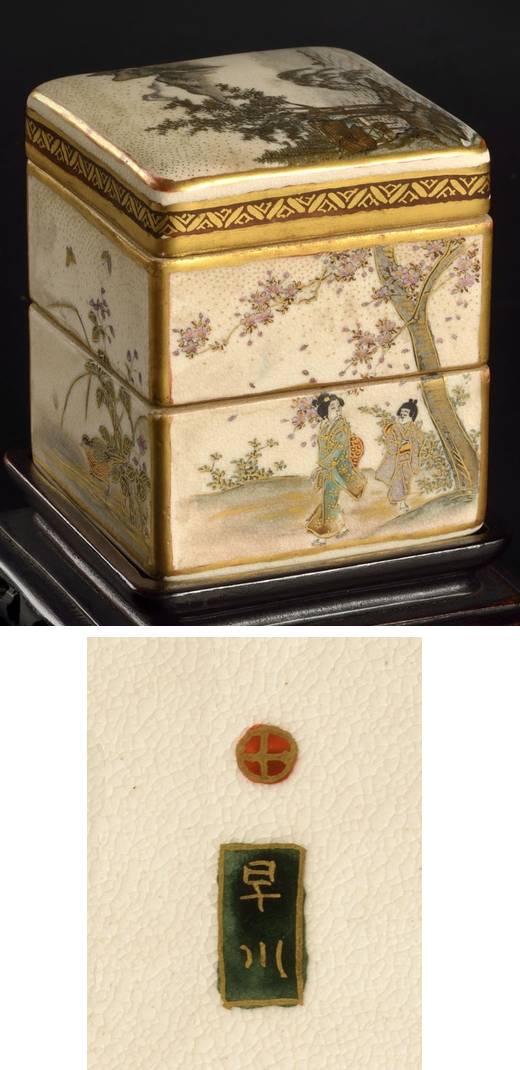
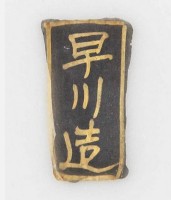
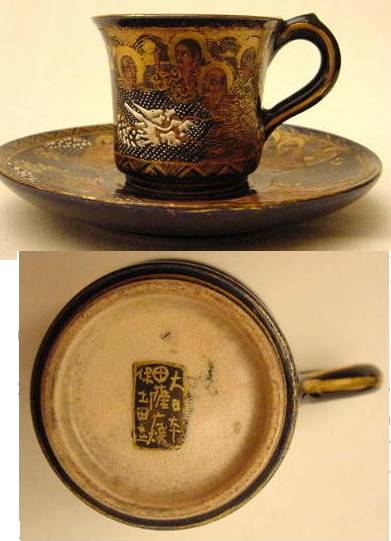
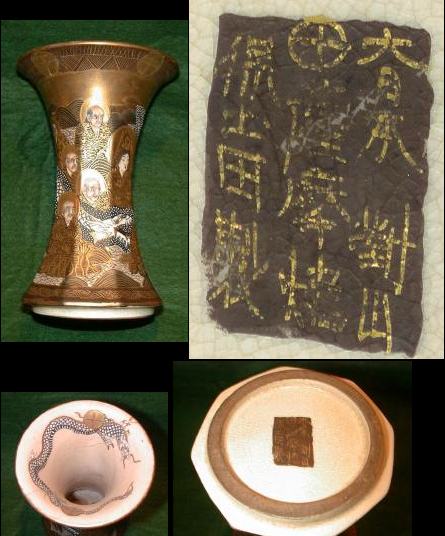



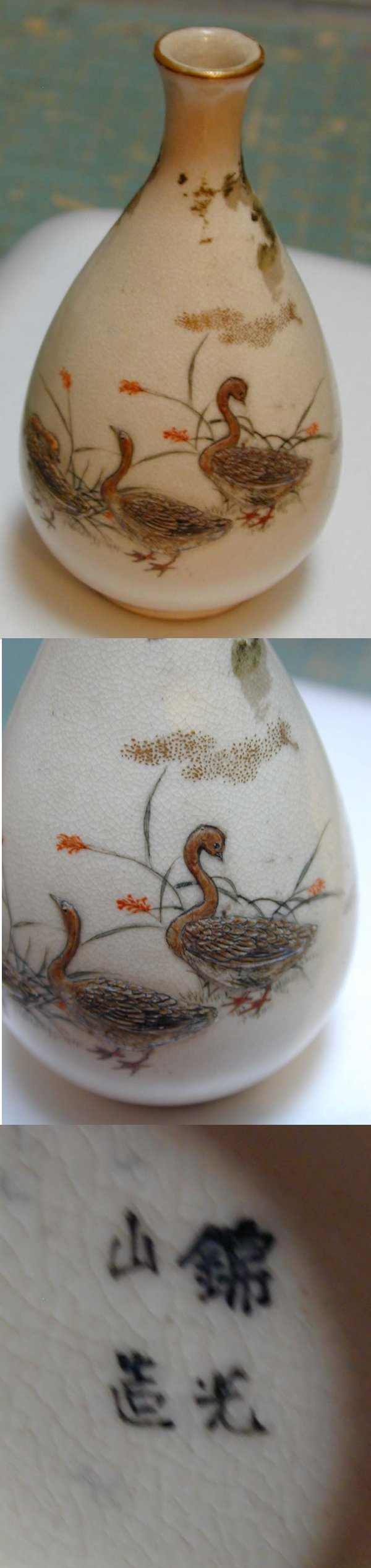

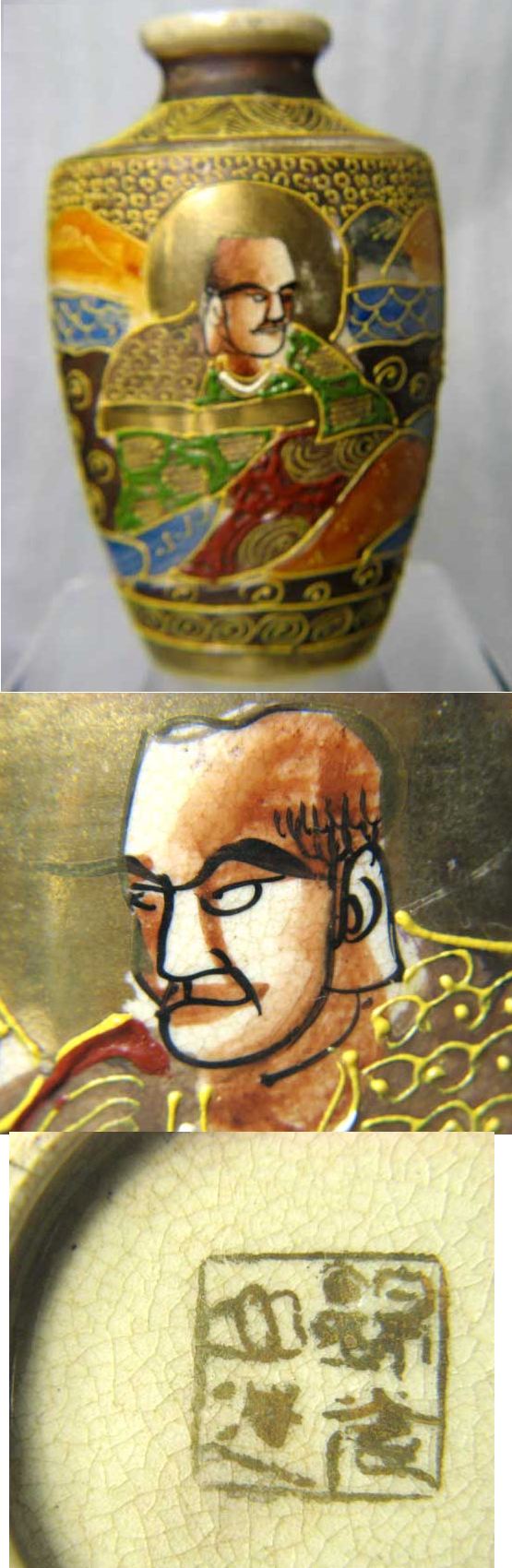
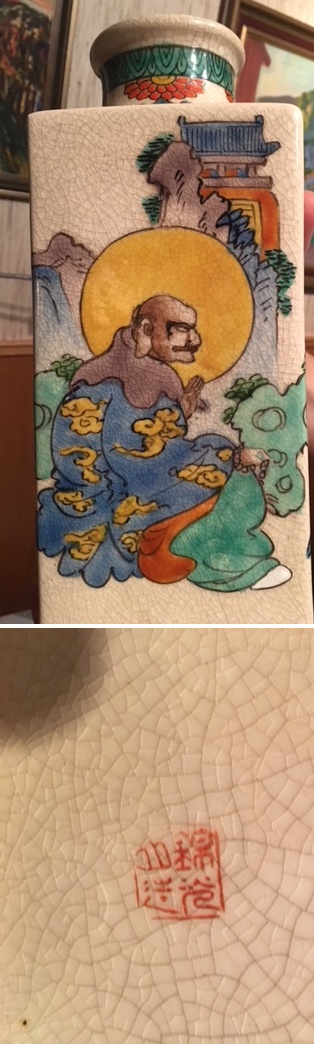
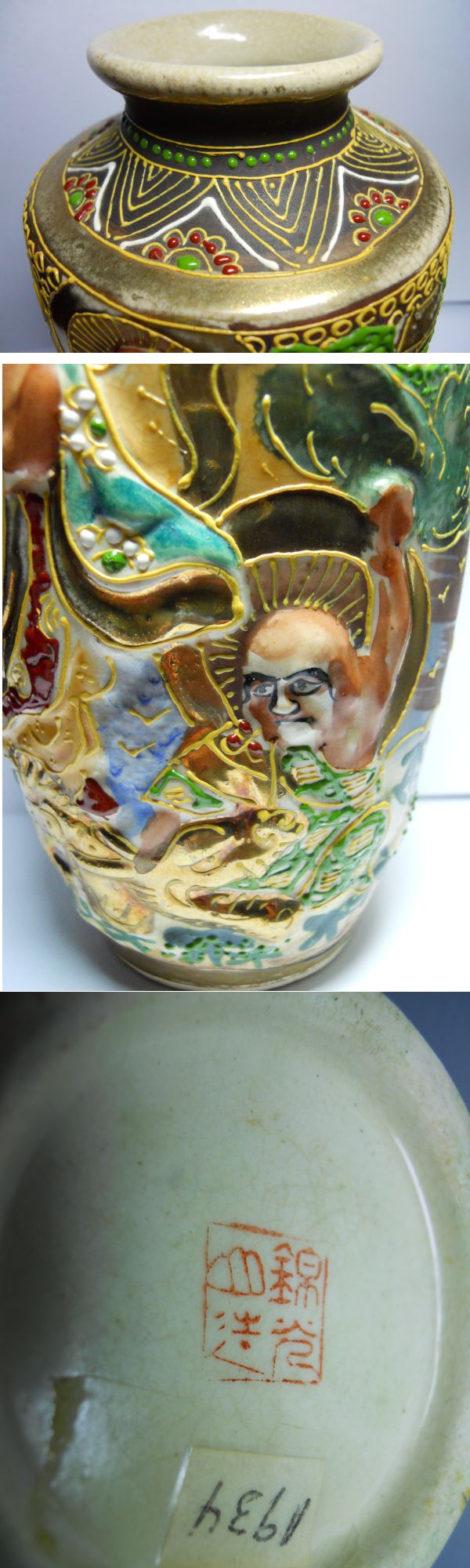
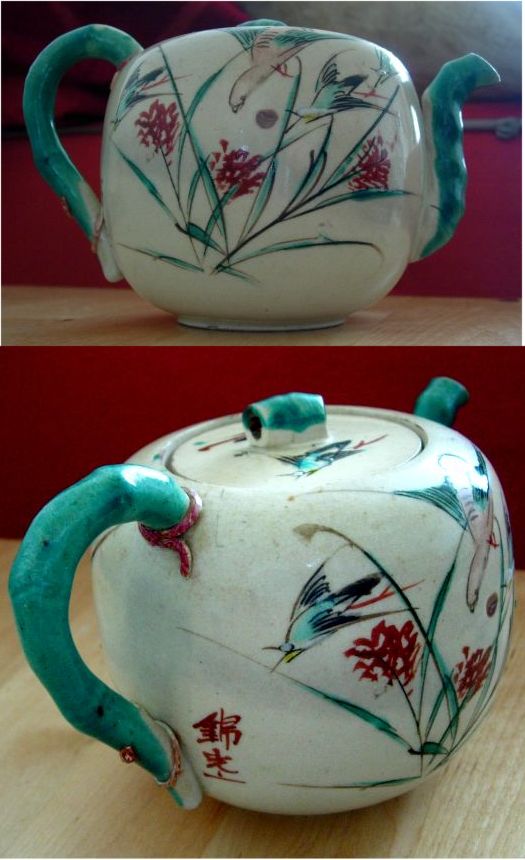
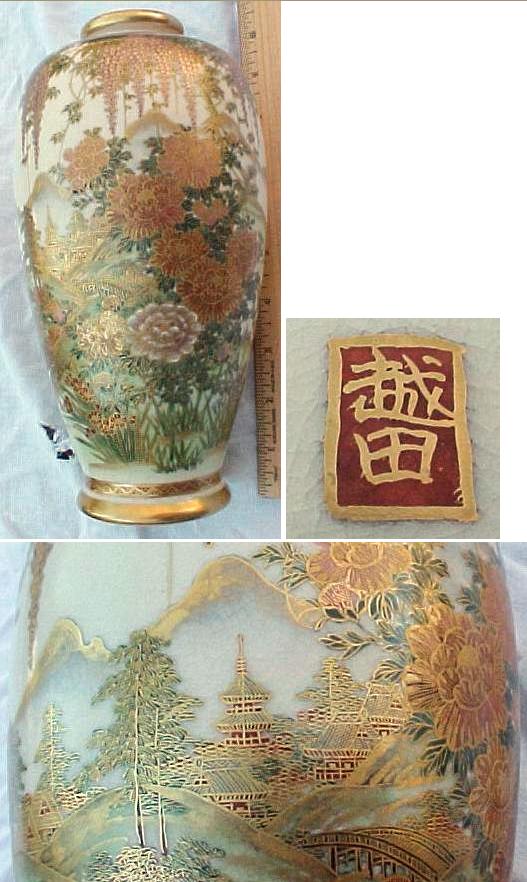

 The Makuzu workshop (the official kiln name) was established in Yokohama in 1871 by the Kyoto potter Miyagawa Kozan (1842-1916). It initially produced Satsuma-style pottery painted in polychrome enamels and gold, but during the 1880s it focused increasingly on the making of porcelain decorated in Chinese style. Satsuma-style pieces marked 'Kozan' can also be classified as a Makuzu ware or a Yokohama ware. Link to Makuzo ware introduction video.









 Click here to see large picture
 Click here to see large picture
 Click here to see large picture
 Click here to see large picture
 Click here to see large picture
 Click here to see large picture
 Click here to see large picture