
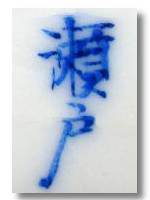
 Seto, located close to Nagoya is one of the Nihon Rokkoyo i.e. one of the six old kilns of medieval Japan. The history of this craft in Seto goes back 1300-years, the longest of any area in Japan.
The location of Seto makes it ideal for the production of pottery and ceramics. The soil around the city contains good quality porcelain clay and silica (used in making glass), and there are forests nearby to provide firewood for fuel.
The history of ceramics in Seto dates back to the Heian period (794-1185), with the creation of Akazu-yaki ware, a type of pottery where the clay could be glazed in a number of different ways before it was fired. Japan's first ash-glazed pieces were also fired in Seto sometime in the 14th century.
Seto became recognized as one one of the six "Nihon Rokkoyo" during the Kamakura period (1158-1333), and it stood out from the other areas as it was the only area to glaze its pottery.
During this time, Seto also became known for producing tenmoku tea bowls, which prior to that time had always been imported from China. However, as the demand for these tea bowls grew, production began in Seto since Seto was the only place in Japan which glazed its products, thus it was also the only place which was able to make black-glazed bowls. As a result, the form, style and color of its products differed greatly from those of the other five "Nihon Rokkoyo".
Early in the Edo era, around 1600 more advanced glaze and porcelain technique - with underglaze cobalt decoration and enamels - was brought into the western Arita area of Kyushu through Korean potters and Seto's ceramic industry maintained, by the production of various items ranging from everyday household items to exquisite works of art.
Development of ceramic ware has been closely connected with that of the tea-cult. The custom of enjoying the tea-cult first came to be observed among the Imperial family around A.C. 815 or so. It has so developed that emperors gave their vassals tea or tea-utensils as Imperial gifts. Tea-utensils accordingly came to be regarded as treasures. In the Azuchi-Momoyama period by the end of the 16th century the tea-cult had become widely spread among the warrior class. With this also followed a large increase in the demand for tea-utensils.
The late sixteenth and early seventeenth centuries (Momoyama and early Edo) were one of the great periods of Japanese ceramic production in
Seto and the neighboring Mino region. It was the period when individual artisans began to explore their craft most creatively, pushed on by the demands of the tea ceremony and the aesthetics of the tea master Oribe. Many of the most famous Raku and Shino bowls were produced at that time, and even in those days they were hugely valuable. The Jesuit priest Louis Frois wrote that one tea bowl equalled the price of the most precious jewels in Europe. As a result, setomono is as common a term for ceramics in Japan as china is in England.
In the book Tea Ceremony Utensils by Ryoichi Fujioka there's a photograph of an early 17th century Seto tea caddy named Zaichu-an. It's a national treasure and it has a set of eight cloth bags, made from the finest Chinese fabrics, to protect it - and they are treasures also.
While the ceramic history of Seto can be dated back to the end of the ice age, the modern history did not start before the potter Tamikichi Kato who at the risk of his life went to Arita to learn the technique of true porcelain manufacturing with underglaze blue cobalt decoration, as well as kiln technology, glaze and clay preparation, etc. He made it safely back home to Seto in 1807 and is now deified as the founder of Seto Porcelain Industry at the Kamagami Shrine.
The stagnant depression in Arita around the end of the Tokugawa shogunate and a great fire in 1828 caused great problems for the Arita area and Hizen porcelain industry to waver, while porcelain production could begin to flourish in Seto.
Seto is currently the largest producer of ceramic novelties, such as animal and bird figurines, dolls, ash trays, light stands, and flower vases. These items were originally only made for export, but have recently become popular with Japanese customers, as well.
Jan-Erik Nilsson
Introductory text written by and together with several expert members of the Gotheborg Discussion Board
| Dai Nippon | |
|---|---|
| Seto marks that includes Dai Nippon (Great Japan) in Japanese characters. Marks that includes Dai Nippon in Japanese characters on the whole date to the Meiji (1868-1912) period, reflecting the greatly increased nationalism of that period. | |
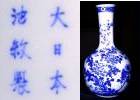 |
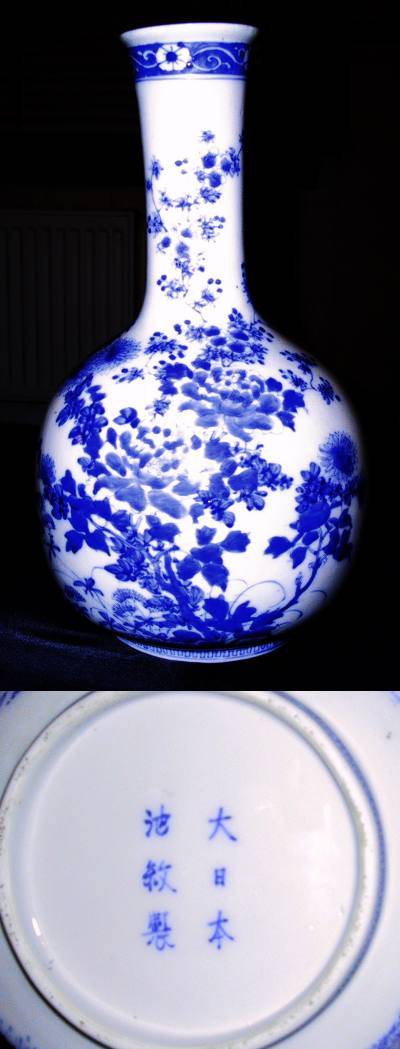
374. Vase. Mark reads: Dai Nippon Ike [unclear] sei, Late 19th/early 20th century. High quality decoration. It is generally accepted that marks that includes "Dai Nippon" in Japanese characters on the whole date to the Meiji (1868-1912) period, reflecting the greatly increased nationalism of that period. |
|
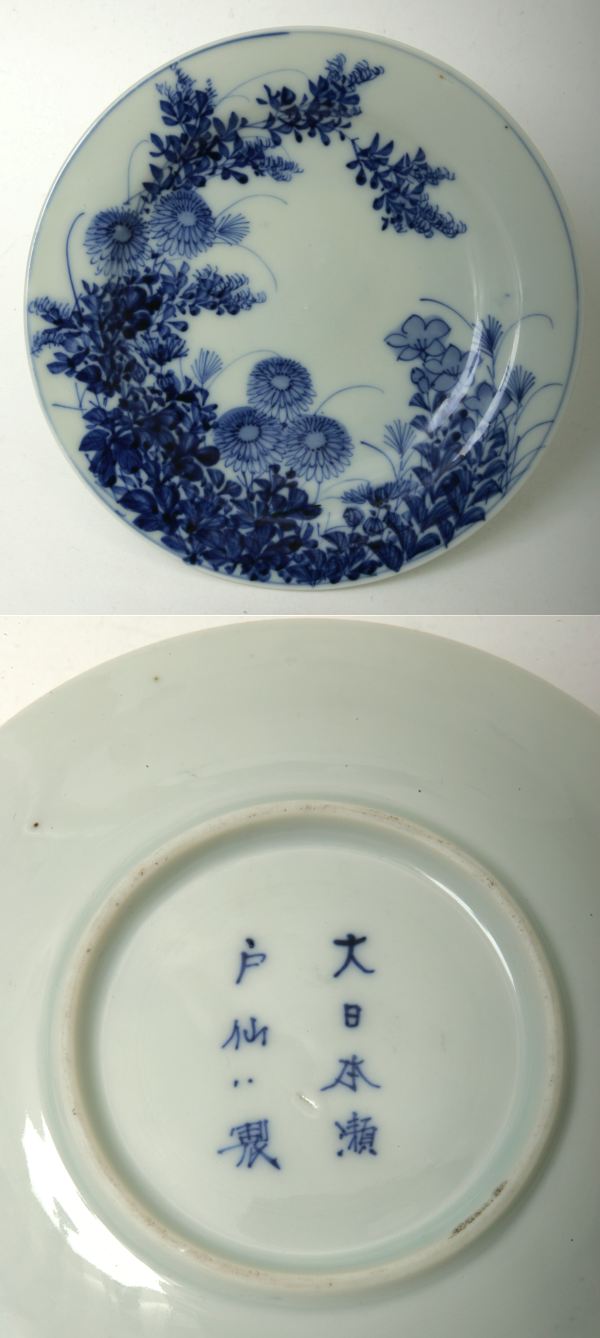
1238. Mark: Dai Nippon, Seto ... zo meaning: Great Japan, Seto, ... Made. Date: Meiji (1868-1912) period. |
|
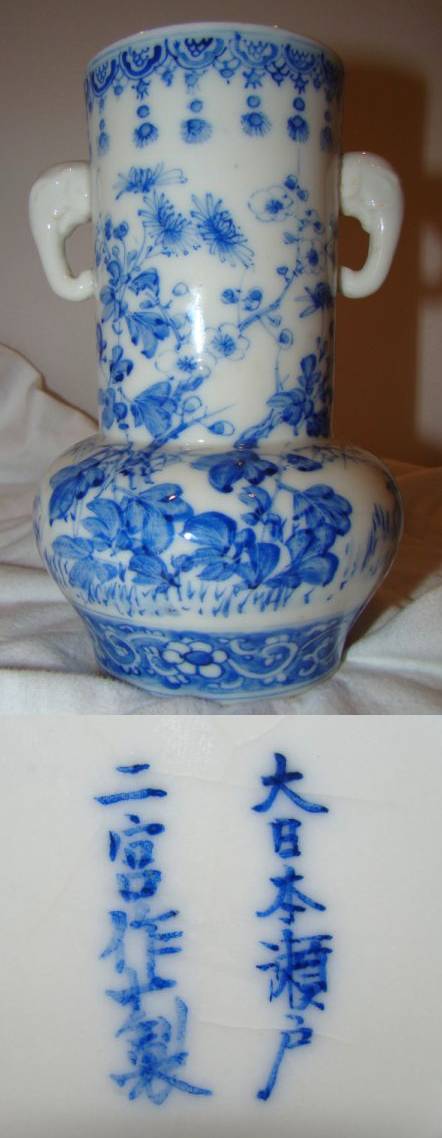
1314. Vase. Mark: Dai Nihon Seto, Jikan saku sei meaning "Great Japan, Seto, Made by Jikan". |

|
1237. Mark: Nippon Seto To Ka (unknown) Tsukuru meaning: "Japan Seto Made by To ka ...." Date: Mid 19th century, early Meiji (1868-1912) period. |
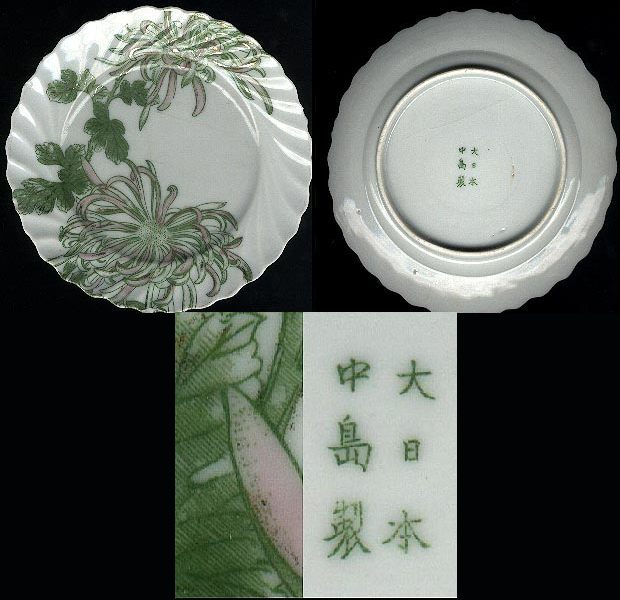 |
933. Mark: Dai Nippon Nakajima Sei meaning: Made in Nakajima Japan. Japan had many small potteries which made and decorated their own wares, but also those that sold wares to major decorating centers such as those in Nakajima. This plate's decoration was made using a stencil transfer - thus the fine lines which comprise the design - with a little bit of pink enamel wash in some of the petals. Koop's 'Japanese Names and How to Read Them' cites Nakajima both as "an administrative division of Owari province" but also as the "family name of a painter." Owari Province is modern Aichi Prefecture, with the famous town of Nagoya slightly south of Seto. Porcelain similar to this is known to have been bought in the late 1930's to very early 1940's. |
|
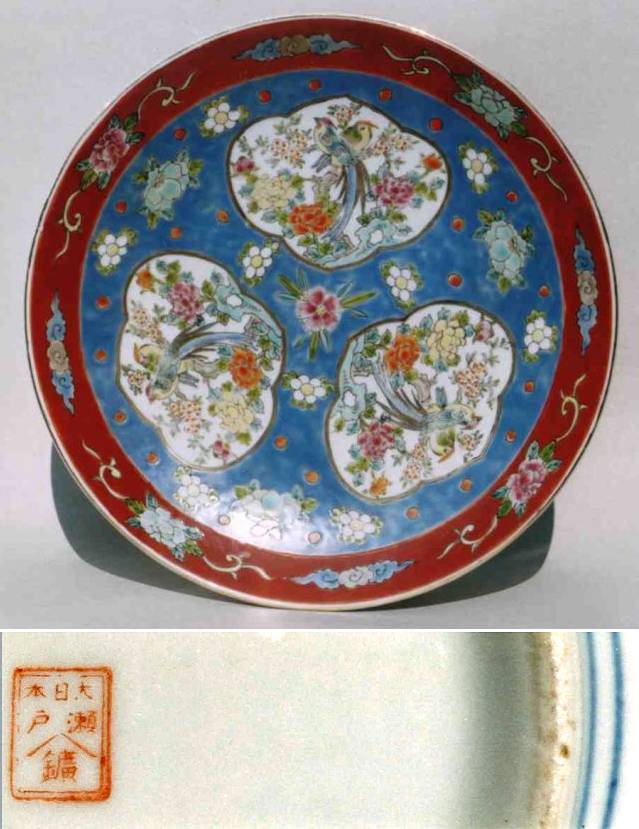
917. Mark: Dai Nippon (great Japan) is the right to left character meaning across the top. Also, underneath that are two characters, also written right to left, meaning Seto, which identifies this piece as Setoyaki from Nagoya. The bottom marking consists of what looks like a roof over a house, which is excatly what it is, identifying a trading shop designation in shorthand. Date: sometime after 1900. |
| Kato | |
|---|---|
|
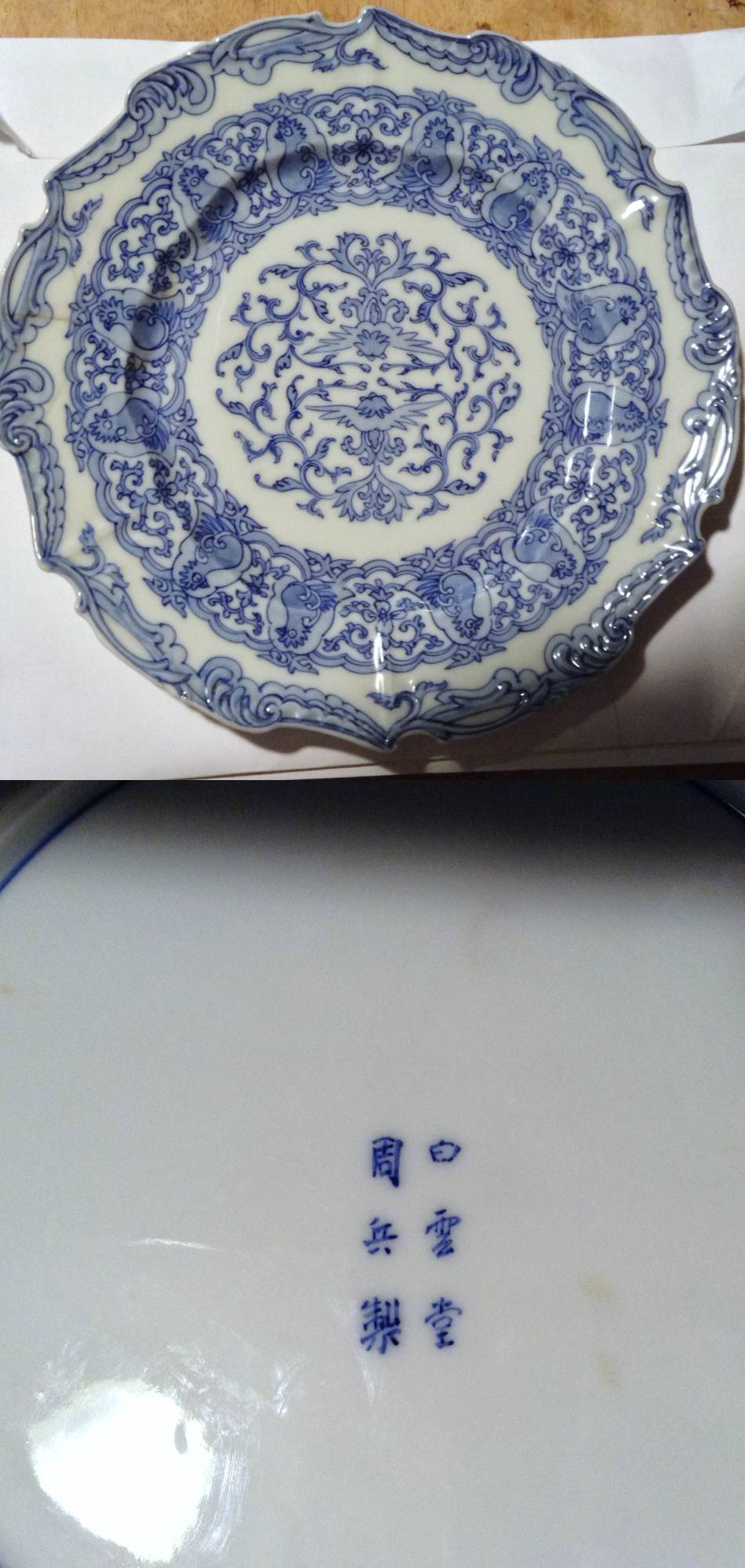
KATO was a famous Japanese ceramist family in Seto. The first known of the line was Kato Shirozaemon / Kagemasa (Toshiro) who in 1228 went to China with the monk Dogen, learnt stoneware firing in the south of China and after returning to Seto, Owari (now Aichi prefecture) in 1230, built the first kiln there and basically established the Japanese ceramic industry. From this on Japanese porcelain is called Setomono after this location. His descendants carry on the tradition until today. In 1807 Kato Tamikichi, who had spent years studying the various kilns in Hizen Province, including Arita, came to Seto and started the production of porcelain. He successfully produced high fired, underglaze cobalt blue and white decorated porcelain wares, known as Seto-Sometsuke. By the middle of the 19th century, many other famous potters had settled at the various Seto kilns and started to make this high grade underglaze blue and white porcelains. In 1852 Kato Shubei I (1819-1900) opened a porcelain factory under the business name Hakuundo (While Claud Hall) along with his son. In 1877 the son adopted his father's name when he became head of the family porcelain workshop. He then continued the family business under the name of Kato Shubei II (1848-1903), producing porcelain items for export, especially to Britain and the U.S.A. Their products were both blue and white (sometsuke) and celadon glazed (seiji) porcelain. The marks used was Hakuundo, Hakuundo Shubei, and Hakuundo Sei, where Sei was short for Kato Seishin, a relative, who decorated porcelain wares for Hakuundo. Selected litterature: General View of Commerce & Industry in the Empire of Japan, 1893, Department of Agriculture and Commerce of Japan "The business name for Kato Shiubei (sic) is Hakuundo located in Seto-cho, Higashikasugaigori in Aichi-ken. They manufactured porcelain wares". Brinkley, "Japan - its history, arts and literature, 1901" marks #631 and #632. | |
|
1485. Mark: Hakuundo Shubei Sei, meaning: Made for the White Cloud Hall by Shubei, mark used by Kato Shubei II (1848-1903). |
|
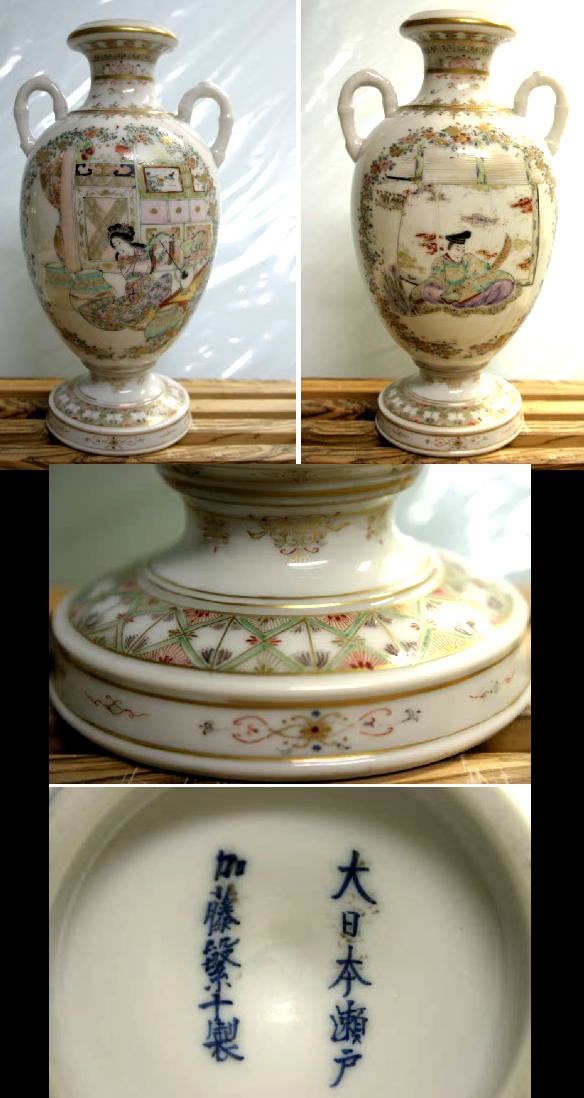
969. Mark: Dai Nippon, Seto Kato Shigeju zo meaning: Made by Kato Shigeju of Seto, in Japan. Date: Meiji (1868-1912) period (perhaps last quarter of 19th century). |
|
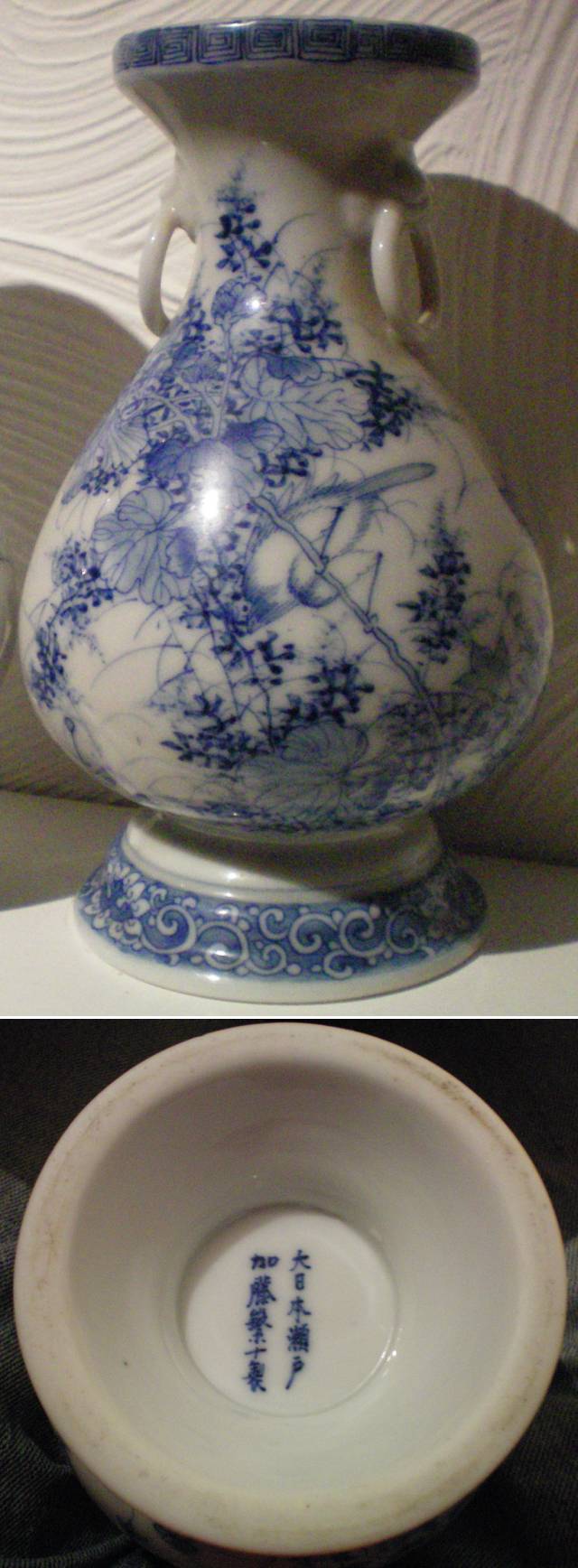
1348. Mark: Dai Nippon, Seto Kato Shigeju zo meaning: Made by Kato Shigeju of Seto, in Japan. Date: Meiji (1868-1912) period (perhaps last quarter of 19th century). |
| Kawamoto Masukichi Made | |
|---|---|
| Hand drawn Seto marks that does not include Dai Nippon (Great Japan). Marks could be both earlier and later than the Meiji (1868-1912) period, when this was the norm. | |
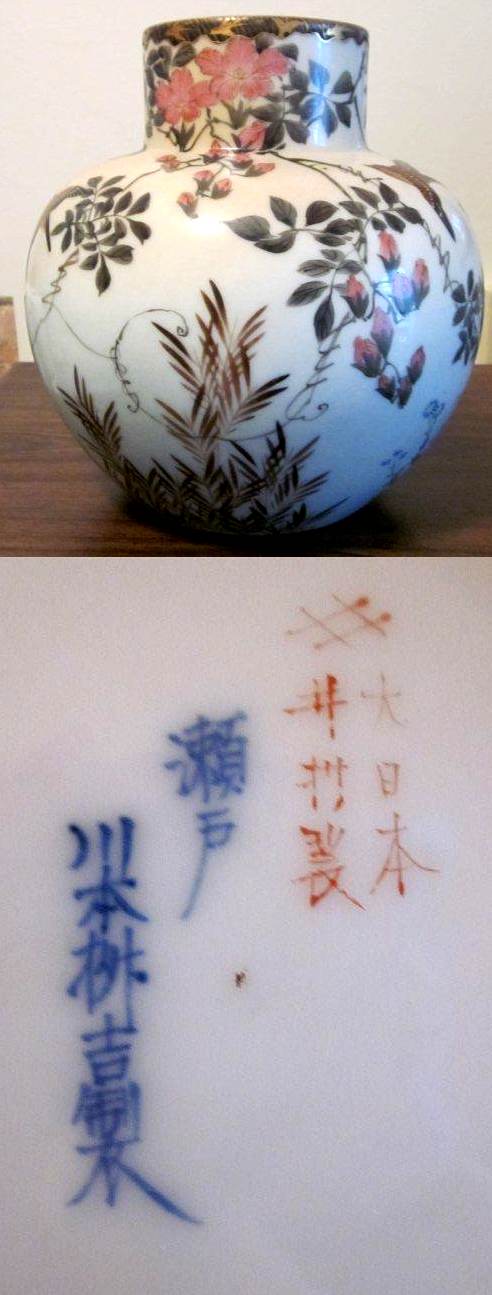 |
1398. Vase, with enamel decoration. Marks in underglaze blue and red enamels. Mark in red: Dai Nippon; Imura Zo. Mark in blue "Seto; made by AICHI KAWAMOTO MASUKICHI SEI".
Generally when this happens it could mean the blank pot was made by Kawamoto from Seto and that the painting in enamels were made by a Kutani artist (Imura). The way it is signed and the design of the painting suggests that a Kutani artist decorated this Seto made vase in Yokohama for export. Date 1910 to 1920, matching Yokohama activity which ended in 1923 with the great Tokyo earthquake. |

|
1308. Mark right column: Seto, left column Kawamoto Masukichi Made Date: Meiji (1868-1912) period. |
| Kawamoto Masukichi II (1852-1918) | |
|---|---|
| Masukichi II was one of the leading porcelain manufacturers in Seto; he gained a reputation for developing new glazes. He was the second son of Hansuke IV and was adopted by Masukichi I in 1877, and became Masukichi II in 1886. The potter singled out by Brinkley in 1901 and described as 'Kato Masukichi of Seto' was almost certainly Kawamoto Masukichi II. (Moyra Clare Pollard, Master Potter of Meiji Japan, 2002) | |
|
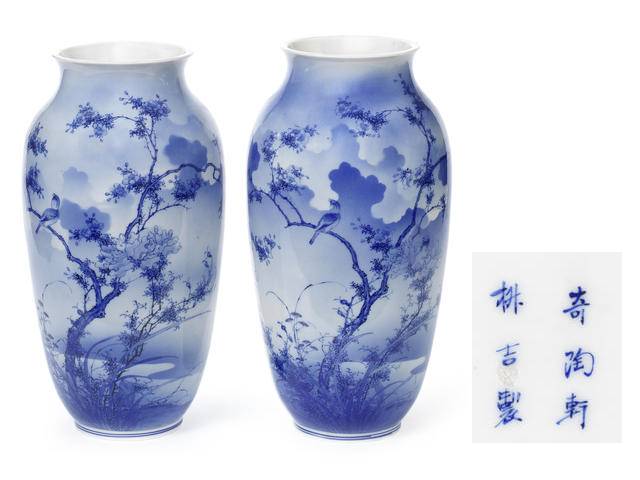
1490. Mark: Kito-ken Masukichi sei. Vase, by Kawamoto Masukichi II (1852-1918). Date: Meiji (1868-1912) period. |
| Aito | |
|---|---|
|
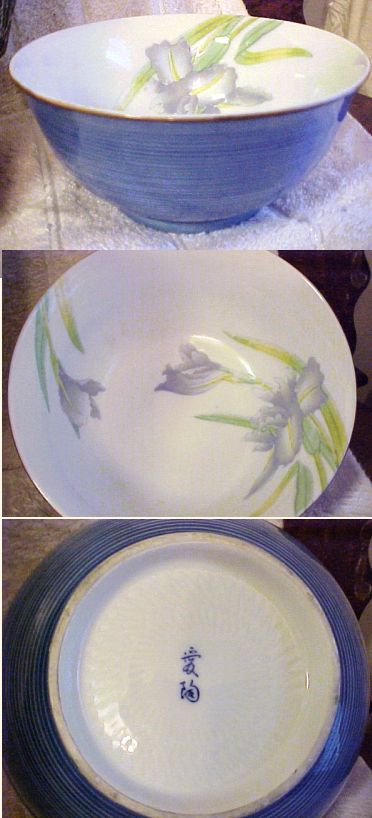
1204. Mark: Ai To Japanese reading = Ai To ('love' of 'ceramics'), usually indicating Aichi Prefecture (Nagoya), Seto ware, modern, contemporary. |
| Stamped or printed marks | |
|---|---|
| Printed Seto or Seto area marks that does not include Dai Nippon in Japanese characters. These marks dates to after the Meiji (1868-1912) period. | |
|
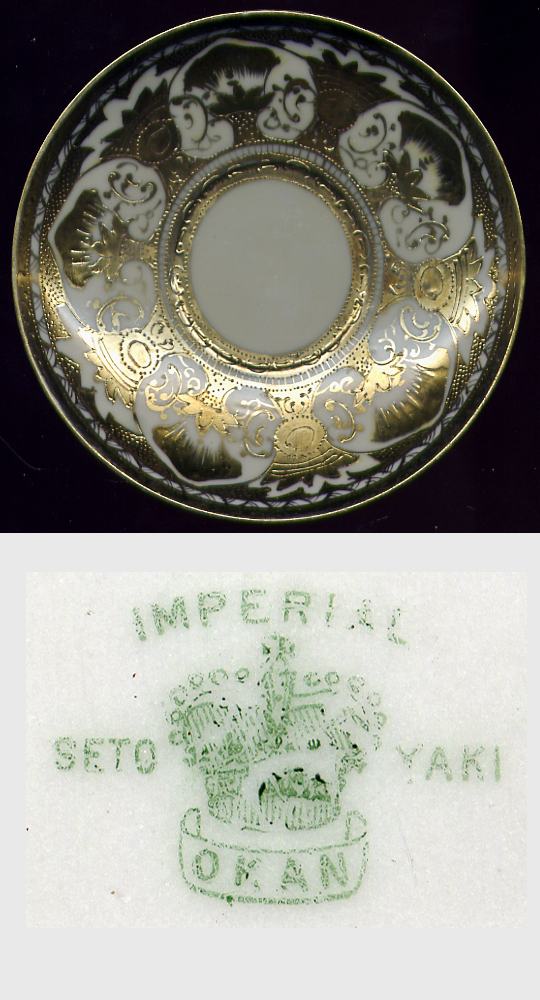
888. Mark: Imperial Seto Yaki - OKAN". Japanese porcelain. Tentative date: mid 1940s. |
|
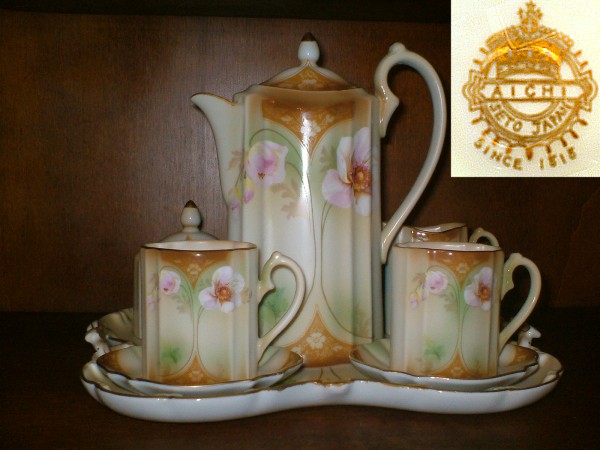
1057. Mark: "Aichi Seto Japan since 1818". Aichi Prefecture is the old name of the Owari Province where the Seto village and industries are. Tentative date: mid 1940s. |
|
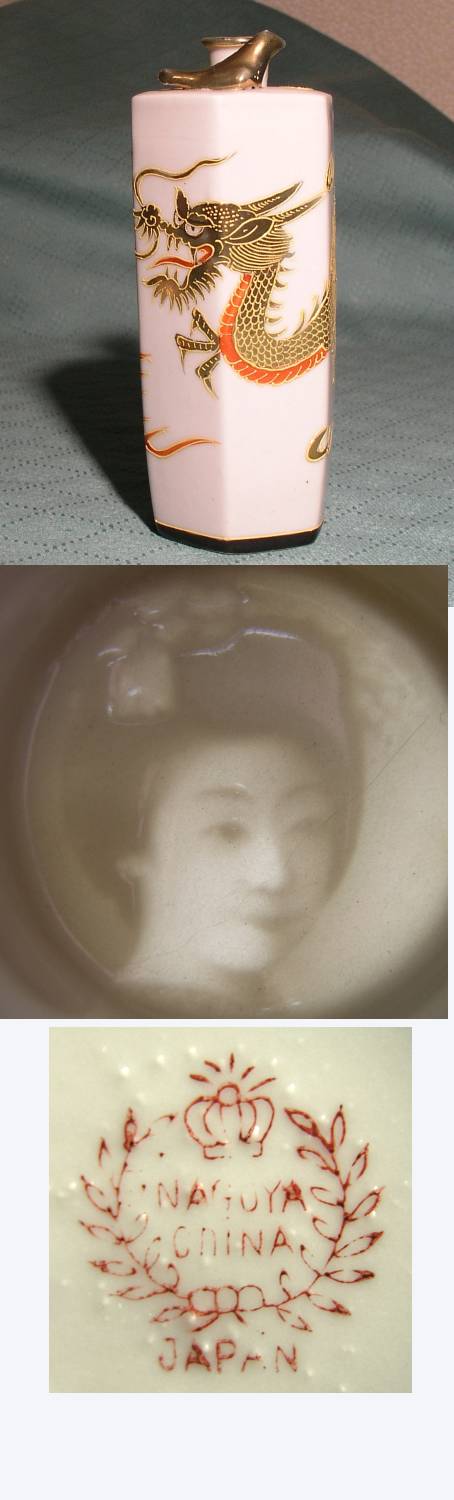
1061. Sa'ke bottle. The woman's face on the base is called a "Lithophane". Pieces like this was made between the late 1930s and into the late 1950s/early 1960s, mostly for export. Many pieces dates to the "Occupied Japan" period (1945-52) and could thus be dated from this, if they carry a mark saying so. Most of this porcelain appears to have been made by the Kutani factory in Japan, and thereafter being decorated at lesser decorating firms, based from the multitude of different marks they can be found with. Since this piece carry the additional mark of "Nagoya" this could indicate that the Seto ceramic center slightly north of Nagoya might be the actual birth place of this set, however that is impossibly to tell for sure. Nagoya is the commercial and industrial metropolis of Owari, and the greatest ceramic center in Japan so far as the amount of products are considered, and they could have worked with porcelain from all over Japan however plain logistics are speaking in favour of something local. |
|
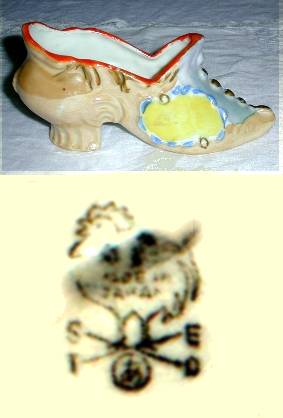
913. Mark: "SETO - Made in Japan". Date: 1920-1940s. |
| Yamahiro Toen | |
|---|---|
|
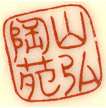
156. Mark: Yamahiro Toen, "Yama hiro" = mountain-wide, and "toen" = pottery garden / studio. Mark of Yamahiro Manufacturing Co. Seto City, Aichi, Japan. Last quarter 20th century. |
|
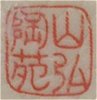
416. Mark: Yamahiro Toen, "Yama hiro" = mountain-wide, and "toen" = pottery garden / studio. Mark of Yamahiro Manufacturing Co. Seto City, Aichi, Japan. Last quarter 20th century. |
| Yamamine (Mountain peak) | |
|---|---|
|
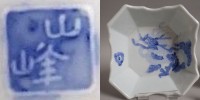
1558. Mark: Yamamine, "Mountain peak". Last quarter 20th century. |
The gotheborg.com marks section was originally initiated by a donation of marks from the collection of Karl-Hans Schneider, Euskirchen, Germany in July 2000. The section have since then been greatly extended by a large number of contributing collectors.
The marks section of Gotheborg.com was initially established in May 2000 thanks to a generous donation of approximately one hundred images of Japanese porcelain marks, by Karl-Hans Schneider from Euskirchen, Germany. This contribution provided a modest yet substantial beginning of the Marks Section. It was a kind gesture that I really appreciated.
Of the many later contributors, I would especially want to mention Albert Becker, Somerset, UK, who was the first to help with some translations and comments on the Japanese marks. His work was then greatly extended by Ms. Gloria S. Garaventa, after which Mr. John Avery looked into and corrected some of the dates. Most of the Satsuma marks were originally submitted by Ms. Michaela Russell, Brisbane, Australia. A section which was then greatly extended by Ian & Mary Heriot, a large amount of information from which still awaits publication.
A warm thank you also goes to John R. Skeens, Florida, U.S.A., and Toru Yoshikawa for the Kitagawa Togei section, and to Susan Eades for her help and encouragement towards the creation of the Moriyama section. For the last full overhaul of the Satsuma and Kutani sections, thank you to Howard Reed, Australia. The most recent larger contribution was made by Lisa M. Surowiec, New Jersey, USA.
In 2004 and from then on, my warm thank you goes to John Wocher and Howard Reed, whose knowledge and interest have sparked new life into this section and given reason for a new overhaul. Thank you again and thank you to all I have not mentioned here, for all help and interest in and contributions to our knowledge of 20th-century Japanese porcelain.
The Chinese marks section would not have been possible without the dedicated help of Mr. Simon Ng, City University of Hong Kong, whose translations and personal efforts in researching the origin and dates of the different marks have been an invaluable resource. It has since been greatly extended by several contributors such as Cordelia Bay, USA, Walt Brygier, USA, Bonnie Hoffmann, Harmen Lensink, 'Tony' Yalin Zhang, Beijing, 'ScottLoar', Shanghai, Mike Harty, and many more expert members of the Gotheborg Discussion Board.
A number of reference pieces have also been donated by Simon Ng, N K Koh, Singapore, Hans Mueller, USA, Hans Slager, Belgium, William Turnbull, Canada, and Tony Jalin Zhang, Beijing.
All images and text submitted by visitors and published anywhere on this site are and remain the copyrighted property of the submitter and appears here by permission of the owners which can be revoked at any time. All information on this site, that are not specifically referenced to peer reviewed sources, are the personal opinions given in good faith by me, my friends and fellow experts, based on photos and the owners' submitted descriptions. They are not to be used for any financial or commercial decisions, but for educational and personal interest only, and can and will be changed as further information merits.
For further studies, Encyclopedia Britannica is to be recommended in preference to Wikipedia, which, not being peer-reviewed, might contain misleading information.
Web design and content as it appears here © Jan-Erik Nilsson 1996-.
 Click here to see large picture