
Yixing County, in the southern part of Jiangsu Province, has been the center of Chinese teapot production since the Song Dynasty (960-1279). High quality Yixing clay comes from along the banks of Lake Tai near Nanjing. Refined and fired to a high temperature it produces a slightly absorbent pottery highly regarded by tea lovers.
A good Yixing teapot should pour evenly from the pot, have a porcelaneous ring to it when struck, come with a very snug fitting lid and, if the lid has a ventilation hole in it, will stop pouring when you put your finger over it. Since the clay will absorb some of the aroma of the tea over the years, and thus enhance the flavor, it is important to drink only one kind of tea out of it. If the tea pot has any age to it, it should have a distinct residue of old tea inside.
The clay used for Yixing pottery is called Zisha ("Purple clay") despite the fact that it is not always purple in color wether unfired or fired. The high content of metallic oxides in the clay body resulted in wares ranging from purple to beige or green, the variation in color being caused by differences in kiln temperature and atmosphere.
Jan-Erik Nilsson
This page has been created together with expert members of the Gotheborg Discussion Board.
| Yixing (Buccaro) | |
|---|---|
|
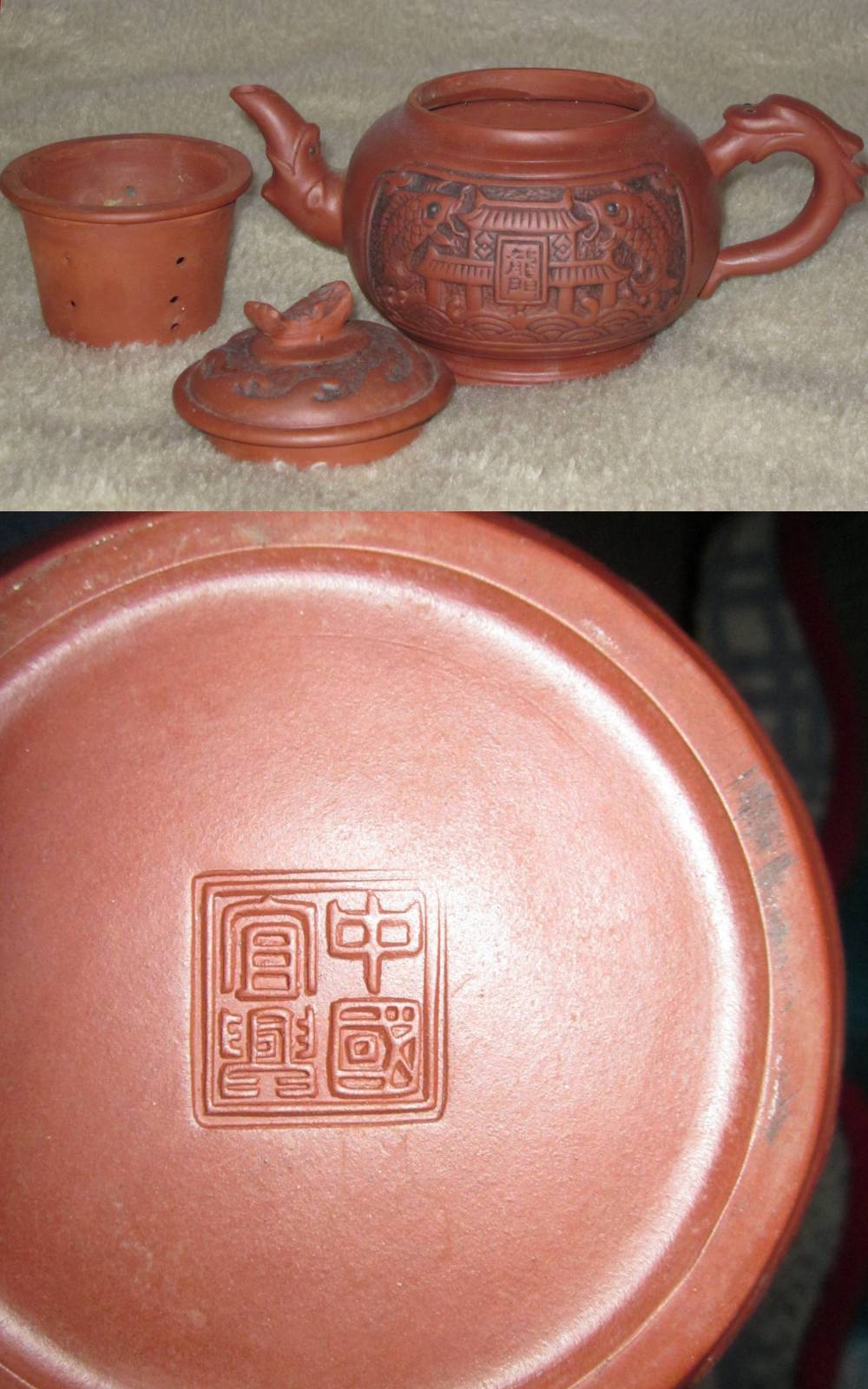
1477. Mark: Zhong Guo Yixing (China Yixing). Characters in the decoration: Long Men (Dragon Gate). Modern, possible year 2000 or later. Symbolizing academic success as in passing the difficult examinations, as a carp manages to leap up-streams over the Lung Men (Dragon's Gate) waterfall, he would transform into a dragon. The full expression is Liyu Tiao Long Men and means that if a person works hard enough success will one day be achieved. |
|
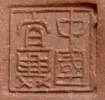
394. "Zhong Guo Yixing" China Yixing. 1990's |
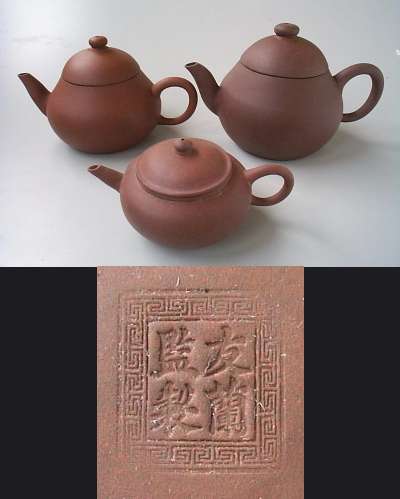 |
516. You Lan Jian Zhi - "You Lan ( Name ) supervised to make". On teapot found in "Straits" porcelain cargo outside Malacca, by Sten Sjöstrand. c. 1840. |
|
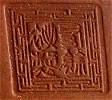
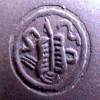
538. Yixing pottery mark, Desaru cargo, c. 1840. On teapot found in "Straits" porcelain cargo outside Malacca, by Sten Sjöstrand. |
|
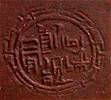
539. Yixing pottery mark, Desaru cargo, c. 1840. On teapot found in "Straits" porcelain cargo outside Malacca, by Sten Sjöstrand. |
|
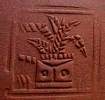
540. Yixing pottery mark, Desaru cargo, c. 1840. On teapot found in "Straits" porcelain cargo outside Malacca, by Sten Sjöstrand. |
|
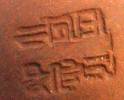
541. Yixing pottery mark, Desaru cargo, c. 1840. On teapot found in "Straits" porcelain cargo outside Malacca, by Sten Sjöstrand. |
|
542. Yixing pottery mark, Desaru cargo, c. 1840. On teapot found in "Straits" porcelain cargo outside Malacca, by Sten Sjöstrand. |
|
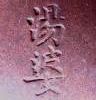
543. Yixing pottery mark, Desaru cargo, c. 1840. Mark Tang Po where "Tang" is a surname and "po" an old woman, perhaps best translated as Old Lady Tang. On teapot found in "Straits" porcelain cargo outside Malacca, by Sten Sjöstrand. |
|
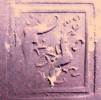
544. Yixing pottery mark, Desaru cargo, c. 1840. On teapot found in "Straits" porcelain cargo outside Malacca, by Sten Sjöstrand. |
|
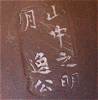
545. Yixing pottery mark, Desaru cargo, c. 1840. On teapot found in "Straits" porcelain cargo outside Malacca, by Sten Sjöstrand. |
|
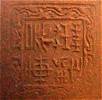
546. Yixing pottery mark, Desaru cargo, c. 1840. On teapot found in "Straits" porcelain cargo outside Malacca, by Sten Sjöstrand. |
|
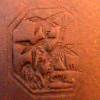
547. Yixing pottery mark, Desaru cargo, c. 1840. On teapot found in "Straits" porcelain cargo outside Malacca, by Sten Sjöstrand. |
|
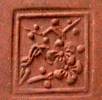
548. Yixing pottery mark, Desaru cargo, c. 1840. On teapot found in "Straits" porcelain cargo outside Malacca, by Sten Sjöstrand. |
|
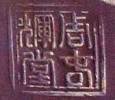
549. Yixing pottery mark, Desaru cargo, c. 1840. On teapot found in "Straits" porcelain cargo outside Malacca, by Sten Sjöstrand. |
|
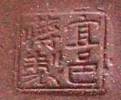
550. Yixing pottery mark, Desaru cargo, c. 1840. On teapot found in "Straits" porcelain cargo outside Malacca, by Sten Sjöstrand. |
|
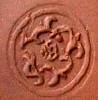
551. Yixing pottery mark, Desaru cargo, c. 1840. On teapot found in "Straits" porcelain cargo outside Malacca, by Sten Sjöstrand. |
|
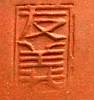
552. Yixing pottery mark, Desaru cargo, c. 1840. On teapot found in "Straits" porcelain cargo outside Malacca, by Sten Sjöstrand. |
|
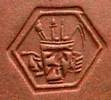
553. Yixing pottery mark, Desaru cargo, c. 1840. On teapot found in "Straits" porcelain cargo outside Malacca, by Sten Sjöstrand. |
|
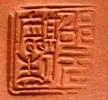
554. Yixing pottery mark, Desaru cargo, c. 1840. On teapot found in "Straits" porcelain cargo outside Malacca, by Sten Sjöstrand. |
|
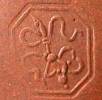
555. Yixing pottery mark, Desaru cargo, c. 1840. On teapot found in "Straits" porcelain cargo outside Malacca, by Sten Sjöstrand. |
|
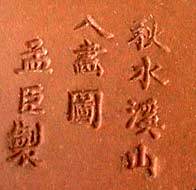
556. Yixing pottery mark, Desaru cargo, c. 1840. On teapot found in "Straits" porcelain cargo outside Malacca, by Sten Sjöstrand. |
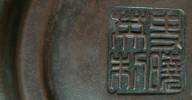 |
563. Yixing pottery mark. 20th century. |
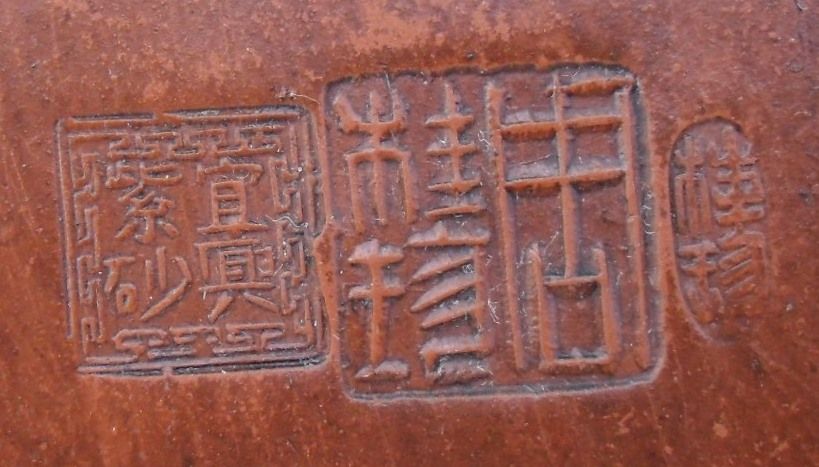 |
1501. Yixing pottery mark, saying "Yixing Purple Clay", contemporary, on a molded pottery teapot brushed with brown dressing to look old. |
| Japanese Tokoname ware | |
|---|---|
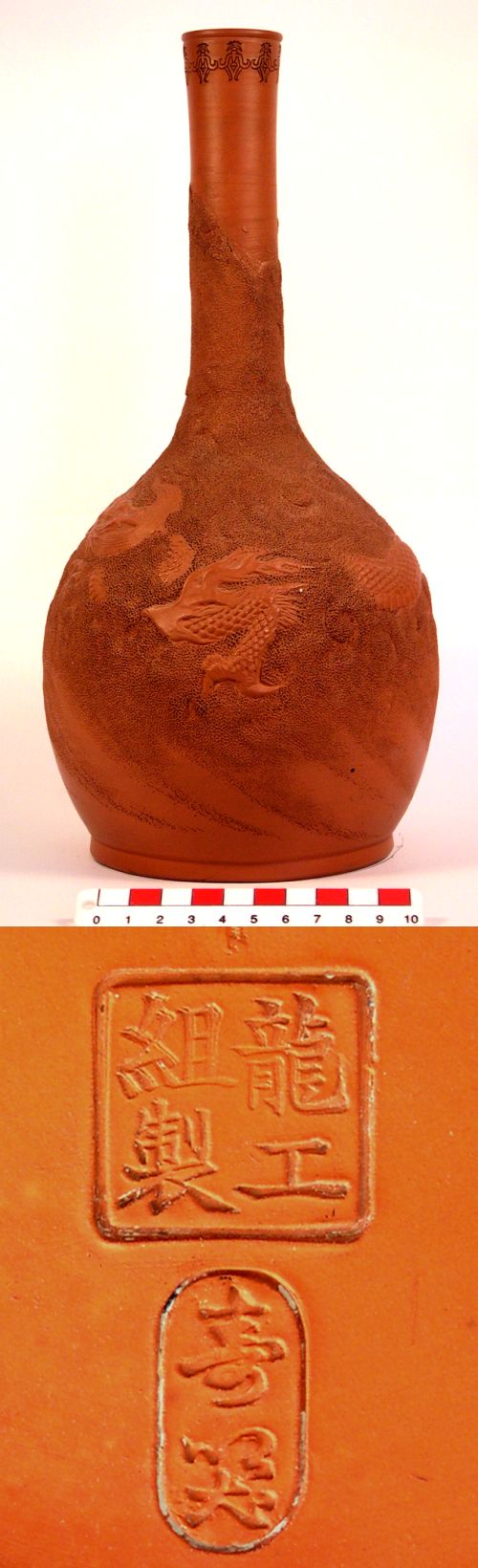
|
1213. Vase. Mark similar to Yixing pottery marks. Top seal means "Dragon Work Team Made". Bottom seal two characters are "Shou (long life) laugh/cry". It could mean 'long life' and 'always happy' or that smiling gives you a long life. Tentative date based on the piece's history c. 1960-80s. In an email of the 29th of January 2008, Carl Wantrup suggests that "this vase is in fact Japanese, and made at the Tokoname kilns. Tokoname is one of the oldest pottery production/kiln sites in Japan, and the clay body in Meiji Period Tokoname wares look very similar to Hongni (red clay) type Yixing wares, however this is to me quite clearly Meiji period Tokoname export ware, from a stylistic point of view. The most common design motif in Tokoname vases from this period was finely carved and incised dragons in low relief, amidst rough patterned clouds, and the vases were often given repeated stamped decoration as borders around the mouth and foot. Additional evidence for my proposal, is the fact that the shape of the vase is not a Chinese shape, but rather a Japanese shape", to which I am prepared to agree. This would clear up a long standing question mark about this type of ware. |
The marks section of Gotheborg.com was initially established in May 2000 thanks to a generous donation of approximately one hundred images of Japanese porcelain marks, by Karl-Hans Schneider from Euskirchen, Germany. This contribution provided a modest yet substantial beginning of the Marks Section. It was a kind gesture that I really appreciated.
Of the many later contributors, I would especially want to mention Albert Becker, Somerset, UK, who was the first to help with some translations and comments on the Japanese marks. His work was then greatly extended by Ms. Gloria S. Garaventa, after which Mr. John Avery looked into and corrected some of the dates. Most of the Satsuma marks were originally submitted by Ms. Michaela Russell, Brisbane, Australia. A section which was then greatly extended by Ian & Mary Heriot, a large amount of information from which still awaits publication.
A warm thank you also goes to John R. Skeens, Florida, U.S.A., and Toru Yoshikawa for the Kitagawa Togei section, and to Susan Eades for her help and encouragement towards the creation of the Moriyama section. For the last full overhaul of the Satsuma and Kutani sections, thank you to Howard Reed, Australia. The most recent larger contribution was made by Lisa M. Surowiec, New Jersey, USA.
In 2004 and from then on, my warm thank you goes to John Wocher and Howard Reed, whose knowledge and interest have sparked new life into this section and given reason for a new overhaul. Thank you again and thank you to all I have not mentioned here, for all help and interest in and contributions to our knowledge of 20th-century Japanese porcelain.
The Chinese marks section would not have been possible without the dedicated help of Mr. Simon Ng, City University of Hong Kong, whose translations and personal efforts in researching the origin and dates of the different marks have been an invaluable resource. It has since been greatly extended by several contributors such as Cordelia Bay, USA, Walt Brygier, USA, Bonnie Hoffmann, Harmen Lensink, 'Tony' Yalin Zhang, Beijing, 'ScottLoar', Shanghai, Mike Harty, and many more expert members of the Gotheborg Discussion Board.
A number of reference pieces have also been donated by Simon Ng, N K Koh, Singapore, Hans Mueller, USA, Hans Slager, Belgium, William Turnbull, Canada, and Tony Jalin Zhang, Beijing.
All images and text submitted by visitors and published anywhere on this site are and remain the copyrighted property of the submitter and appears here by permission of the owners which can be revoked at any time. All information on this site, that are not specifically referenced to peer reviewed sources, are the personal opinions given in good faith by me, my friends and fellow experts, based on photos and the owners' submitted descriptions. They are not to be used for any financial or commercial decisions, but for educational and personal interest only, and can and will be changed as further information merits.
For further studies, Encyclopedia Britannica is to be recommended in preference to Wikipedia, which, not being peer-reviewed, might contain misleading information.
Web design and content as it appears here © Jan-Erik Nilsson 1996-.