The Collector’s Encyclopedia of Geisha Girl Porcelain, by Elyce Litts

          0 votes

The best book ever published on and a necessary reference book for all who collects or have an interest in Japanese Geisha Girl porcelain. A valuable reference also for Japanese export porcelain in general.


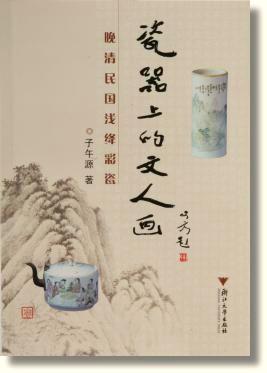
WANQING MINGUO QIANJIANG CAICI: CIQI SHANG DE WENRENHUA. (Late Qing and Early Republic Qianjiang Literati Painting on porcelain), by Zi Wuyuan

* * *     1 votes

WANQING MINGUO QIANJIANG CAICI: CIQI SHANG DE WENRENHUA. (Late Qing and Early Republic Qianjiang Literati Painting on porcelain), by Zi Wuyuan

This small book offers splendid value for money to those looking for some illustration of late Qing dynasty literati paintings (Qianjiang) on porcelain.

The book shows what was done during the late Qing Dynasty where high artistic standard was developed within a group of Qianjiang color artists, painting on porcelain.

The small booklet is extremely well illustrated in color despite its small size. Around 100 items are shown, often from several perspectives; regularly front and back. 64 artist porcelain painters are presented, the book includes a “China Qianjiang colour artist list” for easy reference.

Hangzhou: Zhejiang University Press, 2006
21×14 cm, Paperback.
102 pages, more that 200 Colour illustrations
Marks, seals and inscriptions are illustrated and occasionally prices of the items are given.
The text is entirely in Chinese.
In the captions any date in the inscriptions are given in Arabic numerals.

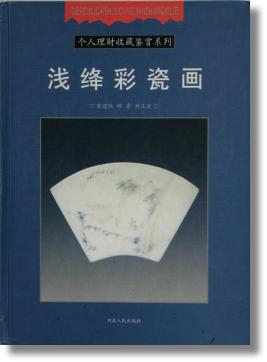
QIANJIANG CAICI HUA (Qianjiang Painted Porcelains), by Chen Jianxin et al.

* * *     1 votes

QIANJIANG CAICI HUA (Qianjiang Painted Porcelains) Geren Licai Shoucang Jianshang Xilie, by Chen Jianxin et al.

For Qianjiang pieces this book is one of the better published so far. It illustrates many pieces from more accomplished Qianjiang artists. It’s a useful and well-illustrated addition to the literature on the subject of Qianjiang painted porcelains from the late Qing and Republic periods. Illustrated throughout in color. Text in Chinese.

Shijiazhuang 2003.
58 pages introduction in Chinese, 193 pp. colour plates.
B/w text illustrations and drawings.
30×21 cm.


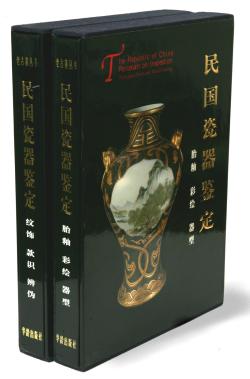
MINGUO CIQI JIANDING I + II, by Tie Yuan and Xi Ming

* * * *   1 votes

MINGUO CIQI JIANDING, Taiyou Caihui Qixing
(I - Republican Period Ceramics: Paste, Glazes, Painting and Shapes).

This is one book is a set of two, both written by Tie Yuan and Xi Ming detailing Republican period ceramics. This volume start with a discourse on the production of ceramics complemented by early black-and-white photographs. Follows with an examination of glazes, painting on Republican ceramics and an in-depth presentation of the many new and prevalent shapes from this period. Illustrated with hundreds of color plates showing many previously unpublished pieces.

MINGUO CIQI JIANDING: Wenshi Kuanshi Bianwei,
(II - Republican Period Ceramics: Designs, Seals and Forgeries).

Second book in this set by the same authors continues the in-depth discourse on Republican period ceramics. Many inscriptions on porcelain are shown that include artists’ seals plus hall and studio marks. Finishes with a section on the problem of forgeries of Republican period ceramics and Republican period imitations of earlier works.

Both books are recommended on behalf of the illustrations although the text remains a closed door to non-Chinese readers. Dates are occasionally given in western numerals in the captions.

Beijing, 2004.
302 resp. 310 pages.
Colour plates throughout.
Book I - Two foldout color illustrations on porcelain figures.
B/w illustrations.
Size 29×22 cm.
Hardbound. Text in Chinese

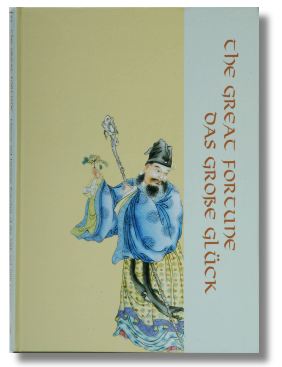
THE GREAT FORTUNE. Das Grosse Gluck, by Georg Weishaupt
* * * * ½ 2 votes

THE GREAT FORTUNE. Das Grosse Gluck, by Georg Weishaupt
The title continues: ‘Chinese and Japanese Porcelain of the 19th and 20th Centuries and Their Forerunners’. Monograph on the 19th and 20th century Chinese and Japanese porcelain collection of the Berlin antiques dealer and connoisseur Georg Weishaupt.
Illustrated throughout in color including bases and seals.
Stuttgart 2003.
405 pp. 440 colour plates.
Size 30×21 cm.
Text in English and German.


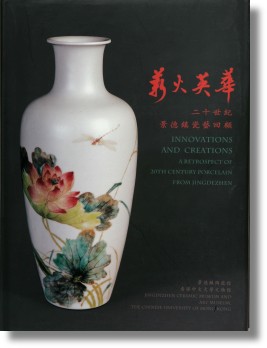
Innovations and Creations, by Lai Suk Yee (Ed.)

* * * * * 2 votes

INNOVATIONS AND CREATIONS. A Retrospect of 20th Century Porcelain from Jingdezhen, by Lai Suk Yee (Ed.)

Catalog of an exhibition jointly presented by the Art Museum, The Chinese University of Hong Kong and the Jingdezhen Ceramic Museum which gives an overview of ceramic production in Jingdezhen in the last century.

This book created quite a stir in the west and in all circles that had held the opinion that no porcelain of any merit had been made since the mid 10th century. This exhibition proved that there were lot to be found also from later periods and in excellent taste and workmanship. There are several books published now from this period, but this one still stands out as one of the most important.

The catalog illustrates and details 186 items of porcelain plaques, wares and sculptures decorated in famille rose enamels, wucai enamels, monochromes and under glaze blue. The rich contents include imperial wares for the last Qing Emperor Xuantong and also the short-lived Hongxian regime, painted porcelain by accomplished ceramic artists including the celebrated group of the “Eight Friends of Zhushan”, sculptures and painted plaques of the Cultural Revolution period (1960s and 70s), a variety of antique-type wares and porcelain painted with new techniques.

The majority of the pieces are selected from the collection of the Jingdezhen Ceramic Museum - this is augmented by items from private and public collections in Hong Kong. Most pieces are here published for the first time. The catalog contains full color plates of all items with detailed descriptions and an introductory essay by Cao Ganyuan, Academic Director of the Jingdezhen Ceramic Museum. Dual text in English and Chinese.

Hong Kong, 2004. 255 pp. Over 150 colour plates.
Text in English and Chinese.
Format 30×24 cm. Cloth.

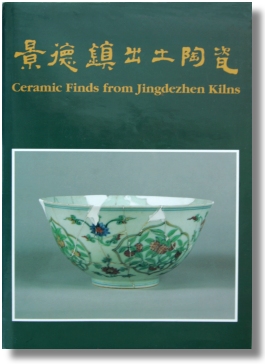
Ceramic Finds from Jingdezhen Kilns, by Liu Xinyuan

* * * * ½ 2 votes

This massive hard bound book is the catalog of a joint exhibition, between the Jingdezhen Institute of Ceramic Archeology and the Fung Ping Shan Museum, the University of Hong Kong in 1992.

The book includes a report on the excavation work that from the 1970 and onwards was made under the direction of Prof. Liu Xinyuan. The report covers the first period of ceramic activity during the Five Dynasties when mostly Yue green wares was imitated; over the Song dynasty when the industry stared to boom and the later development into Ming times. The main emphasis is on the early history and Song, some on Yuan and the touching upon the Ming dynasty in general.

I feel this is an important report, in particular about the Song and Yuan excavations in and around Jingdezhen but however thick with its 366 color illustrated items, I feel it is spread too thin over a too large an area to be really valuable. It is interesting, yes, and I belive if you have that kind of mindset that you want to get to the bottom of the Jingdezhen kilns, this belongs among the must have’s. However you also need to prepare for a long journey, before you have got the full picture because considering the wealth of material dug up in Jingdezhen during the last decades, this book really does not contain much at all. One good point is that quite often bases footrims and marks are show. Something that is missing in the earlier book, Imperial Porcelain of the Yongle and Xuande Periods.

Still, what is here is here and I figure we need to be grateful for that, but as I said, many important areas are covered badly or not at all and is probably awaiting publication in their own sweet time.

JE

Text in English and Chinese, Around 400 pages of which 168 pages with introduction plus around 250 pages with 366 color photos of the exhibits. Any index is strangely missing and there are no pagination on the pages in the section with catalog entries.
University of Hong Kong 1992.

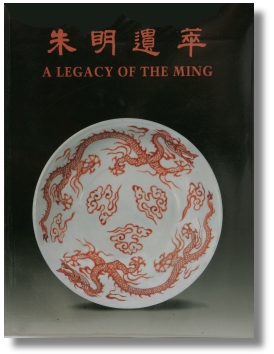
A Legacy of Ming: Ceramic Finds from the Site of the Ming Palace in Nanjing

* * *     1 votes

A Legacy of Ming: Ceramic Finds from the Site of the Ming Palace in Nanjing

Since the 1950’s, several important excavations of porcelain wares have been conducted at the site of the Ming Palace in Nanjing, which has proved to be another important find for Ming ceramics in addition to Jingdezhen. In 1964, while the city dredged the Yudai River, ceramic archaeologists from the Nanjing Museum found a large number of ceramic shards, mainly blue and white wares dating from the late Yuan to the early Ming reigns of Hongwu, Yongle and Xuande. Through careful analysis and extensive research, their findings help identify wares of the Hongwu reign and styles and development of porcelain wares in the Yongle and Xuande reigns. The archaeologists also recognized wares produced in the interregnum period during the three reigns of Zhengtong, Jingtai and Tianshun.

This comprehensive catalog features more than 200 shards illustrated in color-including lead glazed tiles and bricks, porcelain bricks, triangular and circular tile terminals, monochromes, blue and whites and polychromes-together with detailed descriptive entries and two introductory essays.

Paperback: 180 pages
Publisher: Museum and Art Gallery, University of Hong Kong; 1 edition (December 1995)
ISBN-10: 962710132X
ISBN-13: 978-9627101321
Product Dimensions: 10.9 x 8 x 0.5 inches

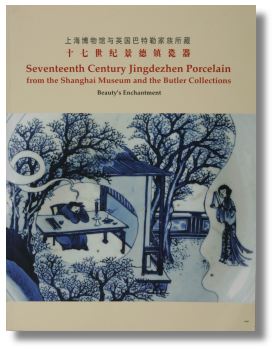
Beauty’s Enchantment, Seventeenth-century Jingdezhen Porcelain from the Shanghai Museum and the Butler Collection, by Sir Michael Butler and Prof. Wang Qingzheng

* * * * * 1 votes


Beauty’s Enchantment, Seventeenth-century Jingdezhen Porcelain from the Shanghai Museum and the Butler Collection, by Sir Michael Butler and Prof. Wang Qingzheng.
This book is a catalog from a joint exhibition between the Shanghai Museum and the Butler Collection, covering the period from 1621 to the Mid Kangxi period. The section introductions and captions take their basis in the historical events of the time and explains how this is reflected in the porcelain pieces discussed. The text as well as the illustrations are first class. If you look for one book only covering the Ming-Qing Transitional period, this volume would be my personal choice. It’s really outstanding.

Another highly appreciated feature is that whenever possible, the bases and any present marks are illustrated in full color. All entries in the catalog are also individually signed by the authors.

If you can find a hardbound version it would definitely be worth it. My copy is paperback but given a choice, the quality of the content definitely motivates a better binding.

Paperback: 360 pages
Publisher: Scala Publishers Ltd (March 15, 2006)
ISBN-10: 1857594177
ISBN-13: 978-1857594171
Product Dimensions: 11.7 x 9.1 x 1.2 inches
Shipping Weight: 4.5 pounds

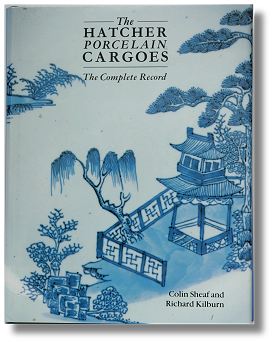
The Hatcher Porcelain Cargoes, by Colin Sheaf & Richard Kilburn

* * *     1 votes

Sheaf, Colin & Kilburn, Richard, The Hatcher Porcelain Cargoes. The Complete Record.

Overview and general presentation of the two first of Michael Hatchers porcelain cargoes, the Ming junk cargo (c. 1643-1646) from a seventeenth century Chinese junk, and the Dutch East Indiaman Geldermalsen that foundered in 1752.

I think this is a good reference for the Hatcher cargoes, in particular the 1640’s junk. This book and the actual auction catalogs covers it very well. I would not call this book indispensable but the color pictures of the 1640s junk cargo are good and considering the precise dating of the pieces this is a valuable reference.

192 pages
212 illustrations of which 138 in color
Phaidon/Christies, 1988.
ISBN. 0 7148 8046 9

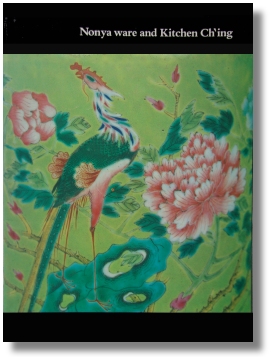
Nonya ware and Kitchen Ch’ing, by William Willetts and Lim Suan Poh

* * * *   2 votes

Nonya Ware and Kitchen Ching (South East Asia Ceramic Society)

This is a fundamental and quite interesting exhibition catalog of a little published kind of Chinese export porcelain, that went to South East Asia during the 19th century. Som was for every day use, some for restaurants - food hawkers - and some for altar and ceremonial use. If you live in Singapore or Malaysia this is a “must have”. I also think that most other collectors interested in the not so expensive common wares of our last few hundred years would find this interesting.

Exhibition held in Muzium Seni Asia, University of Malaya
Kuala Lumpur 1981.

128 pages
Well illustrated with 35 color pictures, 200 catalog pictures in b/w.
plus numerous other b/w figures and maps.
First printing Oxford University Press, 1981 (3000 copies).
Second printing, 1991 (1500 copies).
ISBN. 0-19-582516-0

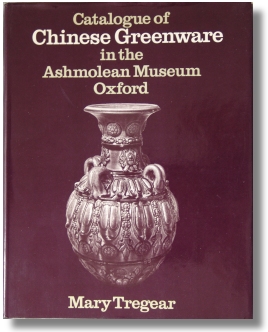
Catalogue of Chinese Greenware in the Ashmolean Museum, by Mary Tregear

* * *     1 votes


Catalogue of Chinese Greenware in the Ashmolean Museum, Oxford

Tregear, Mary, Catalogue of Chinese Greenware in the Ashmolean Museum. This is an old book. A lot of research and discoveries we now think is part of common knowledge was not known when this book was written, still it is the quality of the text that matters. Most of the illustrations are in black and white but it is still a valuable reference work and written by an accomplished scholar.

Hardcover: 92 pages
Ashmolean Museum,
Publisher: Oxford University Press (February 24, 1977)
Language: English
ISBN-10: 0198131674
ISBN-13: 978-0198131670

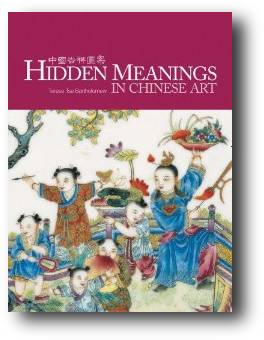
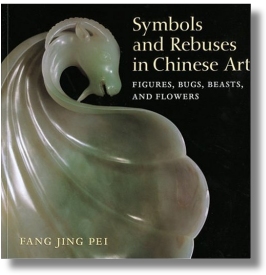
Symbols and Rebuses in Chinese Art: Figures, Bugs, Beasts, and Flowers, by Fang Jing Pei

* * * *   1 votes


Symbols and Rebuses in Chinese Art: Figures, Bugs, Beasts, and Flowers

This is a modern book about symbolism found in Chinese art. An A-to-Z catalog of hundreds of symbols represented in the Chinese arts, with images and text to explore their meanings. Includes more than 200 color and black-and-white images of ceramics, porcelains, carvings, lacquers, embroidery, paintings, and wood blocks depicting the various symbols.

A rebus in Chinese art is a pictorial representation of a word or syllable. The author explains, for instance, why a depiction of a bat can mean happiness, and why some beautiful images, such as sparrows and pears, are rarely seen. Using myths, folklore, history, and religion to explore the significance of each symbol

It does not cover everything but what it covers it does well. The pictures are great. What I like about this book and what I believe sets if apart is that it also list much less known symbols like cactus and the five poisons and the “bak choy” pattern etc. It also list the meaning when one symbol is found together with another symbol. Quite a number of the listings also have images for reference.

This is a very good book and is highly recommended

Published by Ten Speed Press
214 pages
ISBN: 1-58008-551-2

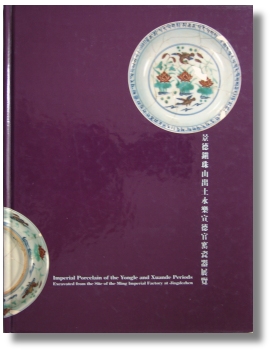
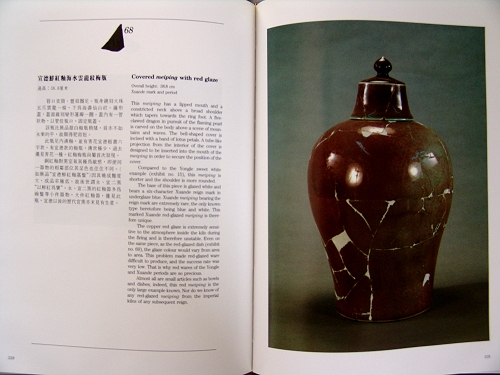
Imperial Porcelain of the Yongle and Xuande Periods

* * * *   1 votes

Imperial Porcelain of the Yongle and Xuande Periods. Excavated from the Site of the Ming Imperial Factory at Jingdezhen.

Hong Kong Museum of Art
Urban Council, Hong Kong, 1989.
ISBN. 962 215 090 10


Far Eastern Ceramics in the Victoria and Albert Museum, by J. G Ayers

          0 votes

Far Eastern Ceramics in the Victoria and Albert Museum, Masterpieces from the V&A collection.
By Ayers, J.G.

ISBN. 0856670766
Hardcover: 294 pages
Sotheby Parke Bernet, London and New York, 1980.
Publisher: Sotheby Parke Bernet Publications (December 1994)
Language: English
ISBN-10: 0856670766
ISBN-13: 978-0856670763


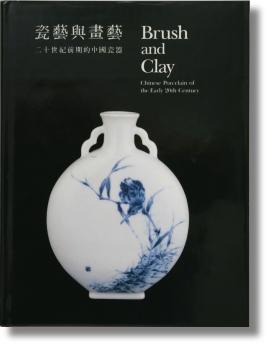
Brush and Clay. Chinese Porcelain of the Early 20th Century, by Simon Kwan

* * * * * 1 votes


This is an exhibition catalog featuring 165 items from the Simon Kwan collection - ceramic plaques with landscape painting, birds and flower scenes, figurative painting. Vases and bowls with varied decoration.

This is the unquestionable best and most wanted book so far written on qianjiang porcelain. The most outstanding feature of porcelain decoration of this period was the predominance of painting with enamels in a style directly inspired by painting on paper. It was also one of the only times in the history of Chinese ceramics when the artists signed their work.

469 Pages,
165 colour plates, many text-illustrations, some in colour.
Hong Kong Museum of Art
Urban Council, Hong Kong, 1990.
ISBN. 962 215 098 5

Continue reading ‘Brush and Clay. Chinese Porcelain of the Early 20th Century, by Simon Kwan

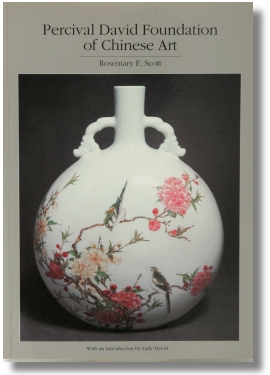
Percival David Foundation of Chinese Art: A Guide to the Collection, by Rosemary E. Scott

* * * * * 1 votes


Percival David Foundation of Chinese Art: A Guide to the Collection, by Rosemary E. Scott

London: The Foundation and the School of Oriental and African Studies, University of London, 1989.
A booklet introducing the Foundation, the founders of the collection, the scope of the collection, and different wares from the Song, Jin, Yuan, Ming and Qing dynasties.

112 pages
Publisher: School of Oriental & African Studies (September 1989)
Language: English
ISBN-10: 0728601508
ISBN-13: 978-0728601505

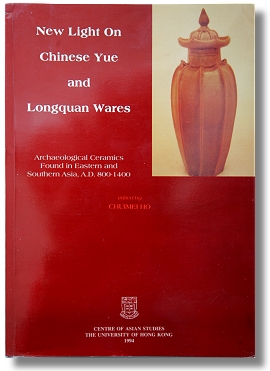
New Light on Chinese Yue and Longquan Wares, By Chuimei Ho (Ed.)

* * * *   1 votes

New Light on Chinese Yue and Longquan Wares: Archaeological Ceramics Found in Eastern and Southern Asia, A. D. 800-1400

Contains essays on the latest research on Chinese green wares. The material consists of 20 papers presented on a conference on Zhejiang green wares from the ninth through the Fourteenth Century. It covers mainly three topics; the production of Yue and Longquan (Celadon) wares; domestic and overseas distribution, and; their influence on products from other ceramic centers.

From an academic point of view this is a reference publication that will remain important for years to come. I believe it is also interesting for the serious student.

My paperback version is a bit too heavy for its binding.
408 pages.
Figures and maps, mostly in black and white.
Hong Kong: Centre of Asian Studies, The University of Hong Kong, 1994.


Minan Blue-and-white Wares

* * * *   1 votes

Minan Blue-and-white Wares: an Archaeological Survey of Kiln Sites of the 16th-19th Centuries in Southern Fujian, China,

(BAR international series ; 428). Oxford, U. K.: B.A.R., 1988.

A detailed report on the kiln finds of Minan blue-and-white wares, in southern Fujian, with descriptions of five districts of sites and localities, technical skills used, organization of the production, thoughts for further research.


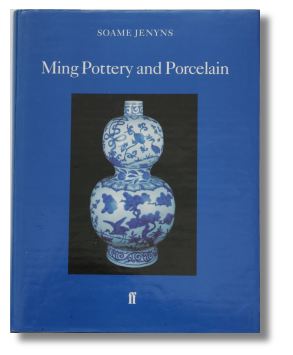
Ming Pottery and Porcelain, by Soame Jenyns

* * * *   1 votes

Ming Pottery and Porcelain

Ming Pottery and Porcelain, by Soame Jenyns

Orogonally published in 1953, this 2nd edition has a foreword by Margaret Medley, an introduction by William Watson, and has added more color plates.

160 pages
Publisher: Faber & Faber (1953)
2nd ed. London: Faber, 1988.
The bibliography is an updated version.


Iron in the Fire: the Chinese Potter’s Exploration of Iron Oxide Glazes, by Nigel Wood

* * * *   1 votes

Iron in the Fire: The Chinese Potters’ Exploration of Iron Oxide Glazes

Iron in the Fire: the Chinese Potter’s Exploration of Iron Oxide Glazes: An Exhibition Held at the Ashmolean Museum, Oxford.

The 1988 exhibition and the catalog provide technical information on the wide range of iron-based colors found on Ming and Qing porcelains. This is a very good book with beautiful illustration of a number of very good and important pieces. I also find it quite interesting to see the variations of color that could be accomplished by one metallic colorant oxide - iron. As usual the people at Percival David Foundation felt we should know this and as usual, they are right.

Hard to find.

London: The Oriental Ceramic Society, 1988.
Paperback: 88 pages
Publisher: Ashmolean Museum Publications (January 1, 1988)
ISBN-10: 0903421232
ISBN-13: 978-0903421232


China: Ancient Kilns and Modern Ceramics: A Guide to the Potteries, by Wanda Garnsey and Rewi Alley

          0 votes

Canberra: Australian National University Press, 1983.
Organized geographically by provinces, the guide provides information on pottery in these provinces, with informative descriptions and illustrations.

Maritime Archaeology: A Technical Handbook, by Jeremy Green

* * * *   1 votes

For those who from the published research on the recent “Wanli” shipwreck have become interested in the ins and outs of practical Maritime Archaeology, I would like to suggest A Technical Handbook, by Jeremy Green. With its 470 pages it is a pretty solid publication as well as a useful reference on what we really should ask from the sometimes meager reports published on recent shipwrecks and their in many cases valuable cargo. When a ship is excavated and its cargo sold the historical remnants is lost forever and what we got left are the finds, scattered to the winds maybe through some auctions, and the reports. This is a tricky balance act regarding what we should leave to coming generations and what we have a right and maybe a need to figure out for ourselves right now. Good archaeological practices are a prerequisite and the more who are in on the discussion, the better.

Jeremy Green’s systematic overview of maritime archaeology offers a step-by-step description of this fast-growing field. With new information about the use of computers and Global Positioning Systems, the second edition of this handbook shows how to extract as much information as possible from a site, how to record and document the data, and how to act ethically and responsibly with the artefacts. Treating underwater archaeology as a discipline, the book demonstrates how archaeologists, ‘looters,’ academics, and governments interact and how the market for archaeological artefacts creates obstacles and opportunities for these groups. Well illustrated and comprehensive in its approach to the subject, this book provides an essential foundation for everybody interested in underwater environments, submerged land structures, and conditions created by sea level changes.This book covers five broad areas: searching for sites, recording sites, excavation, management of collections, and study, research and publication. It describes a variety of techniques and procedures in considerable detail, accessible to both professional and amateur archaeologists.
It contains more than 250 photographs, charts, and diagrams that explain everything from how to operate a sextant and a hand-held GPS to how a swim line should be laid out by the dive team before excavation begins

Hardcover: 470 pages
Publisher: Academic Press; 2 edition (17 Jun 2004)
Language English
ISBN-10: 0122986326
ISBN-13: 978-0122986321
Product Dimensions: 22.9 x 15.5 x 2.8 cm

Ice and Green Clouds: Traditions of Chinese Celadon, by Mino, Yutaka and Katherine R. Tsiang

* *       1 votes

Ice and Green Clouds: Traditions of Chinese Celadon

Indianapolis Museum of Art, 1987.
Catalog of a traveling exhibition with an excellent overview with details of Chinese celadon, its history and technological aspects. Appendix A is an article by Pamela Vandiver and David Kingery, ceramics scientists, entitled ACeladon: The Technological Basis of Their Visual Appearances,@ providing technical aspects of this ware.

Publisher: Indiana Univ Pr (June 1987)
Language: English
ISBN-10: 0936260173
ISBN-13: 978-0936260174

Porcelains of Jingdezhen, by Rosemary E. Scott (Ed.)

* * * * ½ 2 votes

The Porcelains of Jingdezhen: Held on June 15-17 1992 in Celebration of the 100th Anniversary of the Birth of Sir Percival David and the 40th Annive (Colloquies on Art & Archaeology in Asia)

Porcelains of Jingdezhen (Colloquies on Art & Archaeology in Asia; no. 16). Rosemary E. Scott (Ed.)
A seminar held on June 15-17 1992 in Celebration of the 100th Anniversary of the Birth of Sir Percival David and the 40th Annive (Colloquies on Art & Archaeology in Asia)
Contains 12 papers on the Jingdezhen kilns and their products, the most recent archaeological finds, types of wares from the Song, Yuan, Ming and Qing dynasties, and export porcelain.

London: Percival David Foundation of Chinese Art, 1993.
ISBN. 0 7286 0216 4

Straits Chinese Porcelain: A Collector’s Guide, by Ho Wing Meng

* * * *   1 votes


Straits Chinese Porcelain: A Collector’s Guide, by Ho Wing Meng

This is my favorite among the books that details Straits Chinese porcelain. The first edition appeared in 1983 but was soon followed by a second, amended, updated and corrected. For the casual browser the first edition would be perfectly all right while if you are more stringent with getting everything right you would want as late edition as possible of this book.

This beautifully illustrated volume presents Straits Chinese porcelain, an outside South East Asia little known category of 19th century polychrome enameled porcelain made in China, exclusively for export to the Straits Chinese communities of Southeast Asia. Some marks, glossary and bibliography included.

Format: Hardcover, 144 pages
Published: 1983, Singapore, 1st Edition
ISBN: 9789812327581

Sung Porcelain and Stoneware, by Basil Gray

* * * *   1 votes


Sung Porcelain and Stoneware (Faber Monographs on Pottery and Porcelain)

Sung Porcelain and Stoneware, by Basil Gray

Good guide to Chinese porcelain and stoneware of the 10th-13th centuries. Also included are kiln sites, technological aspects, artistic, historic and social context. Recommended reference book.

Hardcover: 205 pages
Publisher: Faber & Faber (London: May 1984)
Language: English
ISBN-10: 0571130488
ISBN-13: 978-0571130481


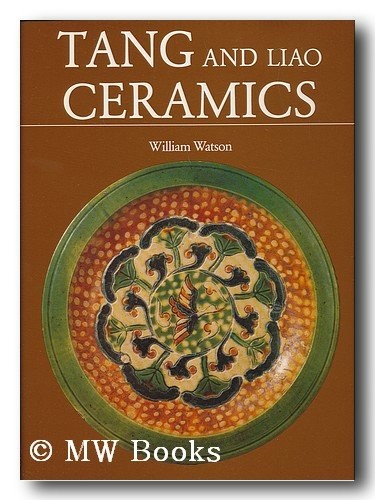
T’ang and Liao Ceramics, by William Watson
          0 votes

T’ang and Liao Ceramics, by William Watson
One of his several works on ceramics from different periods. This work deals with the Tang dynasty (618-907) and Liao dynasty (947-1125).

Publisher: New York: Rizzoli (1984)
Language: English
ISBN-10: 0847805263
ISBN-13: 978-0847805266


Transactions of the Oriental Ceramic Society

* * * * * 1 votes


Transactions (OCS, London)

Begun with an unnumbered issue for 1921/22, it is published annually. Many of the articles are studies on Chinese ceramics, but also on other aspects of Chinese and Asian art. The entire series as well as individual issues are unequaled sources of scholarly discourse on Chinese ceramics. Highly recommended.

Transactions of the Oriental Ceramic Society,
ISSN 0306-0926. London: The Society, 1923-


Vietnamese Ceramics, by Tran Khanh Chuong

          0 votes


Vietnamese Ceramics

There is archaeological evidence that ceramics have been made in Vietnam for ten thousand years. This monograph describes the different categories and the location of their manufacture. With examples presented in color.

Region: Vietnam
Format: Paperback, 99 pages
Published: 2005, Vietnam, 1st Edition